
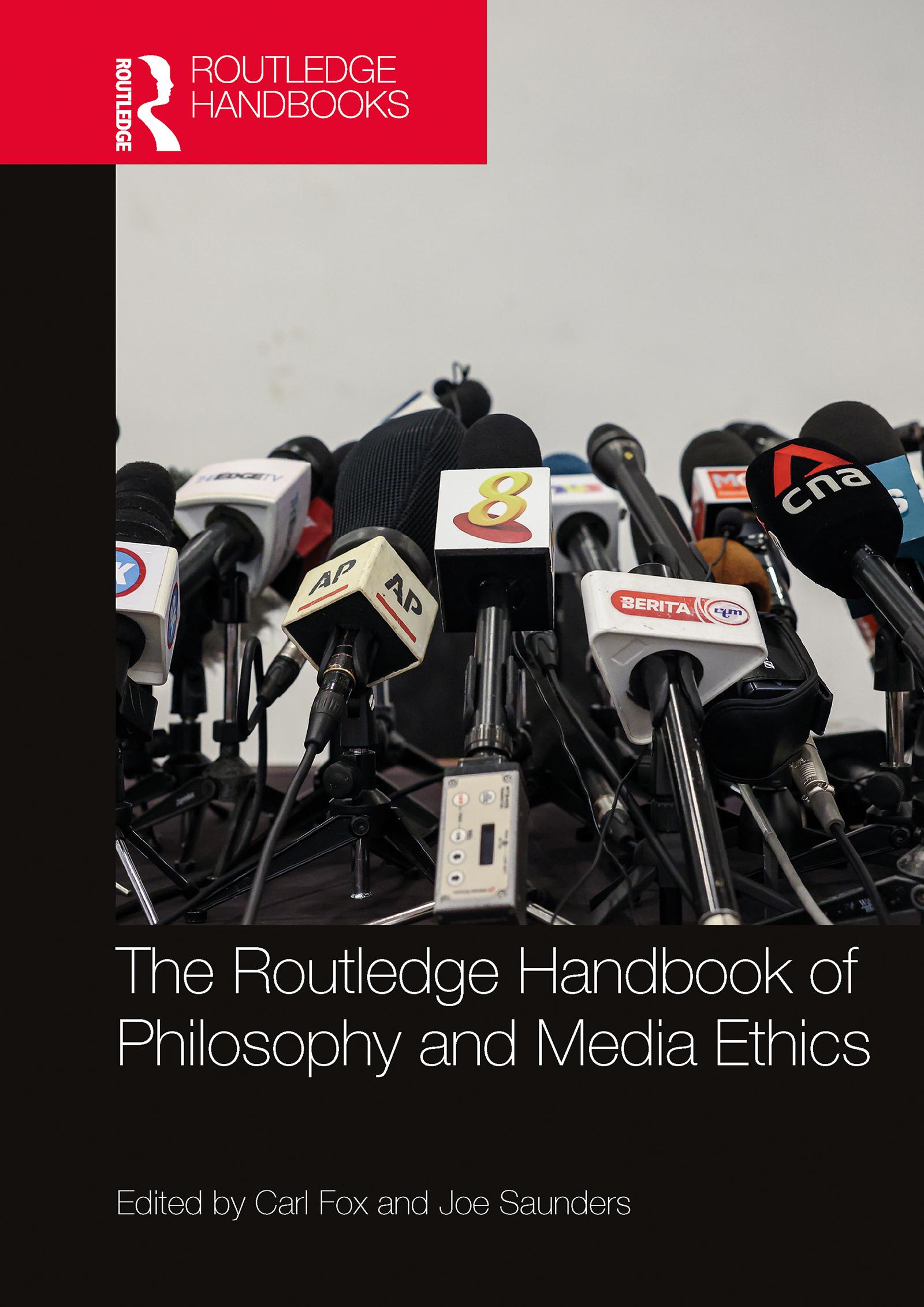
The media informs, entertains, and connects us. It is woven into the fabric of politics. Its increasing immediacy has become an inescapable feature of almost everybody’s life. We are, at the same time, subject to the media and participants in it. The ethical questions it raises have never been more urgent. Trust is in short supply, but we need to share information while dealing with problems like misinformation, disinformation, and echo chambers. And what responsibilities fall on the state, and on other actors such as artists, advertisers, and social media users, as we reckon with endemic problems like racism, sexism, and classism?
The Routledge Handbook of Philosophy and Media Ethics is an outstanding survey and assessment of this vitally important field. Comprising thirty chapters written by an international team of contributors, the Handbook is divided into five parts:
- Freedom of Speech, Privacy, and Censorship
- The News Media
- Broadening the Scope: Giving Other Aspects of the Media their Due
- Justice, Power, and Representation
- Vice and Virtue Online
The Routledge Handbook of Philosophy and Media Ethics is essential reading for students and researchers in philosophy, media and communication studies, politics, and law, as well as practising media professionals and journalists.
Paga fácilmente con tarjeta, Klarna, Apple Pay o Google Pay. ¿No estás contento? Siempre tienes 14 días de garantía de devolución. Lee más en nuestros términos. Si tienes preguntas, escríbenos a hello@memmo.org.
Memmo hace que estudiar sea más fácil, estés donde estés. Aquí tienes tus libros de texto y herramientas de estudio inteligentes en un solo lugar: resúmenes, quizzes, podcasts y flashcards. Y también a Ted, tu compañero de estudio que responde a todo lo que te preguntes. Más de 50 000 estudiantes ya estudian aquí. Está hecho para que aprendas más rápido y te estreses menos.