
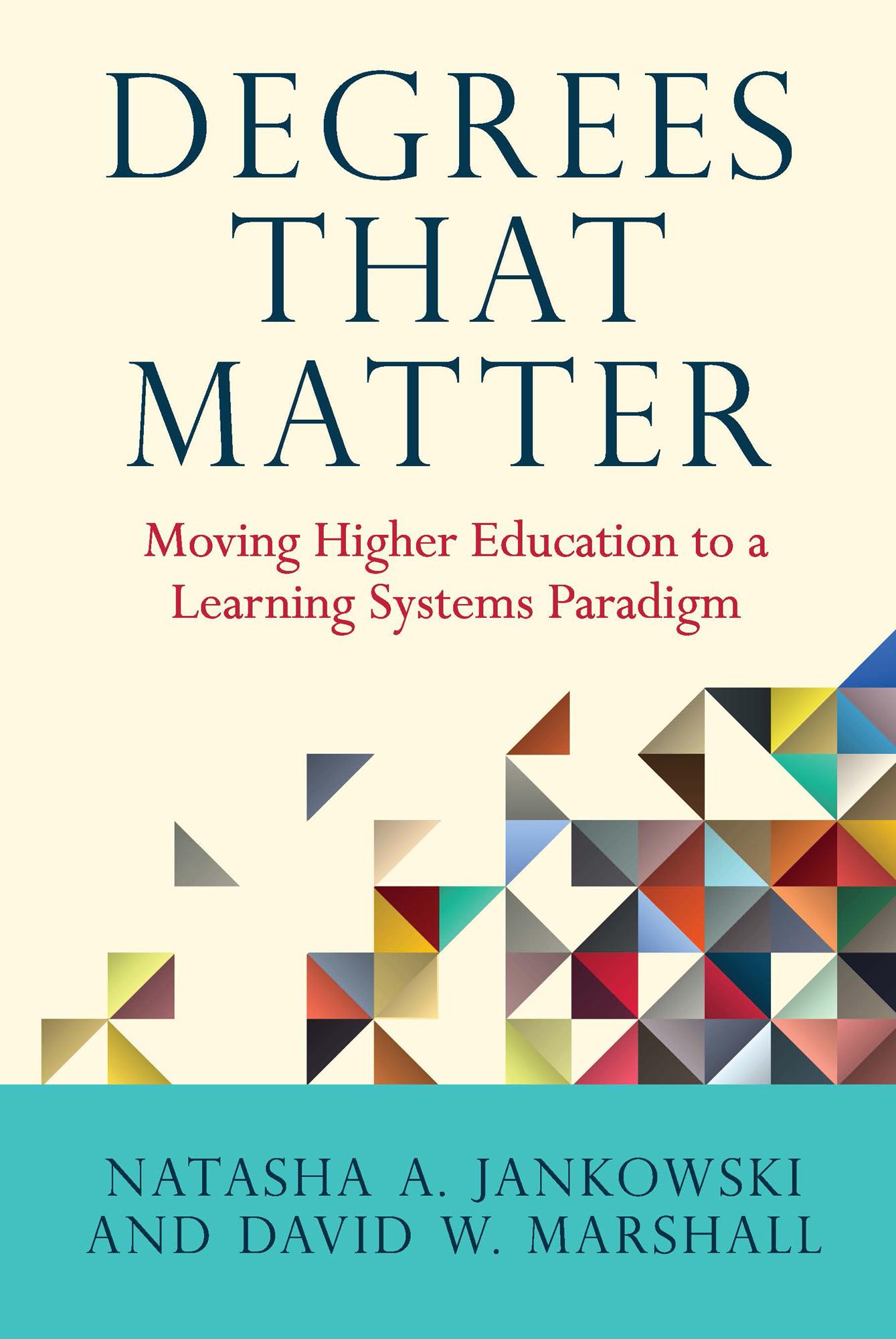
Sponsored by Concerned by ongoing debates about higher education that talk past one another, the authors of this book show how to move beyond these and other obstacles to improve the student learning experience and further successful college outcomes. Offering an alternative to the culture of compliance in assessment and accreditation, they propose a different approach which they call the Learning System Paradigm. Building on the shift in focus from teaching to learning, the new paradigm encourages faculty and staff to systematically seek out information on how well students are learning and how well various areas of the institution are supporting the student experience and to use that information to create more coherent and explicit learning experiences for students.The authors begin by surveying the crowded terrain of reform in higher education and proceed from there to explore the emergence of this alternative paradigm that brings all these efforts together in a coherent way. The Learning System Paradigm presented in chapter two includes four key elements—consensus, alignment, student-centeredness, and communication. Chapter three focuses upon developing an encompassing notion of alignment that enables faculty, staff, and administrators to reshape institutional practice in ways that promote synergistic, integrative learning. Chapters four and five turn to practice, exploring the application of the paradigm to the work of curriculum mapping and assignment design. Chapter six focuses upon barriers to the work and presents ways to start and options for moving around barriers, and the final chapter explores ongoing implications of the new paradigm, offering strategies for communicating the impact of alignment on student learning.The book draws upon two recent initiatives in the United States: the Tuning process, adapted from a European approach to breaking down siloes in the European Union educational space; and the Degree Qualifications Profile (DQP), a document that identifies and describes core areas of learning that are common to institutions in the US. Many of the examples are drawn from site visit reports, self-reported activities, workshops, and project experience collected by the National Institute for Learning Outcomes Assessment (NILOA) between 2010 and 2016. In that six-year window, NILOA witnessed the use of Tuning and/or the DQP in hundreds of institutions across the nation.
Paga fácilmente con tarjeta, Klarna, Apple Pay o Google Pay. ¿No estás contento? Siempre tienes 14 días de garantía de devolución. Lee más en nuestros términos. Si tienes preguntas, escríbenos a hello@memmo.org.
Memmo hace que estudiar sea más fácil, estés donde estés. Aquí tienes tus libros de texto y herramientas de estudio inteligentes en un solo lugar: resúmenes, quizzes, podcasts y flashcards. Y también a Ted, tu compañero de estudio que responde a todo lo que te preguntes. Más de 50 000 estudiantes ya estudian aquí. Está hecho para que aprendas más rápido y te estreses menos.