
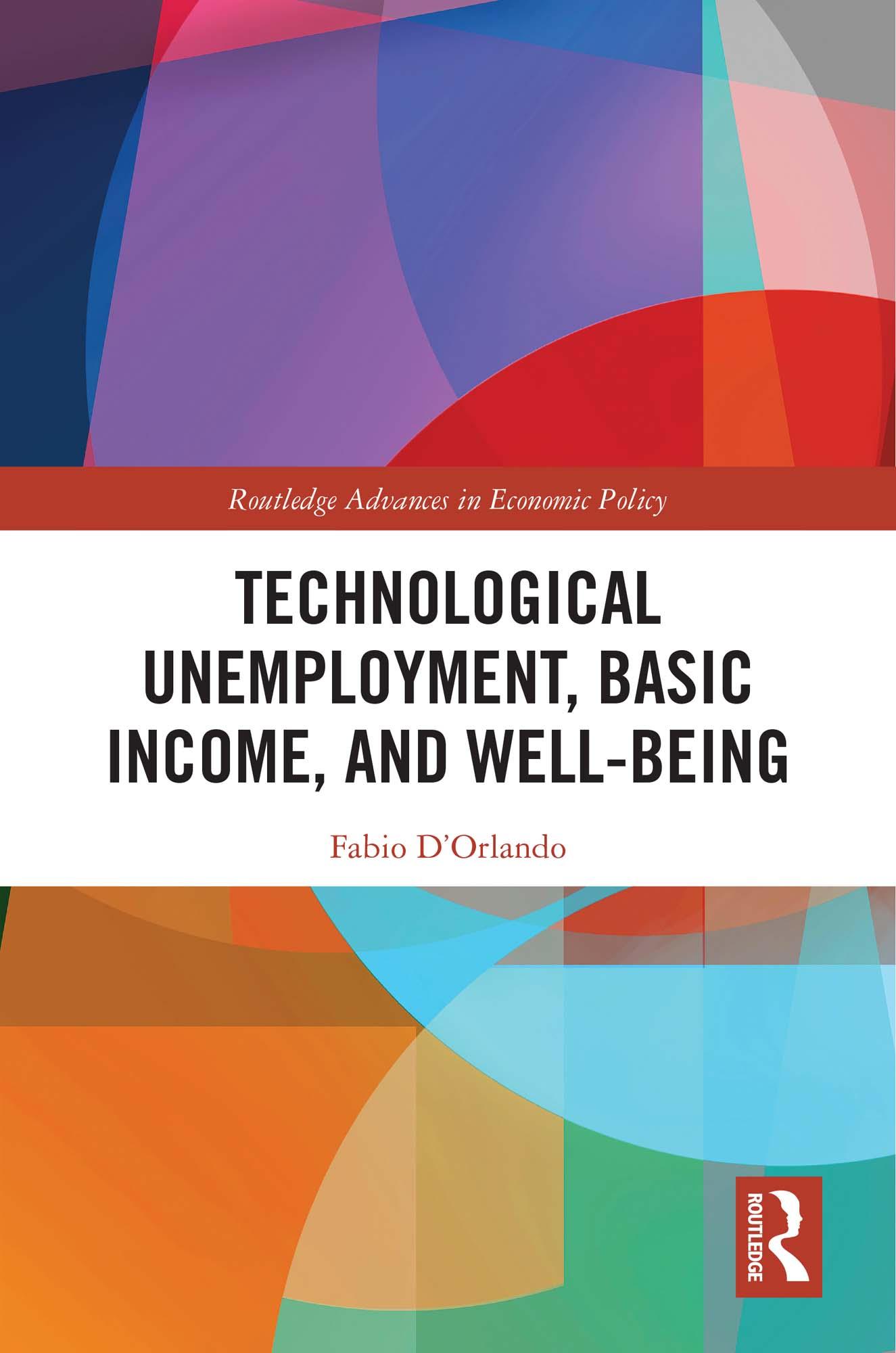
The main novelty of the Fourth Industrial Revolution is the entry of robots and Artificial Intelligence into the production process. This phenomenon could potentially generate high levels of unemployment, or even full unemployment, and therefore calls for innovative public policies.
This book adopts an agnostic position on the size of the future impact of technological progress on employment but proposes a thought experiment built on a full unemployment scenario, which focuses on the consequences that these policies might have for people’s well-being, with particular reference to the provision of a universal Basic Income (UBI). Relying on some of the principles and models of Behavioral and Happiness Economics, it is argued that implementing a UBI that does not change over time may increase well-being inequality. A policy mix that combines a rising basic income with other measures is therefore recommended.
This book marks a significant contribution to the literature on economic policy, labor economics, the economics of well-being and happiness, and behavioral economics.
Paga fácilmente con tarjeta, Klarna, Apple Pay o Google Pay. ¿No estás contento? Siempre tienes 14 días de garantía de devolución. Lee más en nuestros términos. Si tienes preguntas, escríbenos a hello@memmo.org.
Memmo hace que estudiar sea más fácil, estés donde estés. Aquí tienes tus libros de texto y herramientas de estudio inteligentes en un solo lugar: resúmenes, quizzes, podcasts y flashcards. Y también a Ted, tu compañero de estudio que responde a todo lo que te preguntes. Más de 50 000 estudiantes ya estudian aquí. Está hecho para que aprendas más rápido y te estreses menos.