
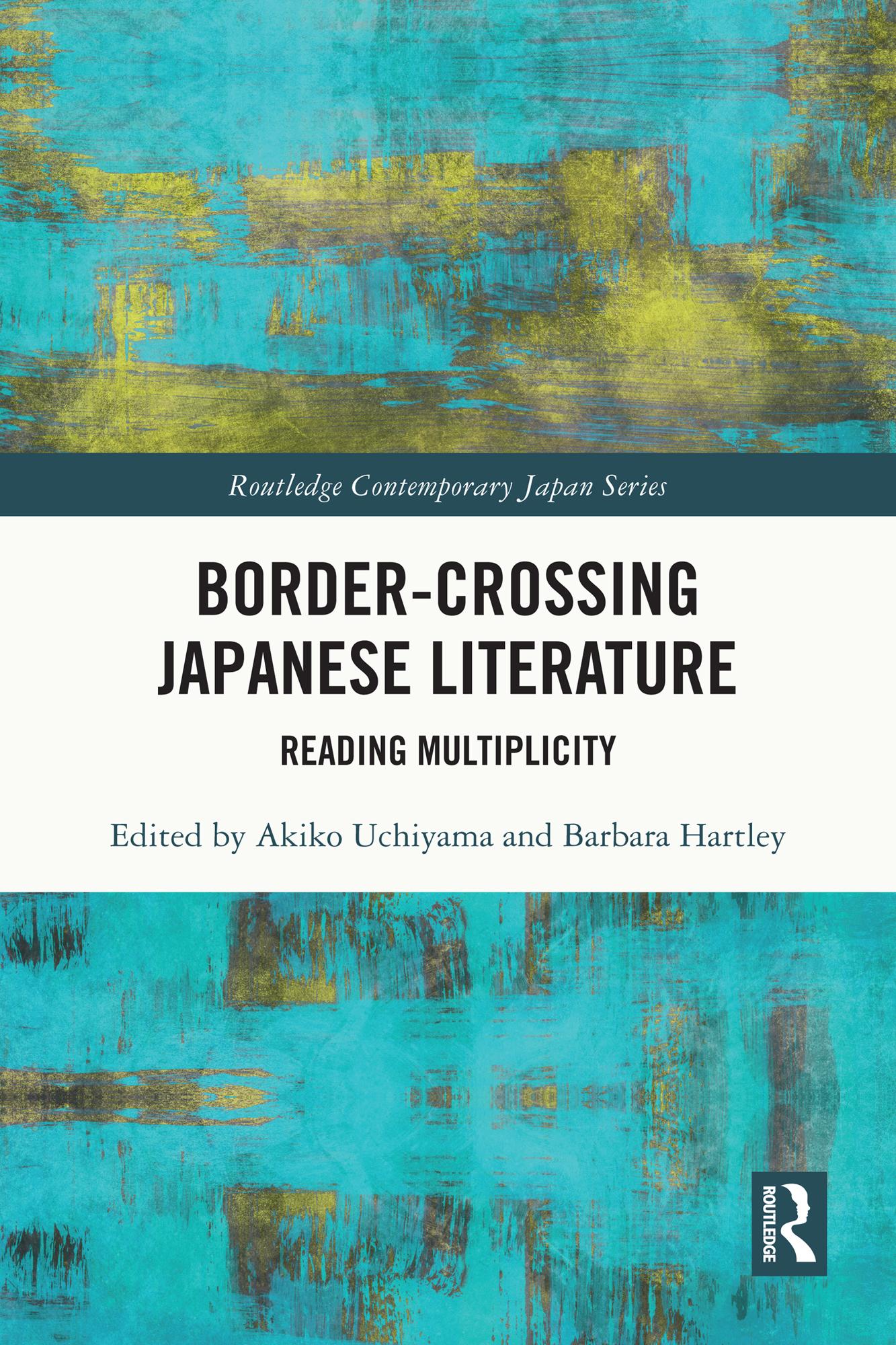
This collection focuses on metaphorical as well as temporal and physical border-crossing in writing from and about Japan.
With a strong consciousness of gender and socio-historic contexts, contributors to the book adopt an intercultural and interdisciplinary approach to examine the writing of authors whose works break free from the confines of hegemonic Japanese literary endeavour. By demonstrating how the texts analysed step outside the space of ‘Japan’, they accordingly foreground the volatility of textual expression related to that space. The authors discussed include Takahashi Mutsuo and Nagai Kafū, both of whom take literary inspiration from geographical sites outside Japan. Several chapters examine the work of exemplary border-crossing poet, novelist and essayist, Itō Hiromi. There are discussions of the work of Tawada Yōko whose ability to publish in German and Japanese marks her also as a representative writer of border-crossing texts. Two chapters address works by Murakami Haruki who, although clearly affiliating with western cultural form, is rarely discussed in specific border-crossing terms. The chapter on Ainu narratives invokes topics such as translation, indigeneity and myth, while an analysis of Japanese prisoner-of-war narratives notes the language and border-crossing nexus.
A vital collection for scholars and students of Japanese literature.
Paga fácilmente con tarjeta, Klarna, Apple Pay o Google Pay. ¿No estás contento? Siempre tienes 14 días de garantía de devolución. Lee más en nuestros términos. Si tienes preguntas, escríbenos a hello@memmo.org.
Memmo hace que estudiar sea más fácil, estés donde estés. Aquí tienes tus libros de texto y herramientas de estudio inteligentes en un solo lugar: resúmenes, quizzes, podcasts y flashcards. Y también a Ted, tu compañero de estudio que responde a todo lo que te preguntes. Más de 50 000 estudiantes ya estudian aquí. Está hecho para que aprendas más rápido y te estreses menos.