
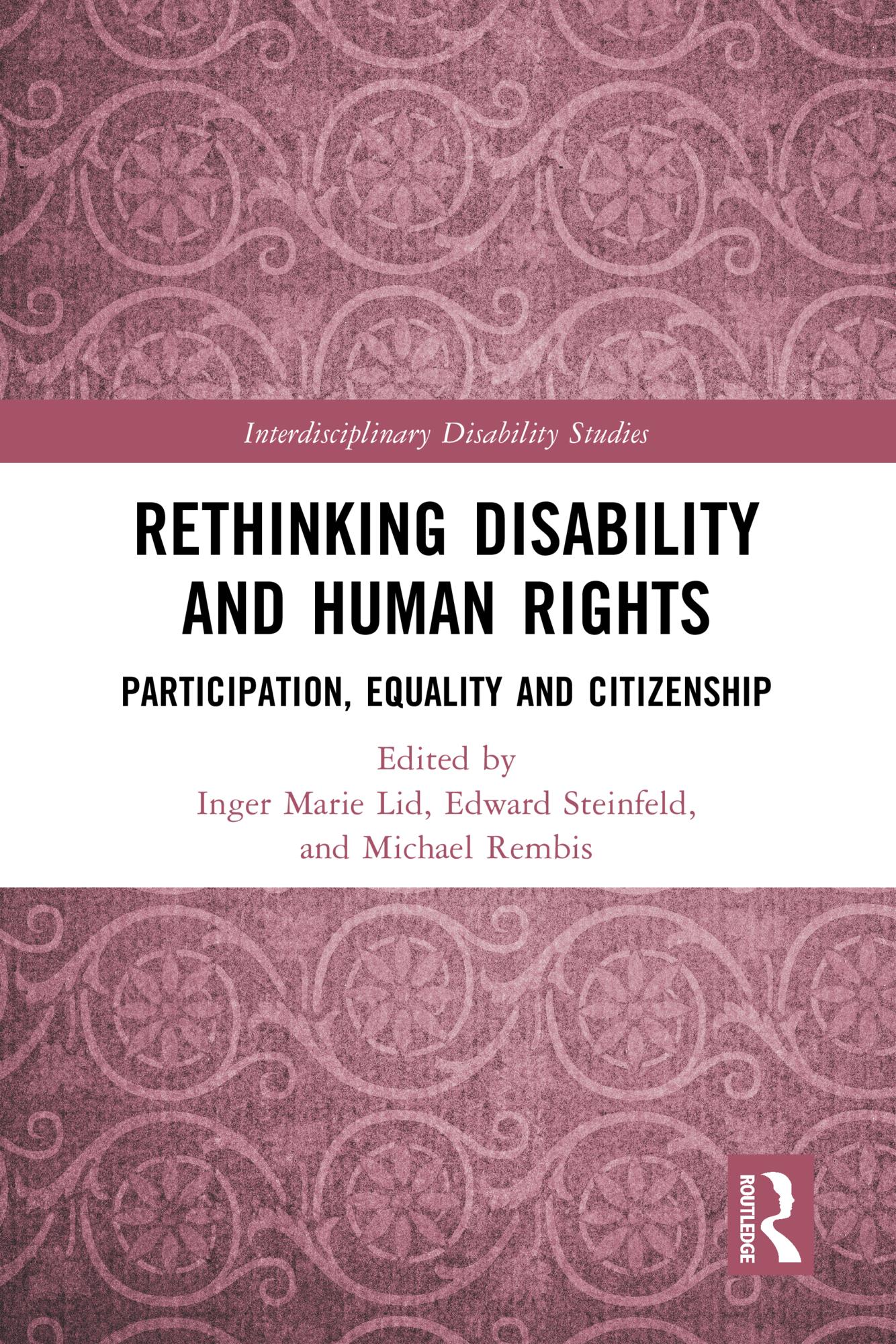
This book examines the role of disability in the right to political and social participation, an act of citizenship that many disabled people do not enjoy.
The disability rights movement does not accept the use of disability to create limits on citizenship, which poses challenges for contemporary societies that will become ever greater as the science and technology of enhancing human abilities evolves. Comprised of eight chapters, three interludes, and a postscript written by leading scholars and disability rights activists, the book explores citizenship for people with disabilities from an interdisciplinary perspective using the United Nations Convention on the Rights of Persons with Disabilities (CRPD) as a point of departure and the concept of universal design as a strategy for actualizing full citizenship for all. Situating disability in its historical and cultural contexts, the authors offer directions for rethinking citizenship, including implications for access to the built environment, information and communication systems, education, work, community life and politics.
This book will be of interest to all scholars and students working in disability studies, planning, architecture, public health, rehabilitation, social work, and education.
Paga fácilmente con tarjeta, Klarna, Apple Pay o Google Pay. ¿No estás contento? Siempre tienes 14 días de garantía de devolución. Lee más en nuestros términos. Si tienes preguntas, escríbenos a hello@memmo.org.
Memmo hace que estudiar sea más fácil, estés donde estés. Aquí tienes tus libros de texto y herramientas de estudio inteligentes en un solo lugar: resúmenes, quizzes, podcasts y flashcards. Y también a Ted, tu compañero de estudio que responde a todo lo que te preguntes. Más de 50 000 estudiantes ya estudian aquí. Está hecho para que aprendas más rápido y te estreses menos.