
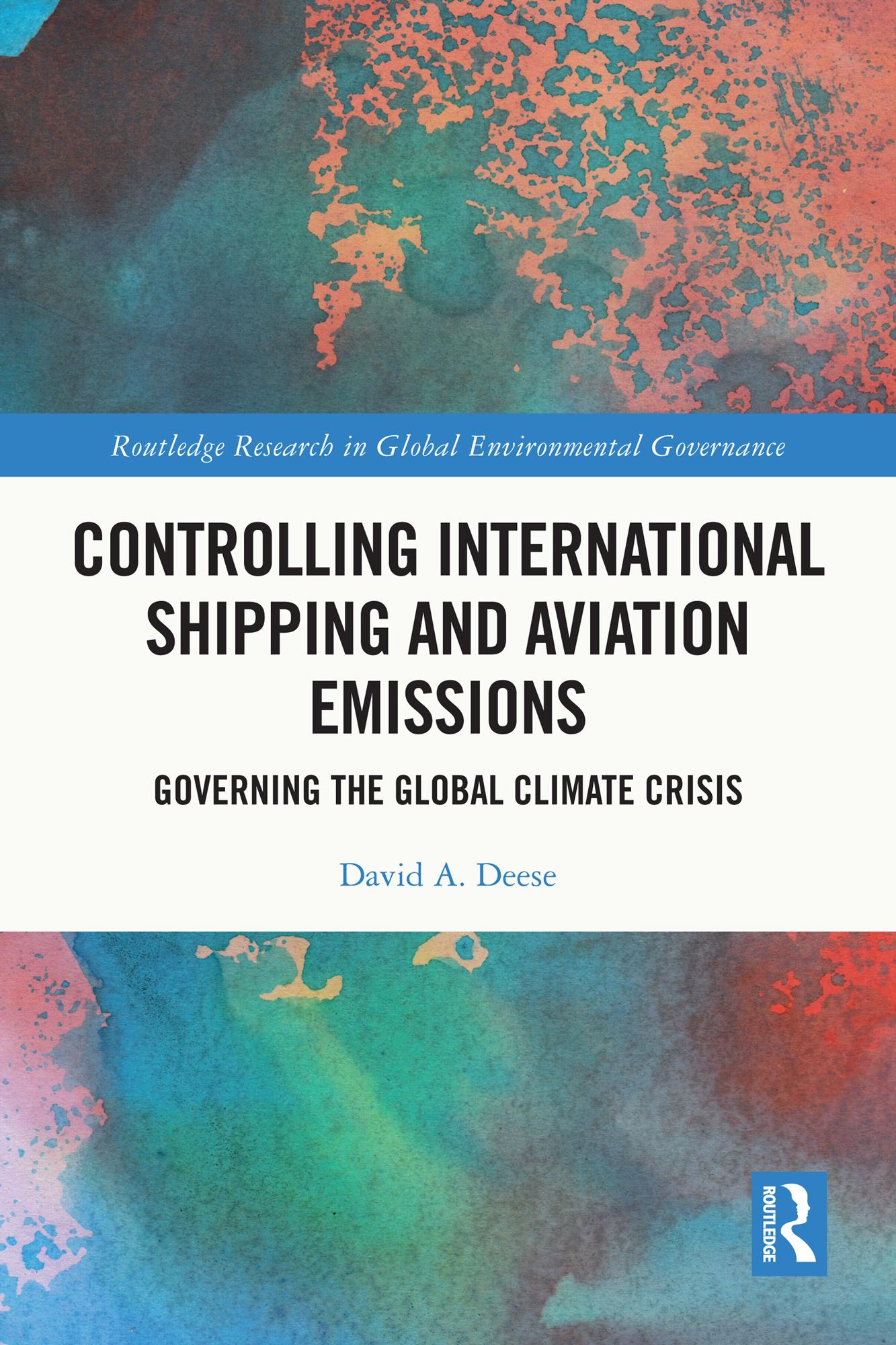
This book assesses the extent to which two specialized UN agencies – the International Maritime Organization (IMO) in London and the International Civil Aviation Organization (ICAO) in Montreal – have been able to regulate environmental pollution in the global commons.
Since the Kyoto Protocol and its tasking of these two public International Organizations (IOs) in 1997 to regulate greenhouse gas emissions from the fast-growing international shipping and aviation sectors, they have struggled with the assignment even as the external pressure has mounted for them to act. David Deese examines why these two UN agencies have largely failed to execute their critical missions to date and explores the most promising emerging and feasible routes to control and reduce these emissions by other means. Drawing on a range of sources including interviews with key actors in the IMO and ICAO, as well as from industry and national governments, Deese looks at the multifaceted politics that drive these IOs and considers how this has delayed and frustrated the execution of their assigned climate mitigation missions. He also explains how the limitations of the IMO and ICAO are likely to be found to a degree in other UN specialized agencies and examines how lessons learned here will be helpful in understanding the operations of other IOs.
The book will be of great interest to students and scholars of global governance and IOs, transport, and environment and climate change. It will also be a useful resource for industry and non-profit experts and public officials working in shipping and aviation regulation.
Paga fácilmente con tarjeta, Klarna, Apple Pay o Google Pay. ¿No estás contento? Siempre tienes 14 días de garantía de devolución. Lee más en nuestros términos. Si tienes preguntas, escríbenos a hello@memmo.org.
Memmo hace que estudiar sea más fácil, estés donde estés. Aquí tienes tus libros de texto y herramientas de estudio inteligentes en un solo lugar: resúmenes, quizzes, podcasts y flashcards. Y también a Ted, tu compañero de estudio que responde a todo lo que te preguntes. Más de 50 000 estudiantes ya estudian aquí. Está hecho para que aprendas más rápido y te estreses menos.