
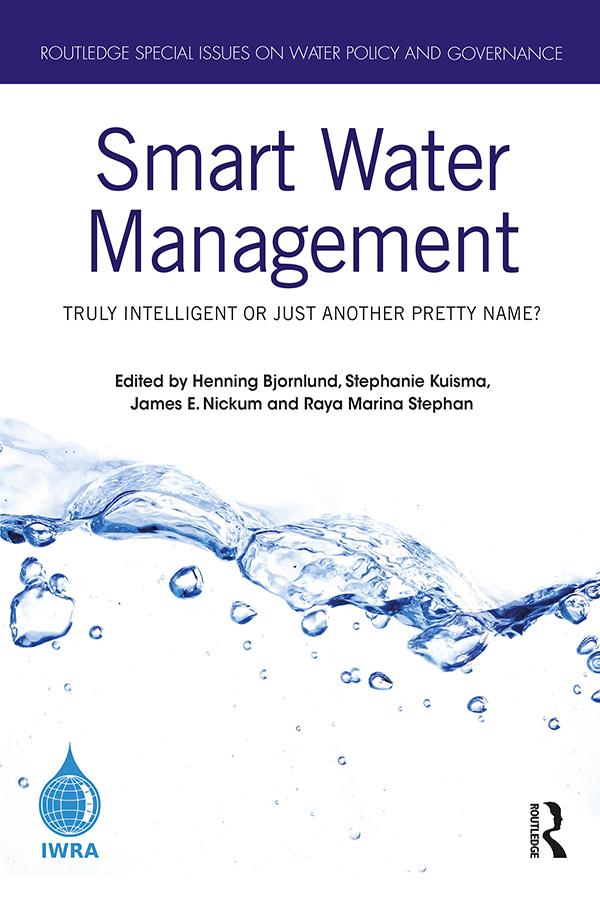
This book contributes to the debate about the suitability and challenges of the Smart Water Management (SWM) approach. Smart Water Management has increasingly been promoted to manage water and wastewater more efficiently and cost effectively by industries and utilities in urban contexts at regional or city scales, while reducing overall consumption. It is based on the use of Information and Communication Technology (ICT) to provide real-time, automated data to resolve water challenges. Many of these technologies are complex and costly, however, and the approach tends to overlook cheaper and less high-tech (softer) approaches to address the same problems. Yet there may be opportunities for using them even in resource short rural communities in developing countries.
The book includes examples of SWM systems in practice in diverse locations from Korea, Mexico, Paris, the Canary Islands and southern Africa, aimed at addressing a diverse set of problems, including monitoring water supply to refugees. Critical voices highlight the need for smart institutions to accompany smart technologies, the absurdity of applying SWM to dysfunctional legacy infrastructure systems, whether its adoption raises moral hazards, and whether SWM is the latest example of hegemonic masculinity in water management.
The chapters in this book were originally published in Water International.
Paga fácilmente con tarjeta, Klarna, Apple Pay o Google Pay. ¿No estás contento? Siempre tienes 14 días de garantía de devolución. Lee más en nuestros términos. Si tienes preguntas, escríbenos a hello@memmo.org.
Memmo hace que estudiar sea más fácil, estés donde estés. Aquí tienes tus libros de texto y herramientas de estudio inteligentes en un solo lugar: resúmenes, quizzes, podcasts y flashcards. Y también a Ted, tu compañero de estudio que responde a todo lo que te preguntes. Más de 50 000 estudiantes ya estudian aquí. Está hecho para que aprendas más rápido y te estreses menos.