
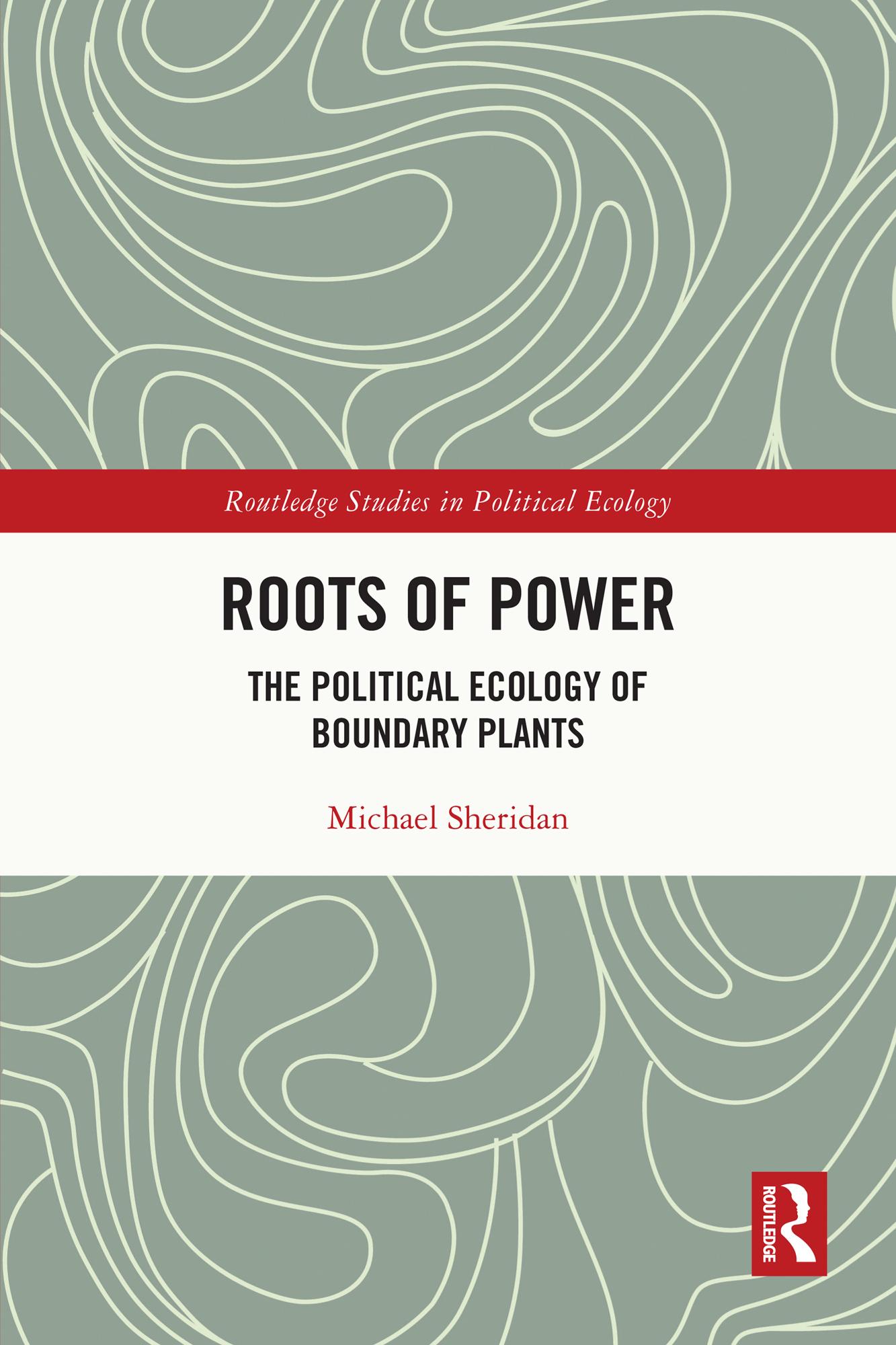
Roots of Power tells five stories of plants, people, property, politics, peace, and protection in tropical societies. In Cameroon, French Polynesia, Papua New Guinea, St. Vincent, and Tanzania, dracaena and cordyline plants are simultaneously property rights institutions, markers of social organization, and expressions of life-force and vitality.
In addition to their localized roles in forming landscapes and societies, these plants mark multiple boundaries and demonstrate deep historical connections across much of the planet’s tropics. These plants’ deep roots in society and culture have made them the routes through which postcolonial agrarian societies have negotiated both social and cultural continuity and change. This book is a multi-sited ethnographic political ecology of ethnobotanical institutions. It uses five parallel case studies to investigate the central phenomenon of "boundary plants" and establish the linkages among the case studies via both ancient and relatively recent demographic transformations such as the Bantu expansion across tropical Africa, the Austronesian expansion into the Pacific, and the colonial system of plantation slavery in the Black Atlantic. Each case study is a social-ecological system with distinctive characteristics stemming from the ways that power is organized by kinship and gender, social ranking, or racialized capitalism. This book contributes to the literature on property rights institutions and land management by arguing that tropical boundary plants’ social entanglements and cultural legitimacy make them effective foundations for development policy. Formal recognition of these institutions could reduce contradiction, conflict, and ambiguity between resource managers and states in postcolonial societies and contribute to sustainable livelihoods and landscapes.
This book will appeal to scholars and students of environmental anthropology, political ecology, ethnobotany, landscape studies, colonial history, and development studies, and readers will benefit from its demonstration of the comparative method.
Paga fácilmente con tarjeta, Klarna, Apple Pay o Google Pay. ¿No estás contento? Siempre tienes 14 días de garantía de devolución. Lee más en nuestros términos. Si tienes preguntas, escríbenos a hello@memmo.org.
Memmo hace que estudiar sea más fácil, estés donde estés. Aquí tienes tus libros de texto y herramientas de estudio inteligentes en un solo lugar: resúmenes, quizzes, podcasts y flashcards. Y también a Ted, tu compañero de estudio que responde a todo lo que te preguntes. Más de 50 000 estudiantes ya estudian aquí. Está hecho para que aprendas más rápido y te estreses menos.