
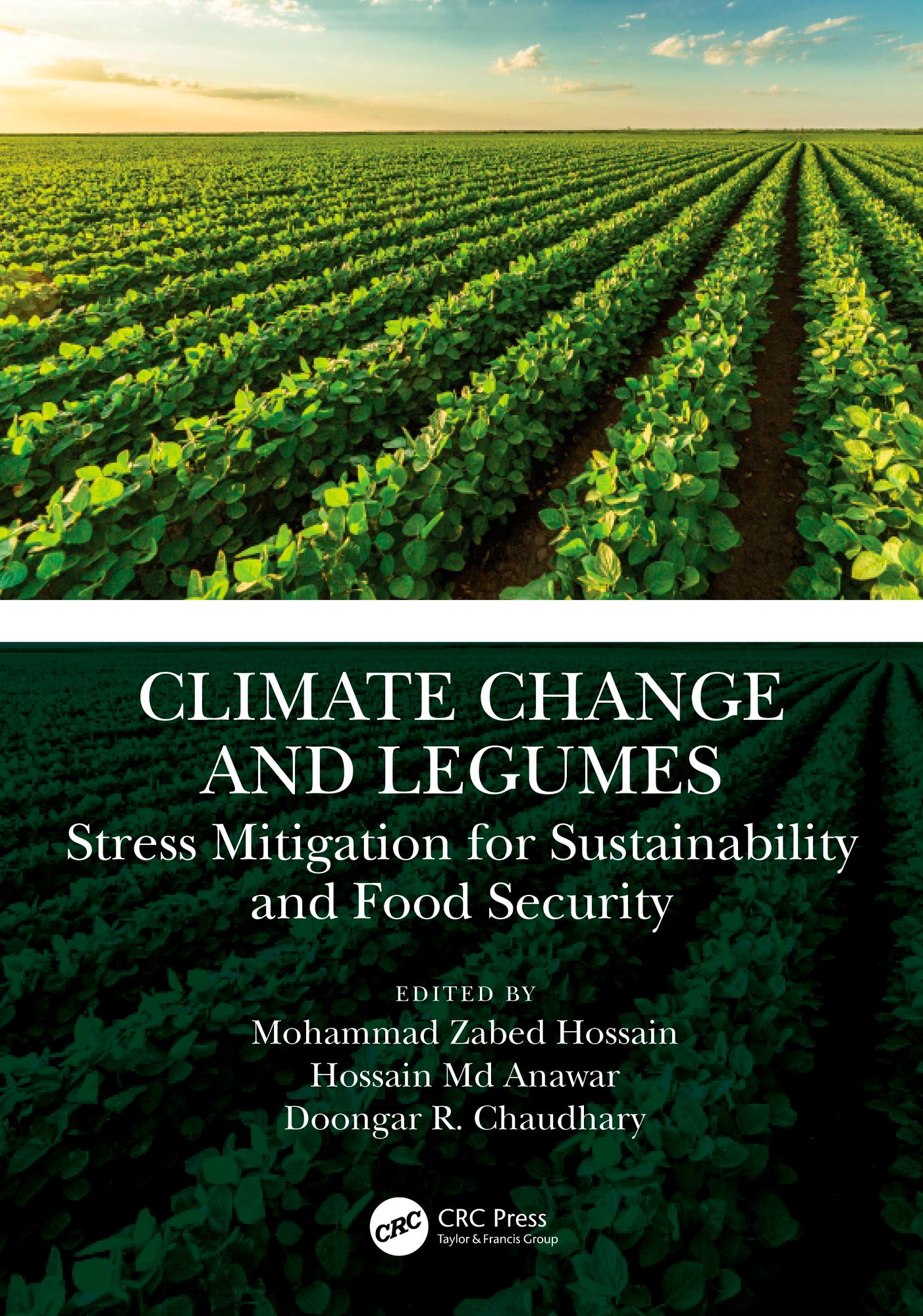
Global climate change has created unprecedented challenges for human civilization due to its widespread adverse consequences, including a reduction in crop yield and threatening food security across the globe. Among the crop plants, legumes have great potential for ameliorating global warming since they can reduce carbon emissions by lowering reliance on the application of chemical fertilizers, by increasing nitrification and carbon sequestration in soil, and by providing protein-rich diets to both humans and livestock. This book identifies the extent of climate-induced stresses on legume plants and focuses on achieving food security through sustainable agricultural practices.
This book compiles recent research findings and reviews on climate-related problems, the potential of legumes in ameliorating the impacts of climate change, as well as better management of agricultural land and practices for achieving environmental sustainability and food security.
This book will serve as guidelines for scientists, agricultural practitioners, and policymakers working to achieve food security and better management of climate-induced stresses in agricultural interventions. It will also be useful as a reference book for researchers and students of both graduate and postgraduate levels. Furthermore, this book will provide enhanced knowledge about the mechanisms of yield and stress tolerance of legumes as well as developing climate-smart crops and improving cropping systems for a sustainable environment and food security.
Features of the book
- Reviews trends of global climate change and its consequences for food security across the continents
- Identifies the challenges and scopes of cultivating legumes in achieving food security in the context of global climate change
- Focuses on the improvements of legume production through conservation approaches in agricultural practices and modern techniques, including omics-based breeding, biotechnology, genetic engineering, and rhizobium technology
- Discusses the sustainable amelioration options for soils affected by climate-induced stresses
- Cites examples of applications of rhizobium technologies in reducing greenhouse gas emission
- Describes pathways associated with yield, resistance, and tolerance of legumes to climate-induced stresses
Paga fácilmente con tarjeta, Klarna, Apple Pay o Google Pay. ¿No estás contento? Siempre tienes 14 días de garantía de devolución. Lee más en nuestros términos. Si tienes preguntas, escríbenos a hello@memmo.org.
Memmo hace que estudiar sea más fácil, estés donde estés. Aquí tienes tus libros de texto y herramientas de estudio inteligentes en un solo lugar: resúmenes, quizzes, podcasts y flashcards. Y también a Ted, tu compañero de estudio que responde a todo lo que te preguntes. Más de 50 000 estudiantes ya estudian aquí. Está hecho para que aprendas más rápido y te estreses menos.