
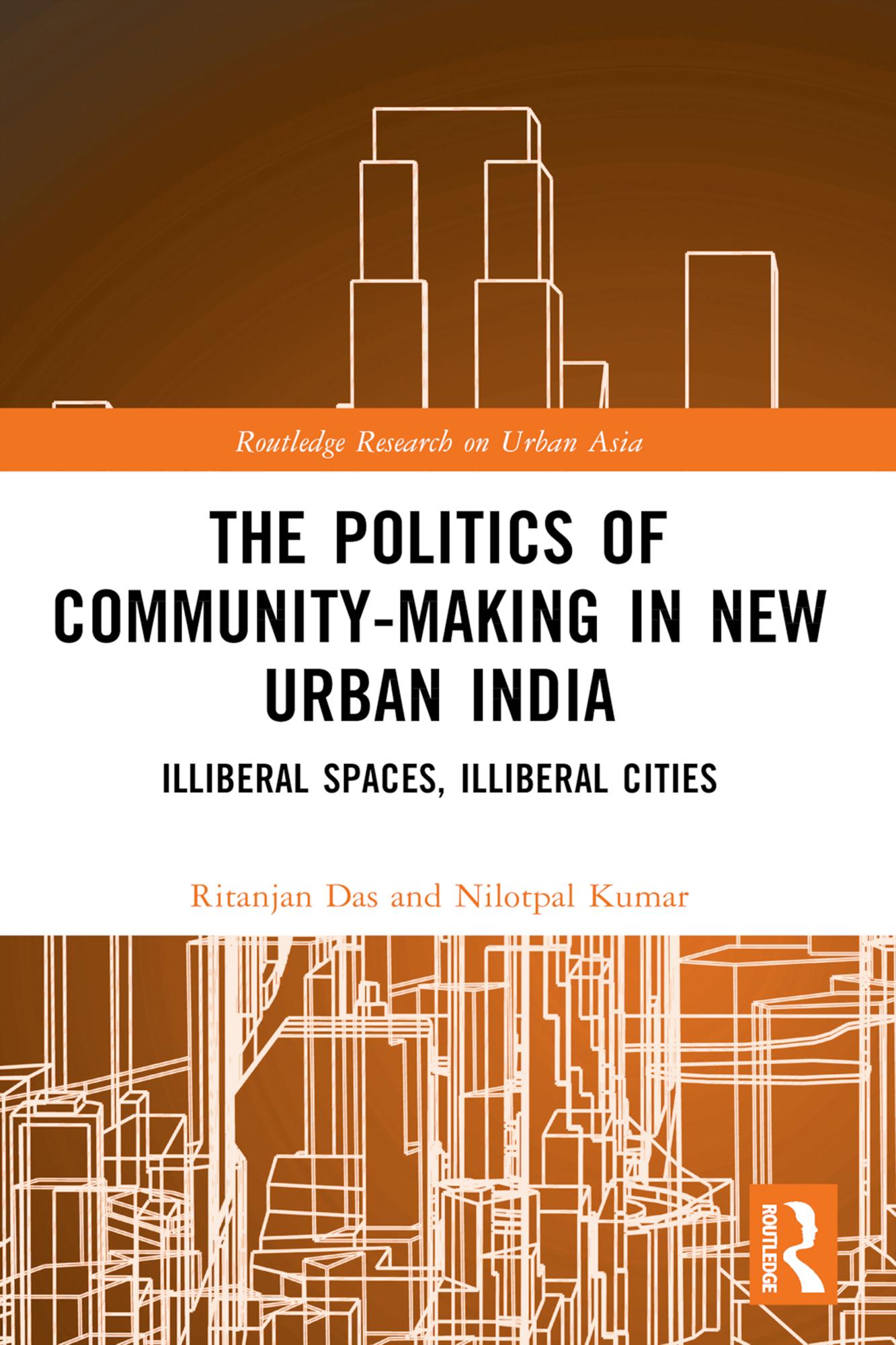
This book explores the relationship between the production of new urban spaces and illiberal community-making in contemporary India. It is based on an ethnographic study in Noida, a city at the eastern fringe of the state of Uttar Pradesh, bordering national capital Delhi.
The book demonstrates a flexible planning approach being central to the entrepreneurial turn in India’s post-liberalisation urbanisation, whereby a small-scale industrial township is transformed into a real-estate driven modern city. Its real point of departure, however, is in the argument that this turn can enable a form of illiberal community-making in new cities that are quite different from older metropolises. Exclusivist forms of solidarity and symbolic boundary construction - stemming from the differences across communities as well as their internal heterogeneities - form the crux of this process, which is examined in three distinct but often interspersed socio-spatial forms: planned middle-class residential quarters, ‘urban villages’ and migrant squatter colonies.
The book combines radical geographical conceptualisations of social production of space and neoliberal urbanism with sociological and anthropological approaches to urban community-making. It will be of interest to researchers in development studies, sociology, urban studies, as well as readers interested in society and politics of contemporary India/South Asia.
Paga fácilmente con tarjeta, Klarna, Apple Pay o Google Pay. ¿No estás contento? Siempre tienes 14 días de garantía de devolución. Lee más en nuestros términos. Si tienes preguntas, escríbenos a hello@memmo.org.
Memmo hace que estudiar sea más fácil, estés donde estés. Aquí tienes tus libros de texto y herramientas de estudio inteligentes en un solo lugar: resúmenes, quizzes, podcasts y flashcards. Y también a Ted, tu compañero de estudio que responde a todo lo que te preguntes. Más de 50 000 estudiantes ya estudian aquí. Está hecho para que aprendas más rápido y te estreses menos.