
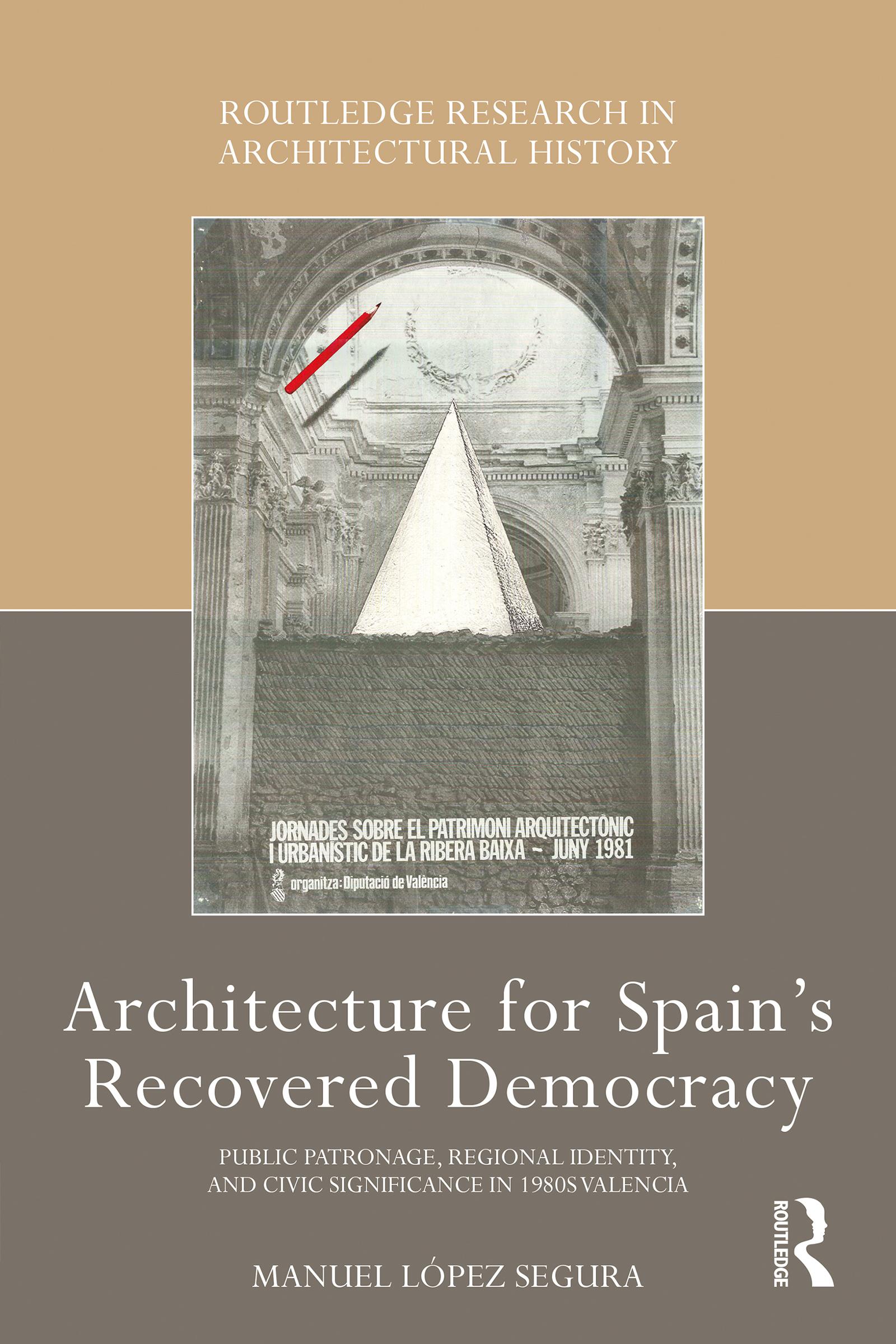
Historical studies on the involvement of architecture in twentieth-century politics have overlooked its contribution to building Spain’s democracy. This pioneering book seeks to fill that void. Between the late 1970s and early 1990s, Spain founded representative institutions, launched its welfare state, and devolved autonomy to its regions. The study brings forth the architectural incarnation of that threefold program as it deployed in the Valencian Country, a Catalan-speaking region on Spain’s Mediterranean shores. There, social democratic authorities mobilized architects, planners, and graphic artists to devise a newly open public sphere and to recover a local identity that Franco’s dictatorship had repressed for decades. The research follows the impetus of reform and its contradictions through urban projects, designs for cultural amenities, and the renovation of governmental and professional bodies. Architecture for Spain’s Recovered Democracy contributes to current debates on nationalism and the arts, the environments of democratic socialism, and postmodernism and neoliberalism. As a result, it widens our understanding of how peripheral regions may yield egalitarian architectures of resistance.
This book is written for students and researchers in architecture and planning, art history, spatial politics, and Hispanic studies, as well as for a general readership interested in inclusive politics in the built environment.
Paga fácilmente con tarjeta, Klarna, Apple Pay o Google Pay. ¿No estás contento? Siempre tienes 14 días de garantía de devolución. Lee más en nuestros términos. Si tienes preguntas, escríbenos a hello@memmo.org.
Memmo hace que estudiar sea más fácil, estés donde estés. Aquí tienes tus libros de texto y herramientas de estudio inteligentes en un solo lugar: resúmenes, quizzes, podcasts y flashcards. Y también a Ted, tu compañero de estudio que responde a todo lo que te preguntes. Más de 50 000 estudiantes ya estudian aquí. Está hecho para que aprendas más rápido y te estreses menos.