
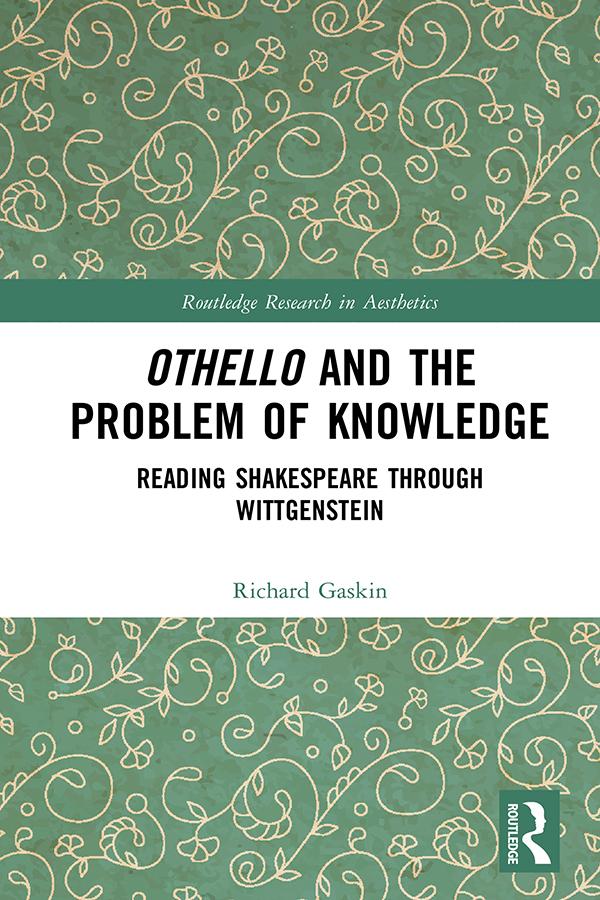
This book analyses the epistemological problems that Shakespeare explores in Othello. In particular, it uses the methods of analytic philosophy, especially the work of the later Wittgenstein, to characterize these problems and the play.
Shakespeare’s Othello is often thought to connect with traditional sceptical problems, and in particular with the problem of other minds. In this book, Richard Gaskin argues that the play does indeed connect in interesting—but also in surprising and so far relatively unexplored—ways with traditional epistemological concerns. Shakespeare presupposes a generally Wittgensteinian model of mind as revealed in behaviour, and communication as necessarily successful in general. Gaskin examines different epistemological models of the tragedy, and argues that it is useful to apply materials from Wittgenstein’s On Certainty to the analysis of Othello’s loss of confidence in Desdemona’s fidelity: Othello treats Desdemona’s fidelity as a ‘hinge certainty’, something that is so fundamental to the language-game that abandoning it results—so Wittgenstein predicts—in chaos and madness. The tragedy arises, Gaskin suggests, from treating the wrong kind of thing as a hinge certainty.
Othello and the Problem of Knowledge will appeal to scholars and advanced students interested in aesthetics, epistemology, philosophy of literature, Shakespeare, and Wittgenstein.
Paga fácilmente con tarjeta, Klarna, Apple Pay o Google Pay. ¿No estás contento? Siempre tienes 14 días de garantía de devolución. Lee más en nuestros términos. Si tienes preguntas, escríbenos a hello@memmo.org.
Memmo hace que estudiar sea más fácil, estés donde estés. Aquí tienes tus libros de texto y herramientas de estudio inteligentes en un solo lugar: resúmenes, quizzes, podcasts y flashcards. Y también a Ted, tu compañero de estudio que responde a todo lo que te preguntes. Más de 50 000 estudiantes ya estudian aquí. Está hecho para que aprendas más rápido y te estreses menos.