
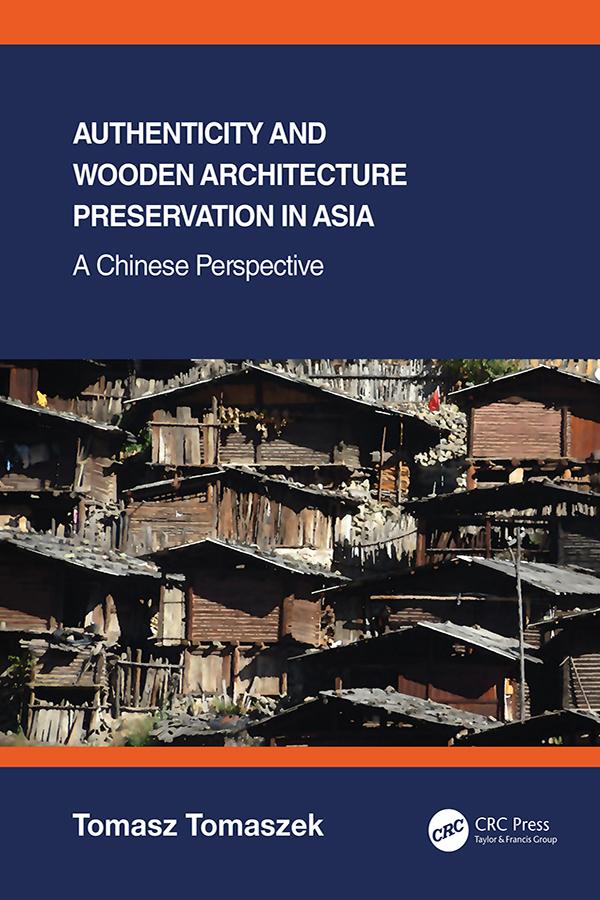
The tradition of Chinese wooden architecture dates back to ancient times. The construction solutions developed in this country over the centuries enchant with their refined character, while the historical wooden structures delight future generations with their dignity and aesthetic excellence. China`s wooden architecture, deeply rooted in its spiritual and religious traditions, is undoubtedly the pinnacle of this type of building in Asian culture. At the same time, it is a testimony to the national identity and reflects the specificity of the country`s material heritage.
The accelerated social and economic changes in China and the constantly advancing globalization of the world have contributed to this country’s assimilation of Western concepts related to the protection of cultural heritage. The issue of authenticity in the preservation of wooden built heritage proved particularly problematic. This book brings closer the theoretical understanding and practical application of the idea of authenticity from Chinese perspective. To do this, the issue of living heritage and the reception and understanding of traditional Chinese wooden architecture and its preservation as a direct materialization of Chinese religious and philosophical traditions is discussed. The above topics are treated within the cyclic concept of time, i.e. in terms of progress and repetition, with preservation being understood as a religious practice. Finally, trends in the preservation of wooden heritage in present-day China are mentioned, including new attempts to interpret the tradition and the reinvention of the tradition of wooden building.
The book aims to contribute to the understanding of the protection of wooden architectural heritage in China from a new perspective, and will be of particular interest to academics and professionals interested in or involved in the preservation of built wooden heritage.
‘(…) a highly valuable contribution to the field of wooden architecture protection and preservation’, Xiaoming Zhu (Tongji University, Shanghai, China)
This book ‘(…) successfully explains the inheritance characteristics of Chinese wooden architectures from the perspective of cultural philosophy for a wide audience (…)’, Yasufumi Uekita, University of Tsukuba, Ibaraki, Japan
Paga fácilmente con tarjeta, Klarna, Apple Pay o Google Pay. ¿No estás contento? Siempre tienes 14 días de garantía de devolución. Lee más en nuestros términos. Si tienes preguntas, escríbenos a hello@memmo.org.
Memmo hace que estudiar sea más fácil, estés donde estés. Aquí tienes tus libros de texto y herramientas de estudio inteligentes en un solo lugar: resúmenes, quizzes, podcasts y flashcards. Y también a Ted, tu compañero de estudio que responde a todo lo que te preguntes. Más de 50 000 estudiantes ya estudian aquí. Está hecho para que aprendas más rápido y te estreses menos.