
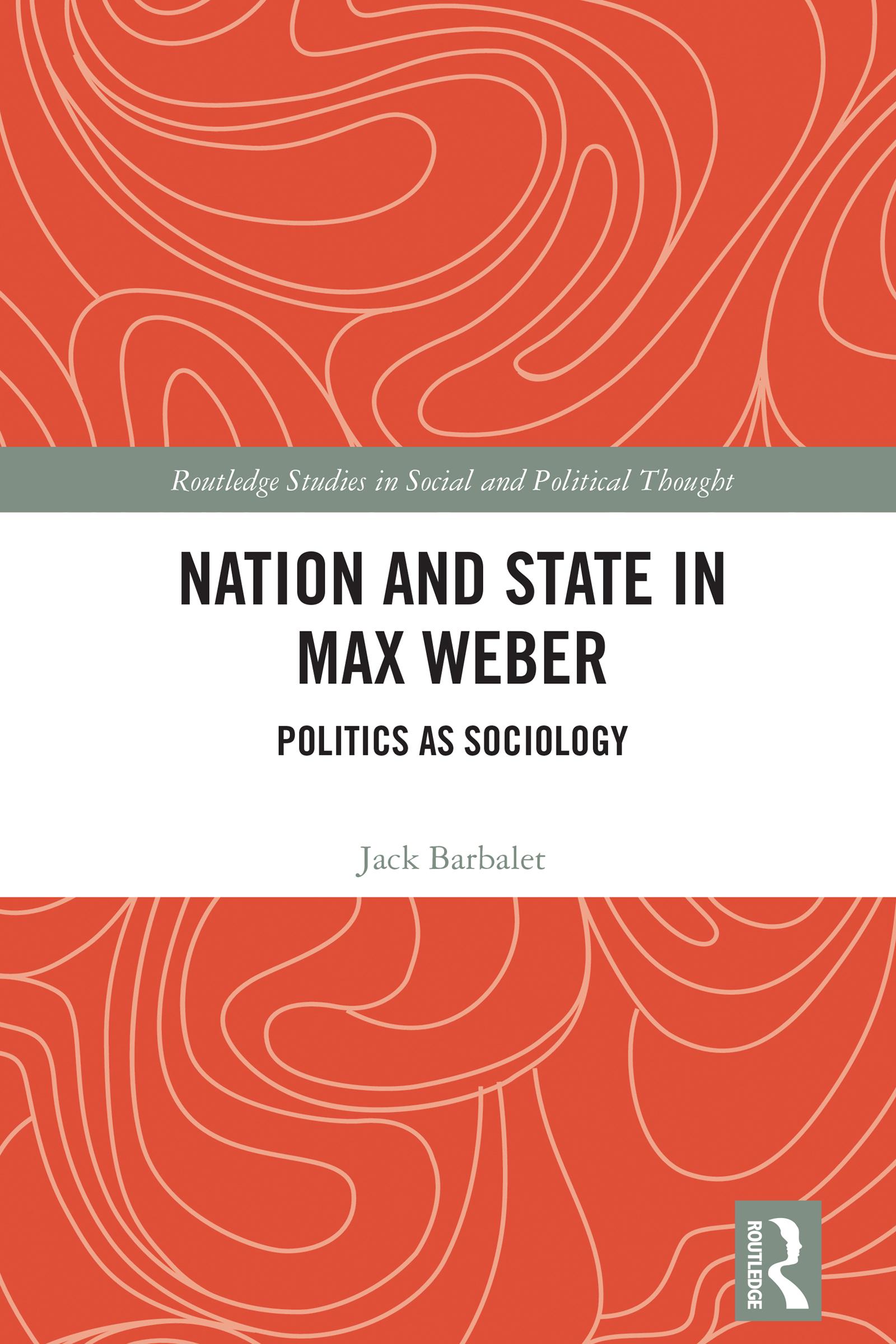
This book shows how Max Weber’s perceptions of the social and political world he inhabited in Wilhelmine Germany were characterized by a nationalist commitment which coloured practically every aspect of his thought, including his social scientific writings and the formulations they expound. Exploring the consequences of Weber’s ardent nationalism in a manner seldom acknowledged in existing scholarship, it considers the alignment of his commitment to liberalism and democracy with his devotion to the ideal of the German people as an ethno-racial community supported by a power-state, with the purpose of realizing the national interest of future generations of Germans. Through an analysis of a range of texts, the author contends that Weber’s liberalism is not based on universalistic principles and that Weber considered the liberty he espoused to play an important role in securing the position of a political elite trained in parliamentary institutions, which are used to shape the citizenry in the pursuit of a patriotic commitment to an expansionist, imperial state. It will therefore appeal to scholars with interests in the history of sociology and classical social theory.
Paga fácilmente con tarjeta, Klarna, Apple Pay o Google Pay. ¿No estás contento? Siempre tienes 14 días de garantía de devolución. Lee más en nuestros términos. Si tienes preguntas, escríbenos a hello@memmo.org.
Memmo hace que estudiar sea más fácil, estés donde estés. Aquí tienes tus libros de texto y herramientas de estudio inteligentes en un solo lugar: resúmenes, quizzes, podcasts y flashcards. Y también a Ted, tu compañero de estudio que responde a todo lo que te preguntes. Más de 50 000 estudiantes ya estudian aquí. Está hecho para que aprendas más rápido y te estreses menos.