
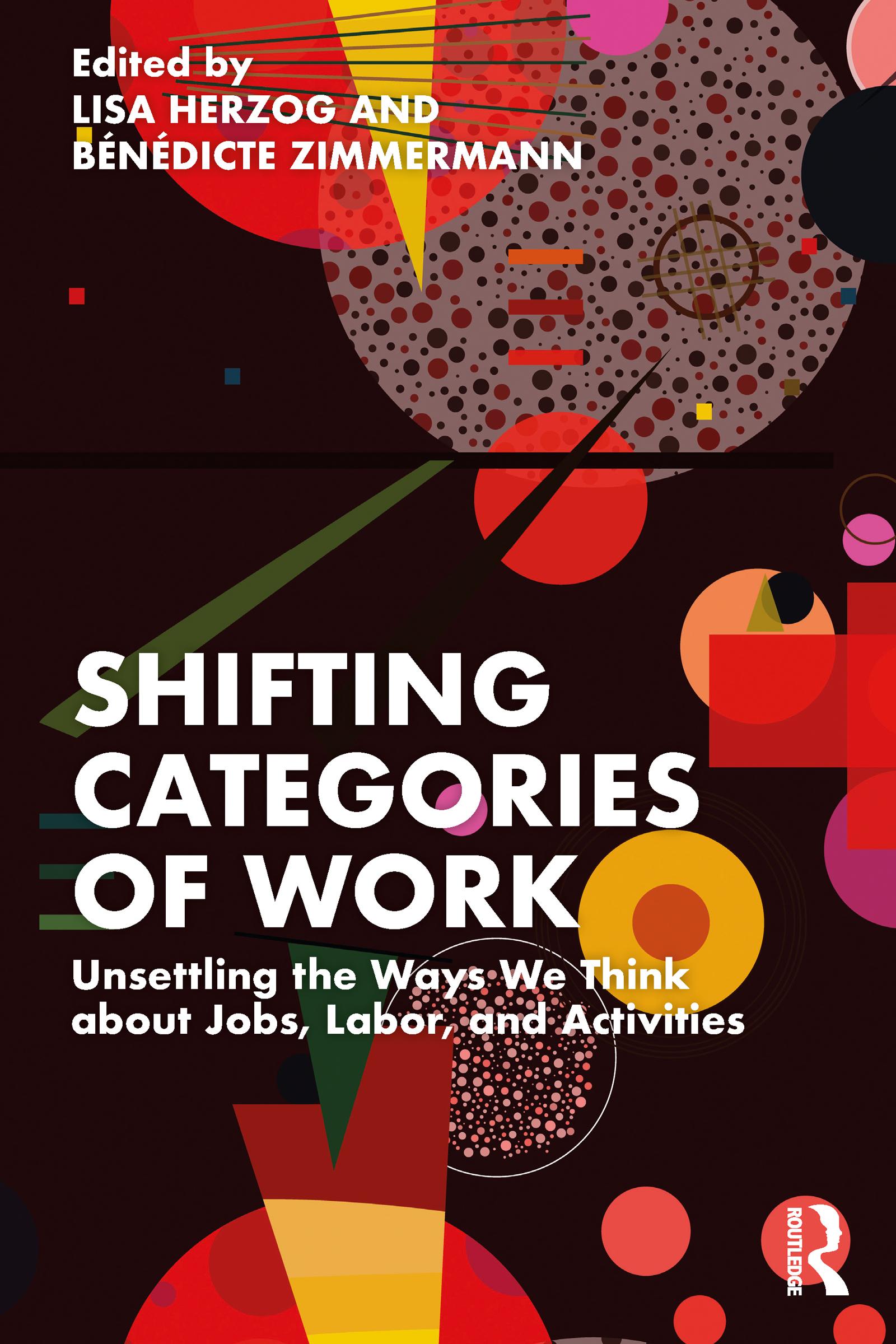
What do human beings do when they work, how is work organized, and what are its multidimensional – economic, social, political, biographical, ecological – effects? We cannot answer these questions without drawing on the numerous categories that we use to describe work, such as "skilled" or "unskilled" work, "domestic work" or "wage labor," "gig work" or "platform work." Such categories are not merely theoretical labels as they also have practical effects. But where do these categories come from, what are their histories, how do they differ between countries, and how are they evolving? Shifting Categories of Work asks these questions, illuminating the many ways in which our societies categorize work. Written by sociologists, philosophers, historians and anthropologists as well as management and legal scholars, the contributions in this volume contrast different cultural practices and frameworks of categorizing work across different countries.
Organized around the three axes of (un)organized work, (in)visible work and (in)valuable work, this book shows how ways of categorizing work express, but also recreate, lines of privilege and disadvantage – challenging our preconceived notions of what work is and what it could be, as it invites us to rethink the categories we use for understanding the work we do, and hence, to some extent, ourselves.
Paga fácilmente con tarjeta, Klarna, Apple Pay o Google Pay. ¿No estás contento? Siempre tienes 14 días de garantía de devolución. Lee más en nuestros términos. Si tienes preguntas, escríbenos a hello@memmo.org.
Memmo hace que estudiar sea más fácil, estés donde estés. Aquí tienes tus libros de texto y herramientas de estudio inteligentes en un solo lugar: resúmenes, quizzes, podcasts y flashcards. Y también a Ted, tu compañero de estudio que responde a todo lo que te preguntes. Más de 50 000 estudiantes ya estudian aquí. Está hecho para que aprendas más rápido y te estreses menos.