
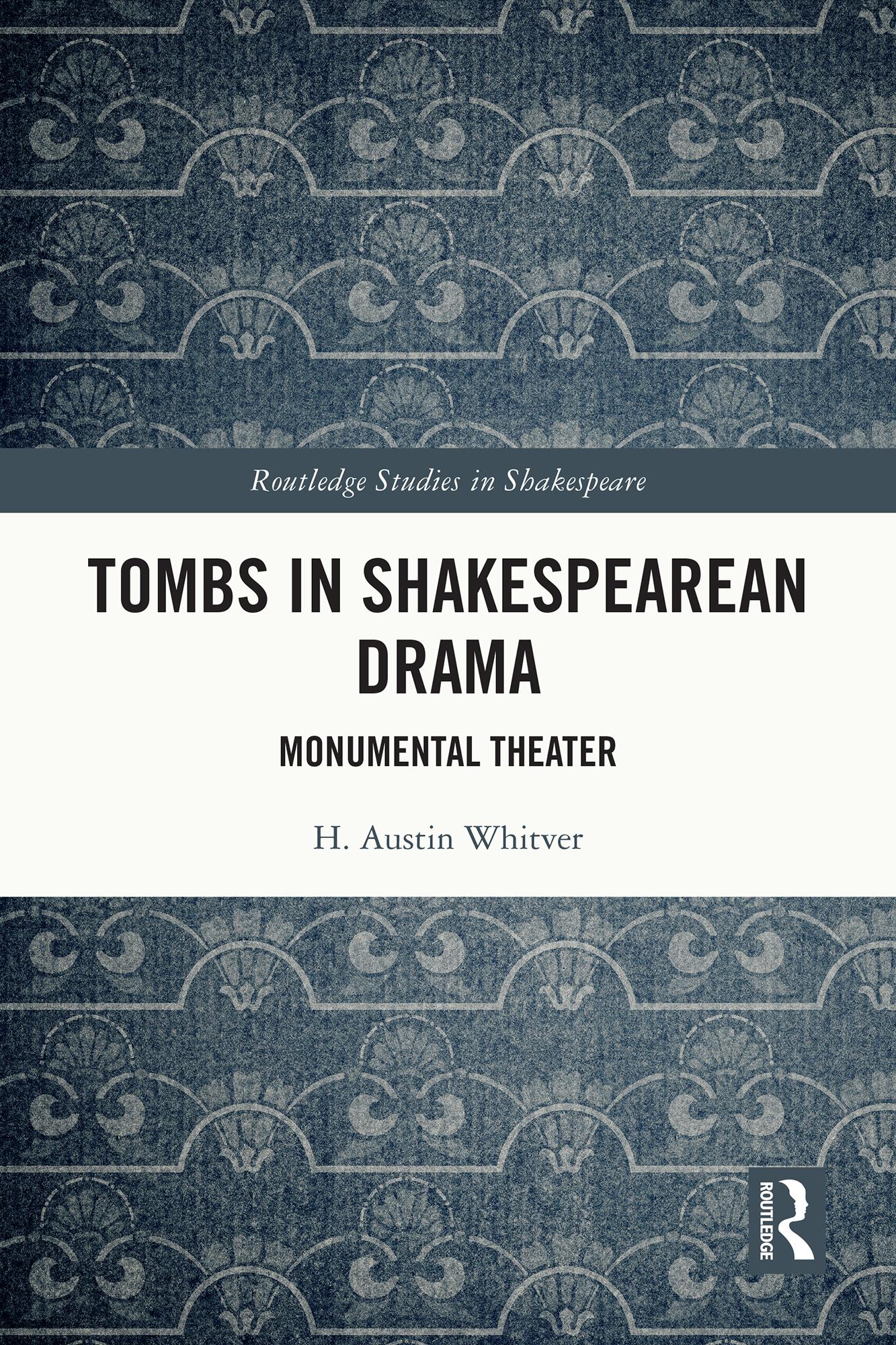
Tombs in Shakespearean Drama explores the rhetorical deployment of tombs and monuments on the early modern stage, demonstrating their historiographic power and mythmaking potential. By analyzing references to tombs in plays by Shakespeare and others in conjunction with extant monuments, this volume demonstrates how these references function in two overlapping ways in period drama: monuments act as repositories of information about the past, and they allow the living to construct and preserve fictive narratives.
The stage exposes the flimsy materiality of paper, placing less value on the written word than period poetry. In this way, critics have perhaps oversold as universal Shakespeare’s poetic praise of stone. Tombs within plays act as a powerful historical and narrative medium, raising the stakes to provide the stage with the illusion of permanency. Playwrights use tombs to anchor the stage action, giving a sense of lasting importance to dramatic events and combatting the ephemeral nature of the playhouse. In drama, Shakespeare and others drew on the persona preserved on tombs; this volume widens our view of how these representations interacted in the commemorative economy of early modern England. Within the playhouse, it was the tomb, not the tome, that stood as a symbol of permanence.
Paga fácilmente con tarjeta, Klarna, Apple Pay o Google Pay. ¿No estás contento? Siempre tienes 14 días de garantía de devolución. Lee más en nuestros términos. Si tienes preguntas, escríbenos a hello@memmo.org.
Memmo hace que estudiar sea más fácil, estés donde estés. Aquí tienes tus libros de texto y herramientas de estudio inteligentes en un solo lugar: resúmenes, quizzes, podcasts y flashcards. Y también a Ted, tu compañero de estudio que responde a todo lo que te preguntes. Más de 50 000 estudiantes ya estudian aquí. Está hecho para que aprendas más rápido y te estreses menos.