
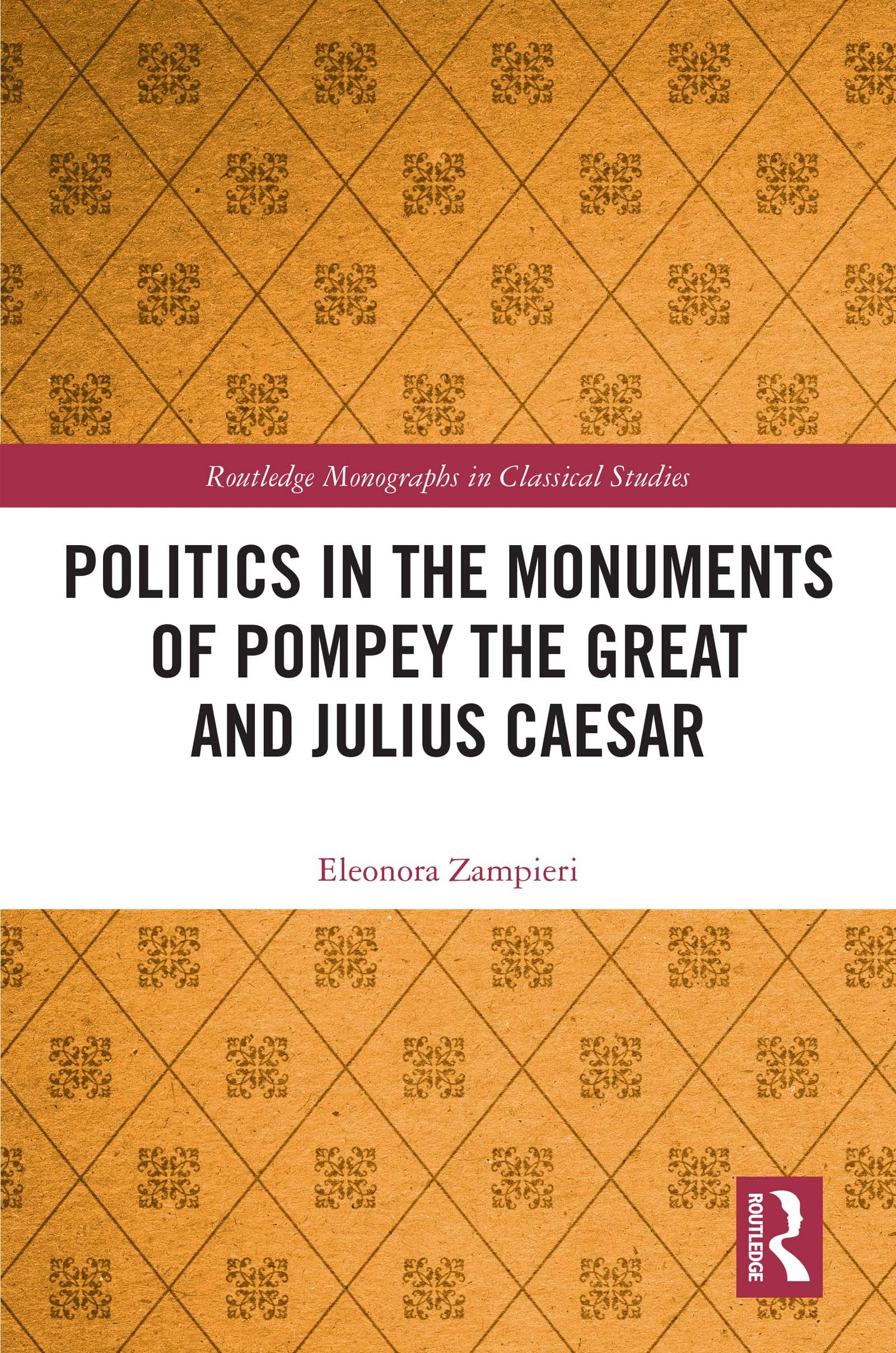
This book explores the diachronic development of the ideological content of Pompey and Caesar’s monuments in Rome, emphasising the importance of the late Republican period as a precursor to imperial propaganda through architecture.
In the final years of the Roman Republic, individuals such as Pompey the Great and Julius Caesar exploited the communicative power of architecture. The former promoted the first and largest stone theatre in Rome; the latter started comprehensive town-planning projects that arguably verged on the utopian. Yet the study of the politics expressed by these monuments and how complex late Republican politics shaped the monuments themselves has attracted less attention than that of subsequent imperial architecture. Zampieri addresses this imbalance, exploring the ideological meaning of late Republican monuments and highlighting that monuments were fluid, adaptable entities, even in the lifespan of a single individual. Accompanied by detailed maps and images, this volume shows how late Republican architecture should be considered an important source for understanding politics of this period.
Politics in the Monuments of Pompey the Great and Julius Caesar will be of use to anyone working on the politics and social world of the late Roman Republic, and on Roman architecture and patronage.
Paga fácilmente con tarjeta, Klarna, Apple Pay o Google Pay. ¿No estás contento? Siempre tienes 14 días de garantía de devolución. Lee más en nuestros términos. Si tienes preguntas, escríbenos a hello@memmo.org.
Memmo hace que estudiar sea más fácil, estés donde estés. Aquí tienes tus libros de texto y herramientas de estudio inteligentes en un solo lugar: resúmenes, quizzes, podcasts y flashcards. Y también a Ted, tu compañero de estudio que responde a todo lo que te preguntes. Más de 50 000 estudiantes ya estudian aquí. Está hecho para que aprendas más rápido y te estreses menos.