
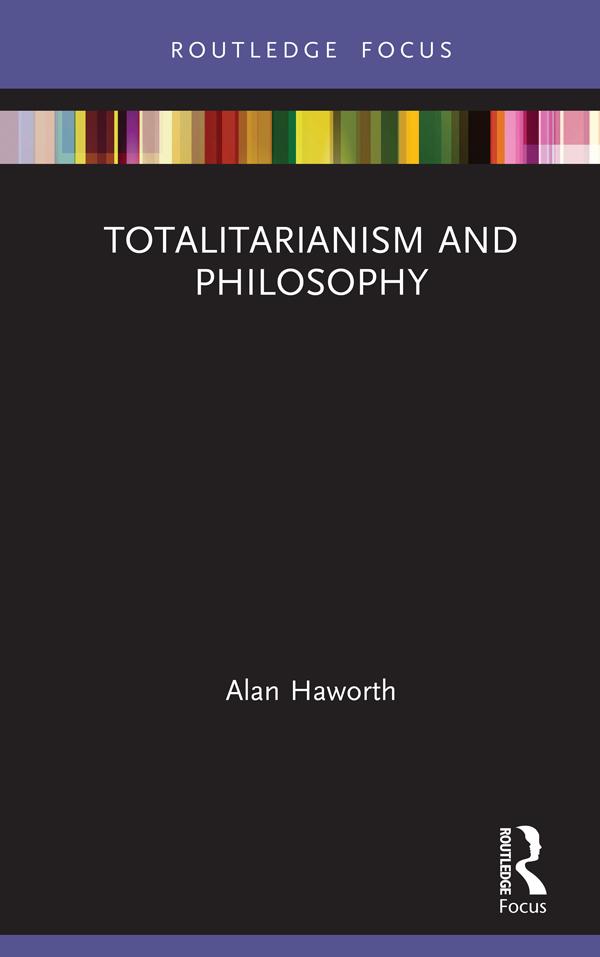
When Mussolini, Hitler and Stalin first came to power in the 1930s, their regimes were considered by many to represent a new and perplexing phenomenon. They were labelled ‘totalitarian’. But is ‘totalitarianism’ genuinely new, or is the word just another name for something old and familiar, namely tyranny?
This is the first question to be addressed by Alan Haworth in this book, which explores the relevance of philosophy to the understanding of totalitarianism. In the course of the discussion, definitions are tested. Is it coherent to think of totalitarianism as the imposition of a ‘total state’, or of ‘total control’? Could it even be that the idea of totalitarianism is a ‘non-concept’?
Examining the work of the totalitarian philosophers Giovanni Gentile and Carl Schmitt, the idea of ‘totalitarianism by other means’ as represented in dystopian fiction, and the philosophy of Hannah Arendt, Totalitarianism and Philosophy is essential reading for all students and scholars of political philosophy.
Paga fácilmente con tarjeta, Klarna, Apple Pay o Google Pay. ¿No estás contento? Siempre tienes 14 días de garantía de devolución. Lee más en nuestros términos. Si tienes preguntas, escríbenos a hello@memmo.org.
Memmo hace que estudiar sea más fácil, estés donde estés. Aquí tienes tus libros de texto y herramientas de estudio inteligentes en un solo lugar: resúmenes, quizzes, podcasts y flashcards. Y también a Ted, tu compañero de estudio que responde a todo lo que te preguntes. Más de 50 000 estudiantes ya estudian aquí. Está hecho para que aprendas más rápido y te estreses menos.