
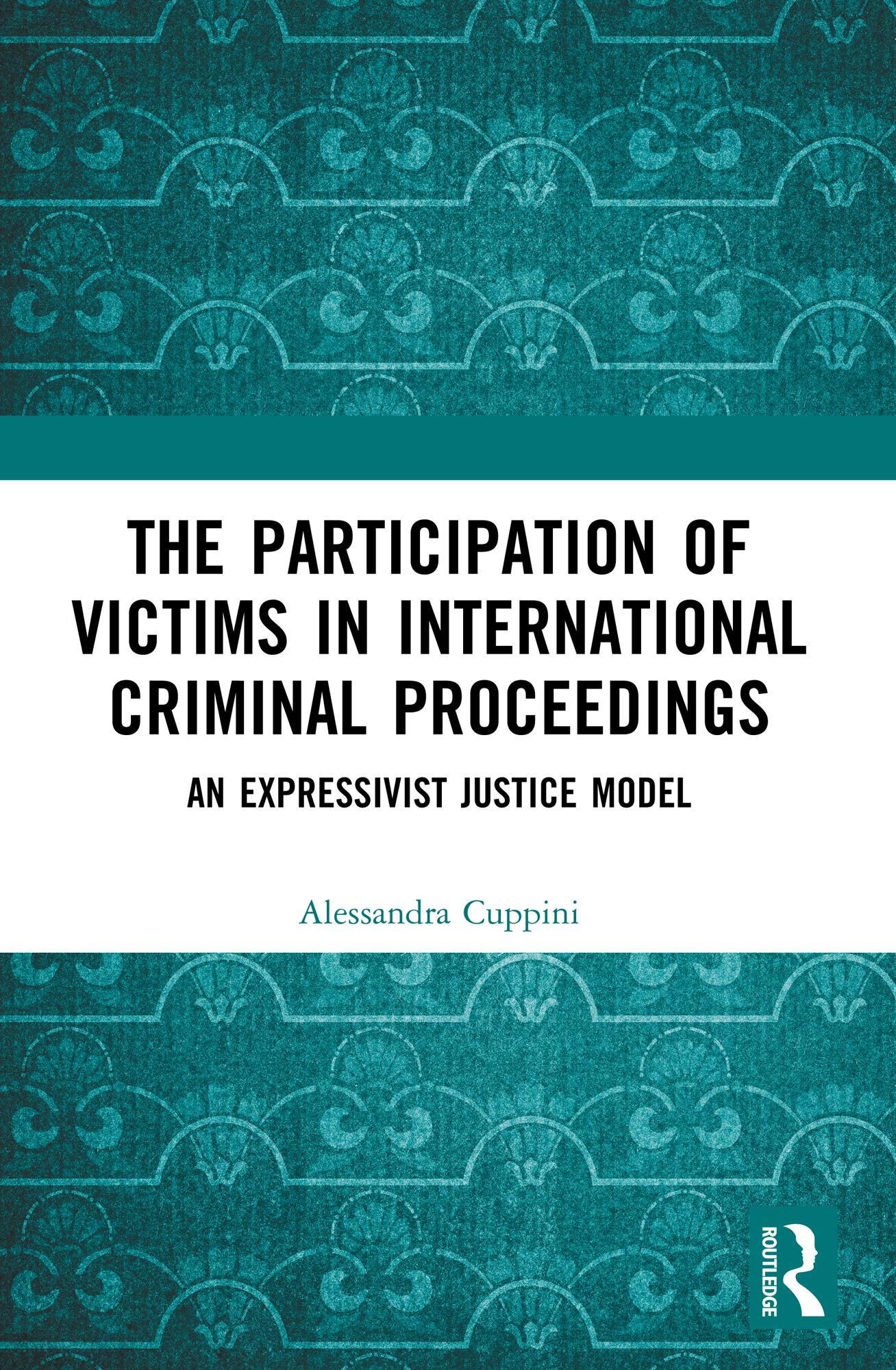
This book argues that the expressivist justice model provides a meaningful foundation for the participation of victims in international criminal proceedings.
Traditional criminal justice theories have tended to marginalise the role afforded to victims while informing the criminal procedures utilised by international criminal courts. As a result, giving content to, shaping, and enhancing victims’ participatory rights have been some of the most debated issues in international criminal justice. This book contributes to this debate by advancing expressivism, which has the capacity to create a historical narrative of gross human rights violations, as a core of international criminal justice able to provide a worthwhile basis for the participation of victims in proceedings and clarifying the scope and content of their participatory rights. The work provides an in-depth discussion on issues related to victims’ participatory rights from the perspective of international human rights law, victimology, and the philosophical foundation of international criminal justice.
The book will be a valuable resource for researchers, academics, and policymakers working in the areas of international criminal justice, international human rights law, transitional justice, and conflict studies.
Paga fácilmente con tarjeta, Klarna, Apple Pay o Google Pay. ¿No estás contento? Siempre tienes 14 días de garantía de devolución. Lee más en nuestros términos. Si tienes preguntas, escríbenos a hello@memmo.org.
Memmo hace que estudiar sea más fácil, estés donde estés. Aquí tienes tus libros de texto y herramientas de estudio inteligentes en un solo lugar: resúmenes, quizzes, podcasts y flashcards. Y también a Ted, tu compañero de estudio que responde a todo lo que te preguntes. Más de 50 000 estudiantes ya estudian aquí. Está hecho para que aprendas más rápido y te estreses menos.