
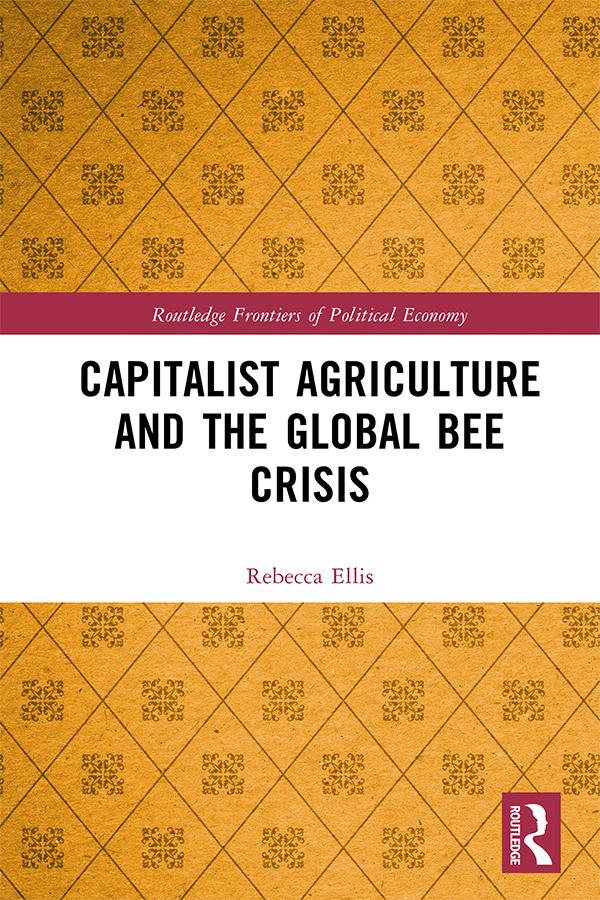
Capitalist agriculture relies heavily on the pollination work of bees, but this system harms bees in innumerable ways. Indeed, human agriculture is one of the main culprits for the declining populations of wild bees and the declining health of honeybees. This book presents a political ecology of pollination that critically examines how managed honey bees and wild bees are harmed by capitalist agriculture.
The book focuses on the three most urgent problems: the standardization and simplification of landscapes through monocultures; the use of pesticides including neonicotinoids, other insecticides, herbicides, and fungicides; and the embeddedness of commercial, migratory beekeeping in the capitalist agriculture system which, among other things, has the potential to spread pests and pathogens across continents. At the heart of this crisis is the power and influence that a small group of agrochemical corporations have over national and international agricultural policy. The book argues for an interspecies alliance of small-scale farmers, bee advocates, beekeepers, environmentalists, and bees themselves, along with a vision for an agricultural system that nurtures multispecies flourishing.
This book will be of significant interest to readers of political ecology, animal geography, environmental anthropology, food system studies, and critical animal studies.
Paga fácilmente con tarjeta, Klarna, Apple Pay o Google Pay. ¿No estás contento? Siempre tienes 14 días de garantía de devolución. Lee más en nuestros términos. Si tienes preguntas, escríbenos a hello@memmo.org.
Memmo hace que estudiar sea más fácil, estés donde estés. Aquí tienes tus libros de texto y herramientas de estudio inteligentes en un solo lugar: resúmenes, quizzes, podcasts y flashcards. Y también a Ted, tu compañero de estudio que responde a todo lo que te preguntes. Más de 50 000 estudiantes ya estudian aquí. Está hecho para que aprendas más rápido y te estreses menos.