
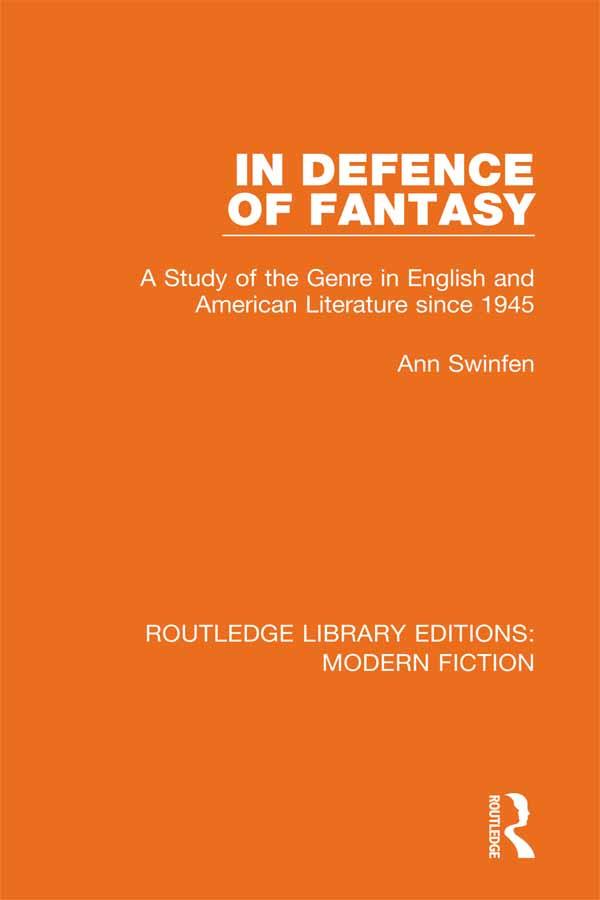
The modern fantasy novel might hardly seem to need a defence, but its position in contemporary literature in the 1980s was still rather ambivalent. Many post-war writers had produced highly successful fantasy novels, some phenomenal publishing successes had occurred in the field, and an increasing number of universities throughout the English-speaking world now included the literary criticism of fantasy as part of their English Literature courses. None the less some critics and academics condemned the whole genre with a passion that seemed less than objectively critical.
In this book, originally published in 1984, Dr Ann Swinfen presents a wide-ranging and comprehensive view of fantasy: what it is, what it tries to achieve, what fundamental differences distinguish it from mainstream realist fiction. She concentrates on the three decades from 1945, when a new generation of writers found that Tolkein had made fantasy ‘respectable’. Her approach is thematic, rather than by individual author, and she brings out the profound moral purpose that underlies much modern fantasy, in a wide range of works, both British and American, such as Russell Hoban’s The Mouse and His Child, C.S. Lewis’s Chronicles of Narnia and Ursula Le Guin’s Earthsea Trilogy.
Paga fácilmente con tarjeta, Klarna, Apple Pay o Google Pay. ¿No estás contento? Siempre tienes 14 días de garantía de devolución. Lee más en nuestros términos. Si tienes preguntas, escríbenos a hello@memmo.org.
Memmo hace que estudiar sea más fácil, estés donde estés. Aquí tienes tus libros de texto y herramientas de estudio inteligentes en un solo lugar: resúmenes, quizzes, podcasts y flashcards. Y también a Ted, tu compañero de estudio que responde a todo lo que te preguntes. Más de 50 000 estudiantes ya estudian aquí. Está hecho para que aprendas más rápido y te estreses menos.