
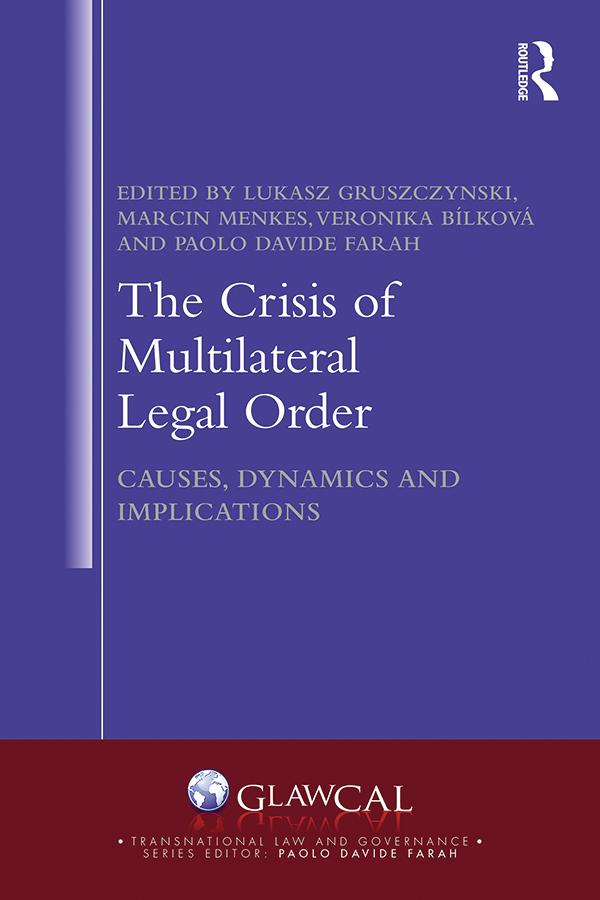
Multilateralism has served as a foundation for international cooperation over the past several decades. Championed after the Second World War by the United States and Western Europe, it expanded into a broader global system of governance with the end of the Cold War. Lately, an increasing number of States appear to be disappointed with the existing multilateral arrangements, both at the level of norms and that of institutions. The great powers see unilateral and bilateral strategies, which maximize their political leverage rather than diluting it in multilateral fora, as more effective ways for controlling the course of international affairs.
The signs of the crisis have been visible for some time – but recent crises indicate an acceleration of the on-going disintegration of the multilateral system, such as Brexit, growing resistance on the part of States to international monitoring of compliance and the radical change in the US foreign policy during the presidency of Donald Trump which saw the US withdraw from several multilateral agreements (e.g. the Iran Nuclear Deal and the Paris Agreement), leave some international organizations or bodies (e.g. the United Nations Human Rights Council or the World Health Organization) or paralyze some others (e.g. the World Trade Organization (WTO)).
Tackling the debate surrounding the crisis of multilateralism and the related transformation of the underlying international legal order, The Crisis of Multilateral Legal Order analyzes selected aspects of the current crisis from the perspective of public international law to identify the nature of the crisis, its dynamics, and implications.
Paga fácilmente con tarjeta, Klarna, Apple Pay o Google Pay. ¿No estás contento? Siempre tienes 14 días de garantía de devolución. Lee más en nuestros términos. Si tienes preguntas, escríbenos a hello@memmo.org.
Memmo hace que estudiar sea más fácil, estés donde estés. Aquí tienes tus libros de texto y herramientas de estudio inteligentes en un solo lugar: resúmenes, quizzes, podcasts y flashcards. Y también a Ted, tu compañero de estudio que responde a todo lo que te preguntes. Más de 50 000 estudiantes ya estudian aquí. Está hecho para que aprendas más rápido y te estreses menos.