
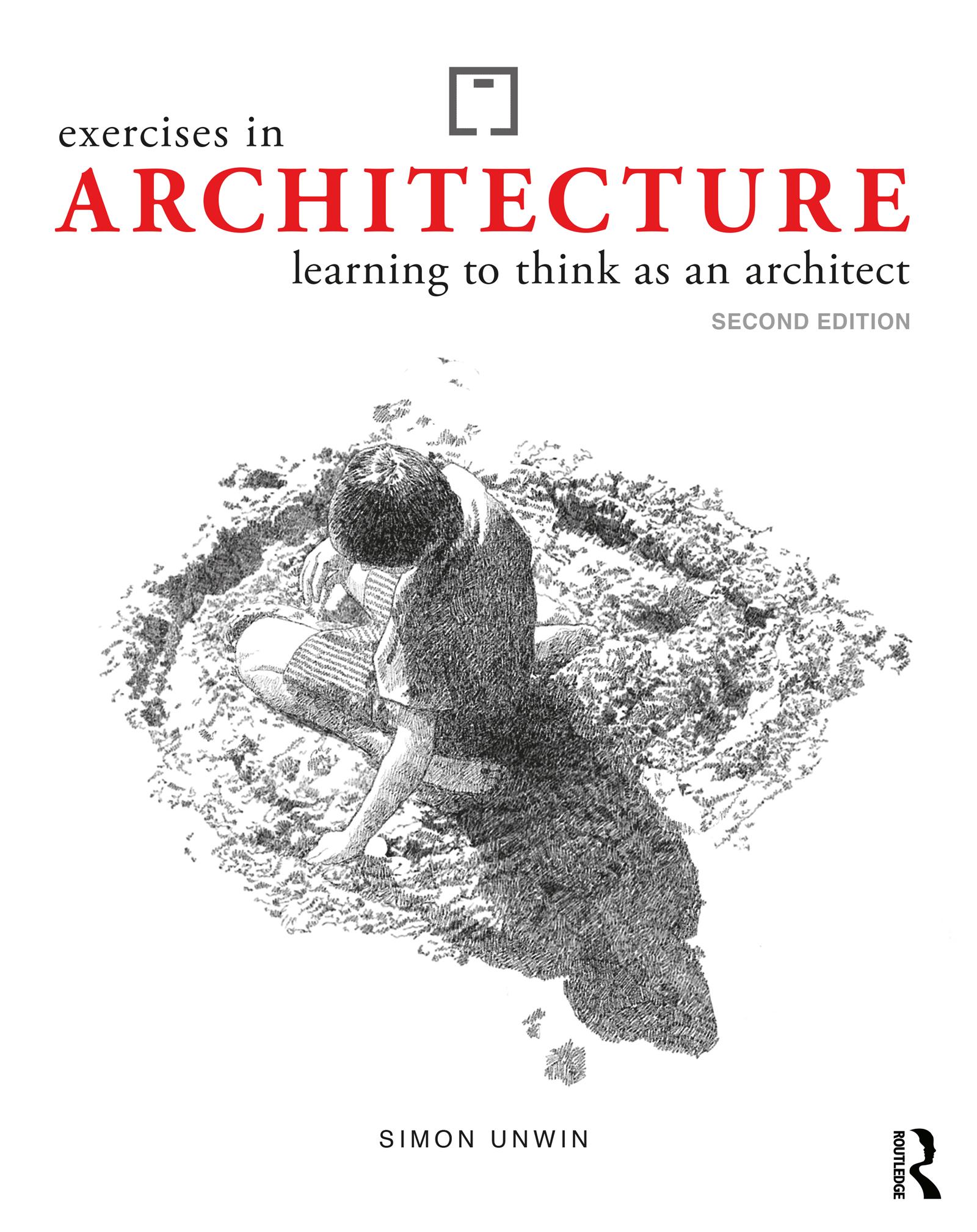
This revised edition of Exercises in Architecture: Learning to Think as an Architect is full of new content, building on the success of the previous edition. All the original exercises have been revised and new ones added, with the format changing to allow the inclusion of more supplementary material. The aim remains the same, to help pre- or early-course architecture students begin and develop their ability to think as architects.
Learning to do architecture is tricky. It involves awakening abilities that remain dormant in most people. It is like learning language for the first time; a task made more mystifying by the fact that architecture deals not in words but in places: places to stand, to walk, to sit, to hide, to sleep, to cook, to eat, to work, to play, to worship…
This book was written for those who want to be architects. It suggests a basis for early experiences in a school of architecture; but it could also be used in secondary schools and colleges, or as self-directed preparation for students in the months before entering professional education.
Exercises in Architecture builds on and supplements the methodology for architectural analysis presented in the author’s previous book Analysing Architecture: the Universal Language of Place-Making (fifth edition, 2021) and demonstrated in his Twenty-Five Buildings Every Architect Should Understand (Routledge, 2015). Together, the three books, deal with the three aspects of learning any creative discipline: 1. Analysing Architecture provides a methodology for analysis that develops an understanding of the way architecture works; 2. Twenty-Five Buildings explores and extends that methodology through analysis of examples as case studies; and 3. Exercises in Architecture offers a way of expanding understanding and developing fluency by following a range of rudimentary and more sophisticated exercises.
Those who wish to become professional architects (wherever in the world they might be) must make a conscious effort to learn the universal language of architecture as place-making, to explore its powers and how they might be used. The exercises in this book are designed to help.
Paga fácilmente con tarjeta, Klarna, Apple Pay o Google Pay. ¿No estás contento? Siempre tienes 14 días de garantía de devolución. Lee más en nuestros términos. Si tienes preguntas, escríbenos a hello@memmo.org.
Memmo hace que estudiar sea más fácil, estés donde estés. Aquí tienes tus libros de texto y herramientas de estudio inteligentes en un solo lugar: resúmenes, quizzes, podcasts y flashcards. Y también a Ted, tu compañero de estudio que responde a todo lo que te preguntes. Más de 50 000 estudiantes ya estudian aquí. Está hecho para que aprendas más rápido y te estreses menos.