
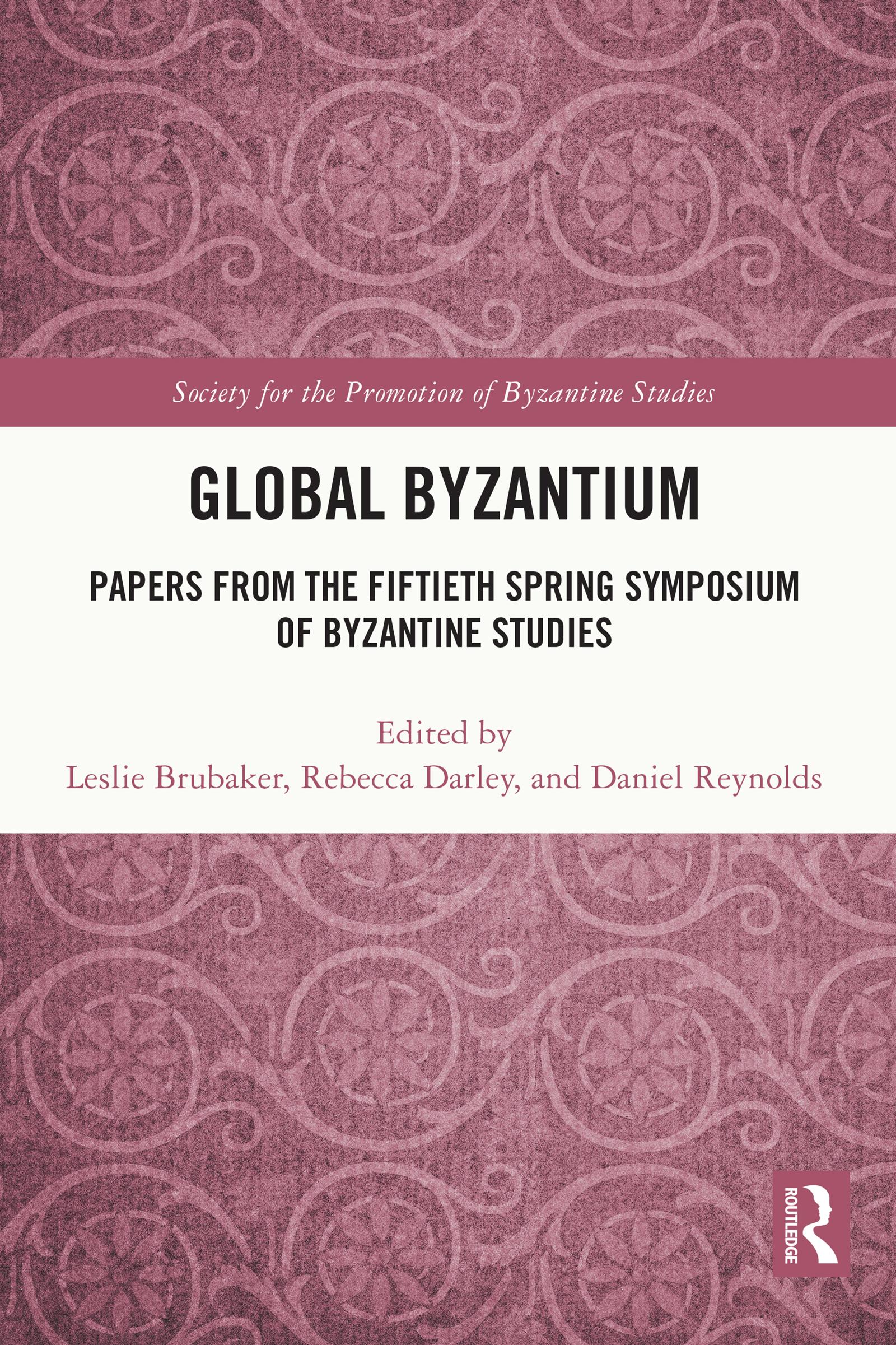
Global Byzantium is, in part, a recasting and expansion of the old ‘Byzantium and its neighbours’ theme with, however, a methodological twist away from the resolutely political and toward the cultural and economic. A second thing that Global Byzantium – as a concept – explicitly endorses is comparative methodology. Global Byzantium needs also to address three further issues: cultural capital, the importance of the local, and the empire’s strategic geographical location. Cultural capital: in past decades it was fashionable to define Byzantium as culturally superior to western Christian Europe, and Byzantine influence was a key concept, especially in art historical circles. This concept has been increasingly criticised, and what we now see emerging is a comparative methodology that relies on the concept of ‘competitive sharing’, not blind copying but rather competitive appropriation. The importance of the local is equally critical. We need to talk more about what the Byzantines saw when they ‘looked out’, and what others saw in Byzantium when they ‘looked in’ and to think about how that impacted on our, very post-modern, concepts of globalism. Finally, we need to think about the empire’s strategic geographical position: between the fourth and the thirteenth centuries, if anyone was travelling internationally, they had to travel across (or along the coasts of) the Byzantine Empire. Byzantium was thus a crucial intermediary, for good or for ill, between Europe, Africa, and Asia – effectively, the glue that held the Christian world together, and it was also a critical transit point between the various Islamic polities and the Christian world.
Paga fácilmente con tarjeta, Klarna, Apple Pay o Google Pay. ¿No estás contento? Siempre tienes 14 días de garantía de devolución. Lee más en nuestros términos. Si tienes preguntas, escríbenos a hello@memmo.org.
Memmo hace que estudiar sea más fácil, estés donde estés. Aquí tienes tus libros de texto y herramientas de estudio inteligentes en un solo lugar: resúmenes, quizzes, podcasts y flashcards. Y también a Ted, tu compañero de estudio que responde a todo lo que te preguntes. Más de 50 000 estudiantes ya estudian aquí. Está hecho para que aprendas más rápido y te estreses menos.