
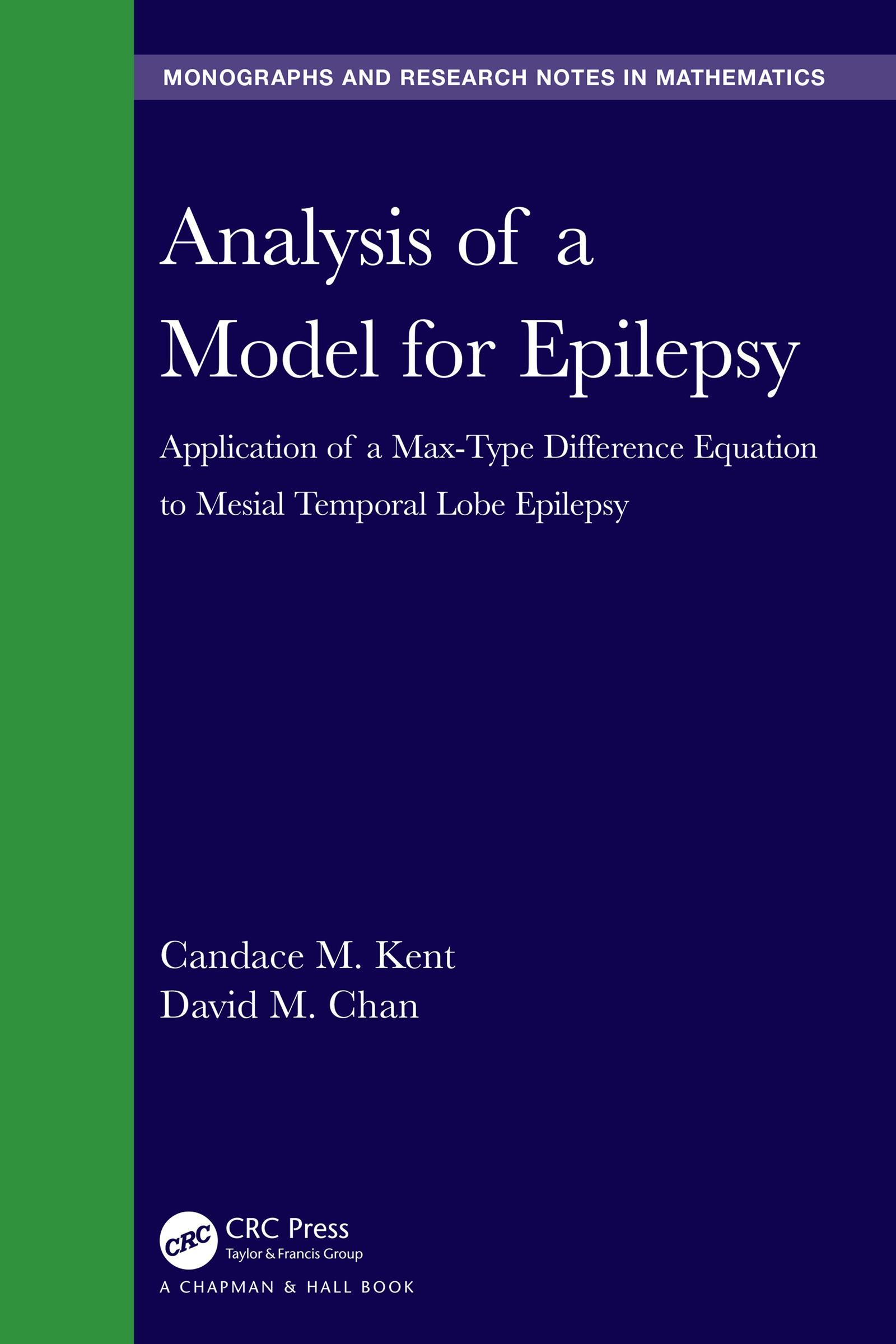
In the 1960s and 1970s, mathematical biologists Sir Robert M. May, E.C. Pielou, and others utilized difference equations as models of ecological and epidemiological phenomena. Since then, with or without applications, the mathematics of difference equations has evolved into a field unto itself. Difference equations with the maximum (or the minimum or the "rank-type") function were rigorously investigated from the mid-1990s into the 2000s, without any applications in mind. These equations often involved arguments varying from reciprocal terms with parameters in the numerators to other special functions.
Recently, the authors of Analysis of a Model for Epilepsy: Application of a Max-Type Difference Equation to Mesial Temporal Lobe Epilepsy and their colleagues investigated the first known application of a "max-type" difference equation. Their equation is a phenomenological model of epileptic seizures. In this book, the authors expand on that research and present a more comprehensive development of mathematical, numerical, and biological results. Additionally, they describe the first documented instance of a novel dynamical behavior that they call rippled almost periodic behavior, which can be described as an unpredictable pseudo-periodic behavior.
Features:
- Suitable for researchers in mathematical neuroscience and potentially as supplementary reading for postgraduate students
- Thoroughly researched and replete with references
Paga fácilmente con tarjeta, Klarna, Apple Pay o Google Pay. ¿No estás contento? Siempre tienes 14 días de garantía de devolución. Lee más en nuestros términos. Si tienes preguntas, escríbenos a hello@memmo.org.
Memmo hace que estudiar sea más fácil, estés donde estés. Aquí tienes tus libros de texto y herramientas de estudio inteligentes en un solo lugar: resúmenes, quizzes, podcasts y flashcards. Y también a Ted, tu compañero de estudio que responde a todo lo que te preguntes. Más de 50 000 estudiantes ya estudian aquí. Está hecho para que aprendas más rápido y te estreses menos.