
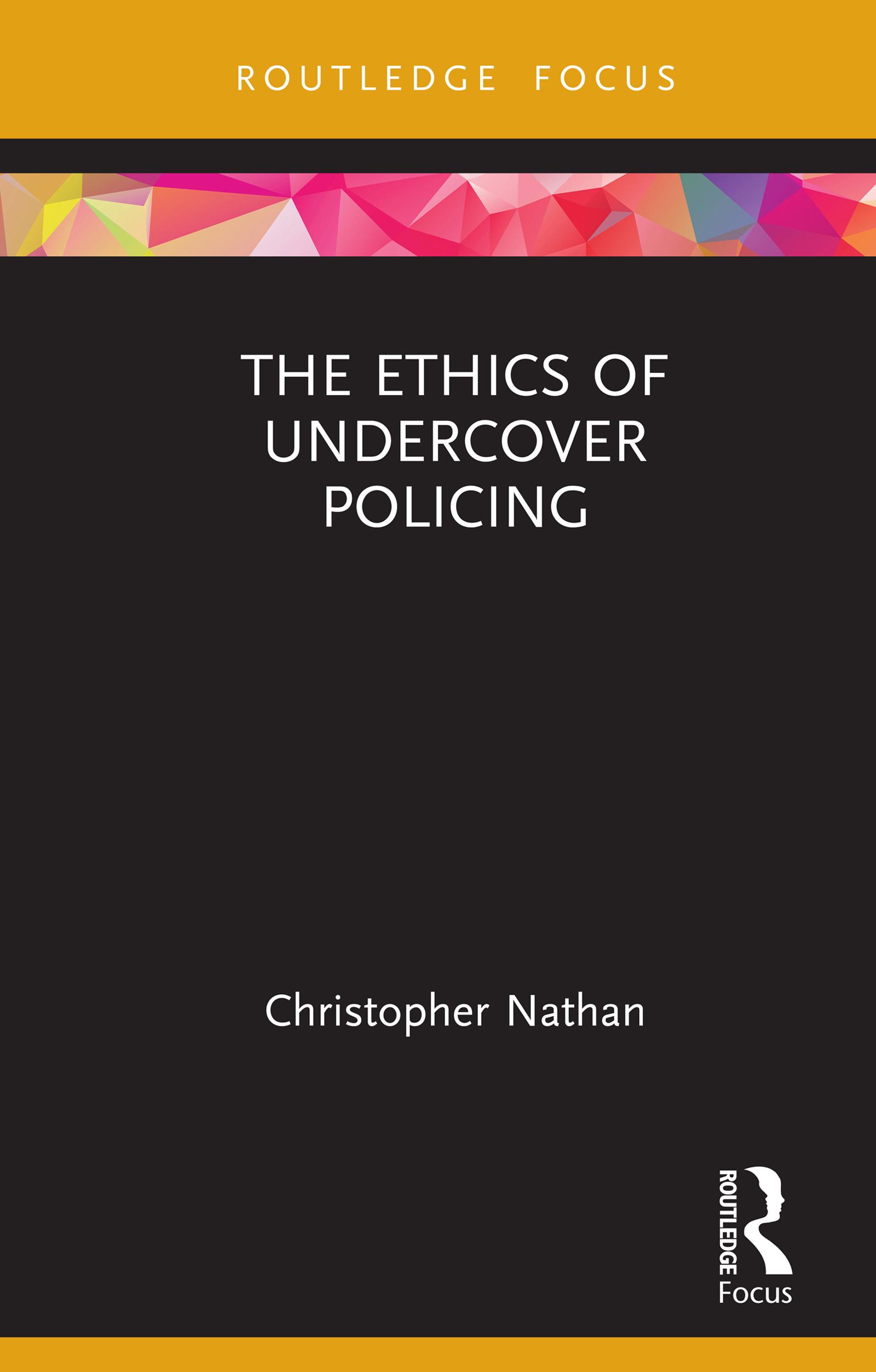
Despite the media controversies surrounding high-profile cases of undercover policing, it is not always clear what ethical issues are at stake. Can undercover policing be justified? What are the ethical issues surrounding concealment and infiltration? What larger questions does undercover policing raise about the nature of policing and the legitimacy of coercive state action?
In this timely and clear account, Christopher Nathan explores these questions and more. He rejects the view that the consequences of undercover policing always justify the means, instead advancing an argument that through their actions people can make themselves morally liable to some forms of undercover policing. Drawing on several recent, high-profile case studies, Christopher Nathan argues for a new understanding of proportionality in undercover policing that takes account of innocent parties, vulnerable targets, and manipulation into wrongful action. He also defends a central role for the judiciary in the oversight of undercover policing.
Paga fácilmente con tarjeta, Klarna, Apple Pay o Google Pay. ¿No estás contento? Siempre tienes 14 días de garantía de devolución. Lee más en nuestros términos. Si tienes preguntas, escríbenos a hello@memmo.org.
Memmo hace que estudiar sea más fácil, estés donde estés. Aquí tienes tus libros de texto y herramientas de estudio inteligentes en un solo lugar: resúmenes, quizzes, podcasts y flashcards. Y también a Ted, tu compañero de estudio que responde a todo lo que te preguntes. Más de 50 000 estudiantes ya estudian aquí. Está hecho para que aprendas más rápido y te estreses menos.