
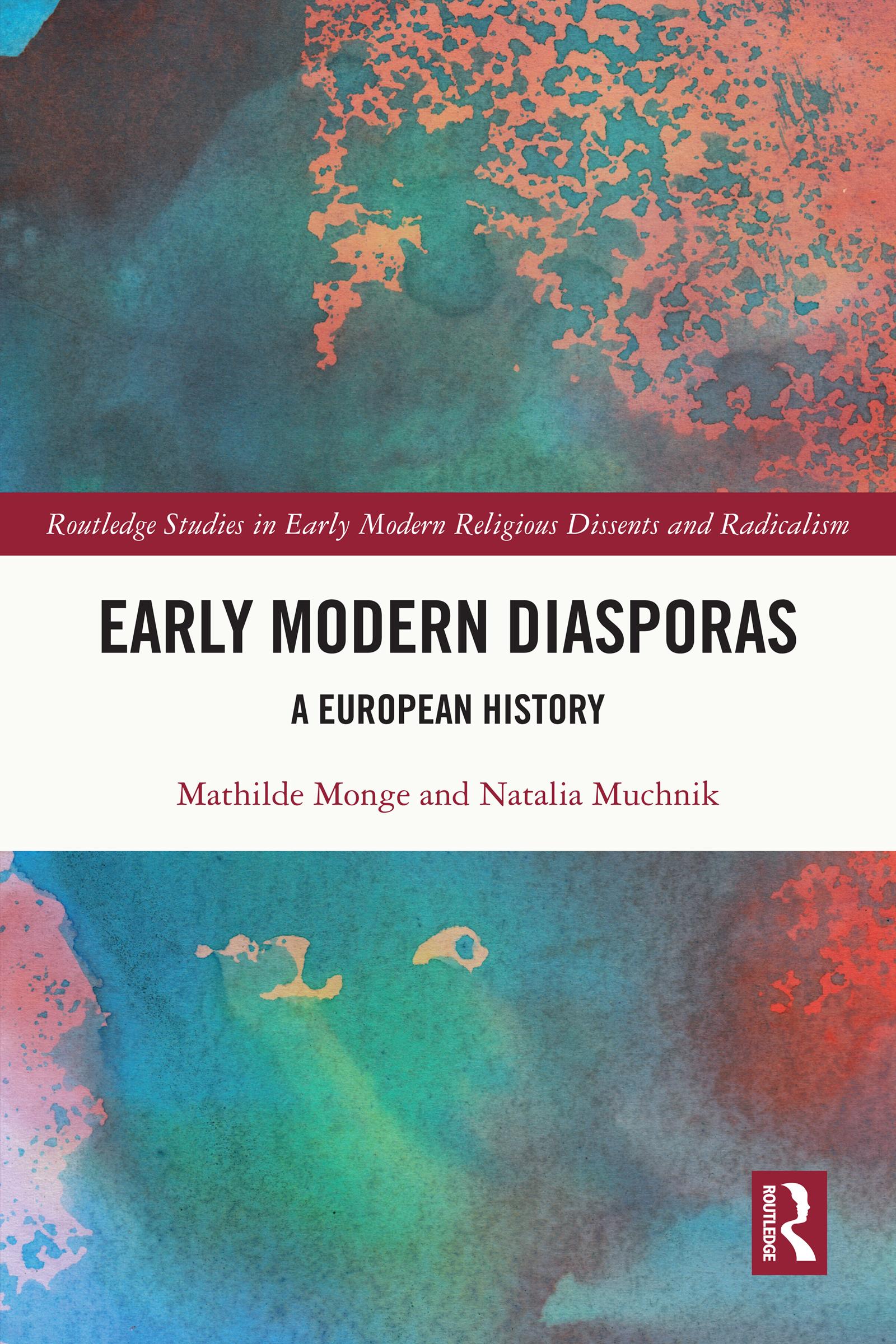
This book is the first encompassing history of diasporas in Europe between 1500 and 1800.
Huguenots, Sephardim, British Catholics, Mennonites, Moriscos, Moravian Brethren, Quakers, Ashkenazim… what do these populations who roamed Europe in the sixteenth to eighteenth centuries have in common? Despite an extensive historiography of diasporas, publications have tended to focus on the history of a single diaspora. Each of these groups was part of a community whose connections crossed political and cultural as well as religious borders. Each built dynamic networks through which information, people, and goods circulated. United by a memory of persecution, by an attachment to a homeland—be it real or dreamed—and by economic ties, those groups were nevertheless very diverse. As minorities, they maintained complex relationships with authorities, local inhabitants, and other diasporic populations. This book investigates the tensions they experienced. Between unity and heterogeneity, between mobility and locality, between marginalisation and assimilation, it attempts to reconcile global- and micro-historical approaches.
The authors provide a comparative view as well as elaborate case studies for scholars, students, and the public who are interested in learning about how the social sciences and history contribute to our understanding of integration, migrations, and religious coexistence.
Paga fácilmente con tarjeta, Klarna, Apple Pay o Google Pay. ¿No estás contento? Siempre tienes 14 días de garantía de devolución. Lee más en nuestros términos. Si tienes preguntas, escríbenos a hello@memmo.org.
Memmo hace que estudiar sea más fácil, estés donde estés. Aquí tienes tus libros de texto y herramientas de estudio inteligentes en un solo lugar: resúmenes, quizzes, podcasts y flashcards. Y también a Ted, tu compañero de estudio que responde a todo lo que te preguntes. Más de 50 000 estudiantes ya estudian aquí. Está hecho para que aprendas más rápido y te estreses menos.