
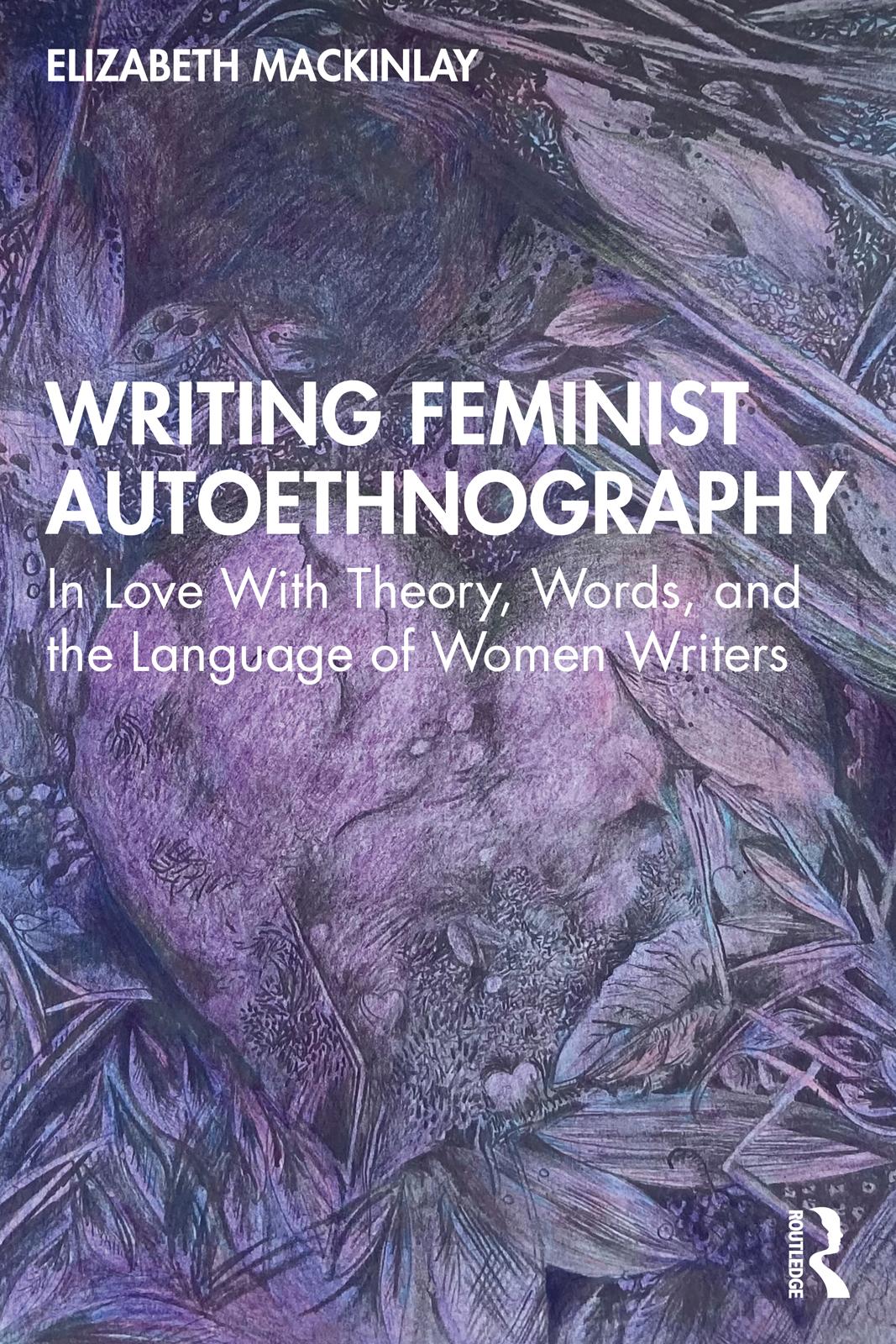
Writing Feminist Autoethnography explores the personal-is-political relationship between autoethnography and feminist theory and practice.
Each chapter introduces the lives and works of a range of feminist thinkers and writers and considers the ways in which their thinking and writing might come to be in relation with our own personal-is-political thinking and writing work as feminist autoethnographers. The book begins with an acknowledgement of the author’s positionality as a white-settler-colonial-woman in relation with Yanyuwa, Garrwa, Mara and Kudanji Aboriginal women. This positionality has continued to resonate deeply with the responses and sensibilities the author holds as a feminist autoethnographer to move beyond coloniality. She explores the writing of Virginia Woolf, Simone Weil, Simone de Beauvoir, Hélène Cixous, Kathleen Stewart, bell hooks and Ruth Behar, with critical affect to embrace, embody and engage with feminist thinking, wondering and feeling. The book creatively and performatively explores what it means to live a feminist life as an autoethnographer.
This book will define and conceptualize feminist autoethnography for all qualitative researchers, especially those interested in critical autoethnography, and scholars in gender studies and communication.
Paga fácilmente con tarjeta, Klarna, Apple Pay o Google Pay. ¿No estás contento? Siempre tienes 14 días de garantía de devolución. Lee más en nuestros términos. Si tienes preguntas, escríbenos a hello@memmo.org.
Memmo hace que estudiar sea más fácil, estés donde estés. Aquí tienes tus libros de texto y herramientas de estudio inteligentes en un solo lugar: resúmenes, quizzes, podcasts y flashcards. Y también a Ted, tu compañero de estudio que responde a todo lo que te preguntes. Más de 50 000 estudiantes ya estudian aquí. Está hecho para que aprendas más rápido y te estreses menos.