
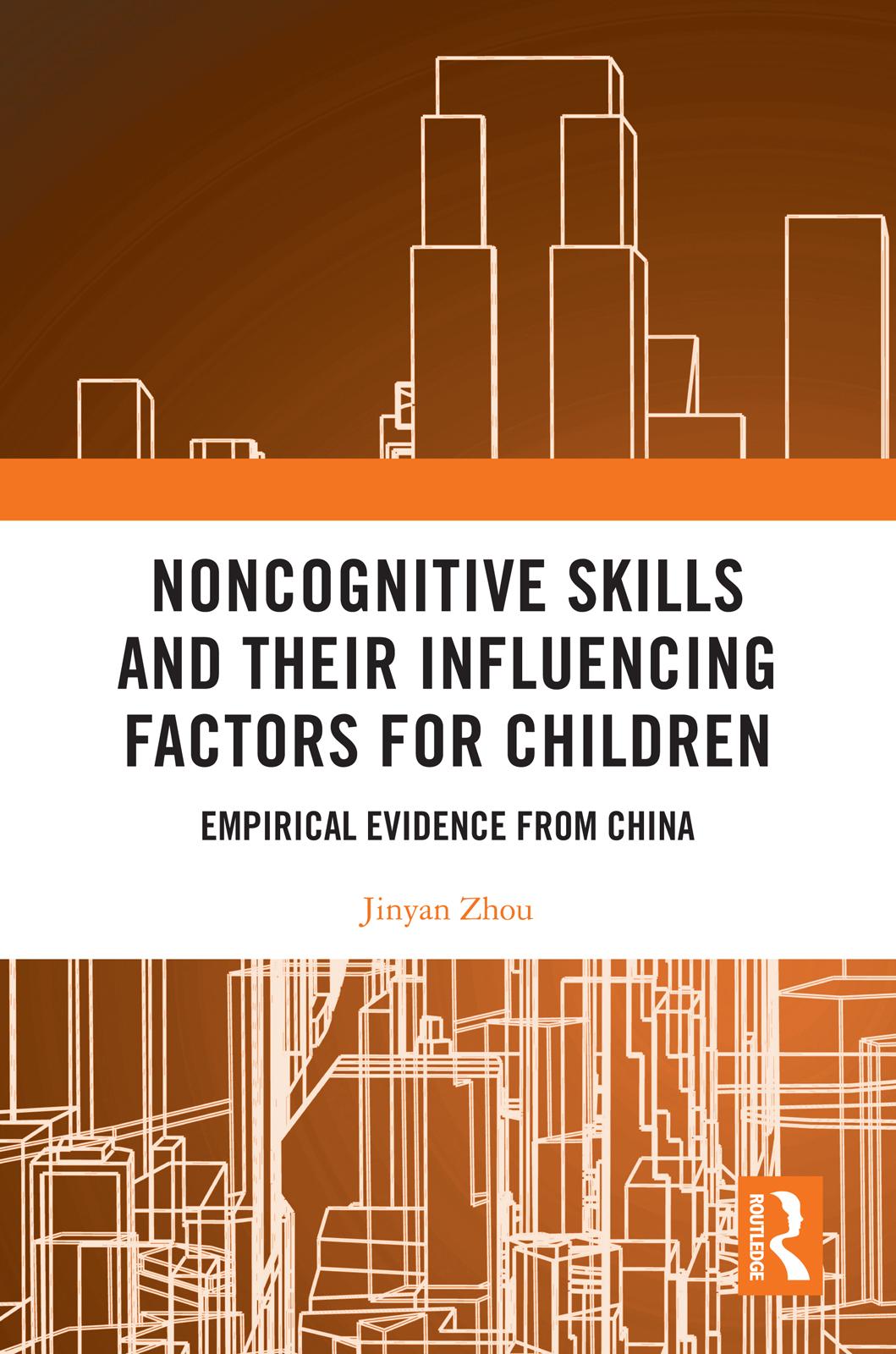
"Non-cognitive skills" are often used to refers to those skills that do not fall within the cognitive category but to describe a stable pattern of thought, feeling, and behavior in different situations and backgrounds with profitable and investable characteristics, such as conscientiousness, perseverance, and teamwork, which are critically important in education. However, for many years, "non-cognitive skills" have always been ignored in human capital theory. The book, using a multidisciplinary approach, tries to uncover the noncognitive components of human capital, so as to answer the question "what is the skill that should be invested in?"
The author expands the connotations of human capital by exploring the value of noncognitive skills and their production patterns, constructing a measurement framework and a set of tools to measure noncognitive skills. She especially carries out an empirical survey which covers primary and secondary school students from seven provinces of China’s east, middle, and west areas. With the data collected, she analyzes Chinese students’ noncognitive development and further identifies the critical factors that may impact their noncognitive skills by applying the Bayesian Model Average approach.
The book will be a theoretical contribution to education economics. Researchers interested in education in China, children’s development, and policymakers in the field of education will find this book helpful and resourceful.
Paga fácilmente con tarjeta, Klarna, Apple Pay o Google Pay. ¿No estás contento? Siempre tienes 14 días de garantía de devolución. Lee más en nuestros términos. Si tienes preguntas, escríbenos a hello@memmo.org.
Memmo hace que estudiar sea más fácil, estés donde estés. Aquí tienes tus libros de texto y herramientas de estudio inteligentes en un solo lugar: resúmenes, quizzes, podcasts y flashcards. Y también a Ted, tu compañero de estudio que responde a todo lo que te preguntes. Más de 50 000 estudiantes ya estudian aquí. Está hecho para que aprendas más rápido y te estreses menos.