
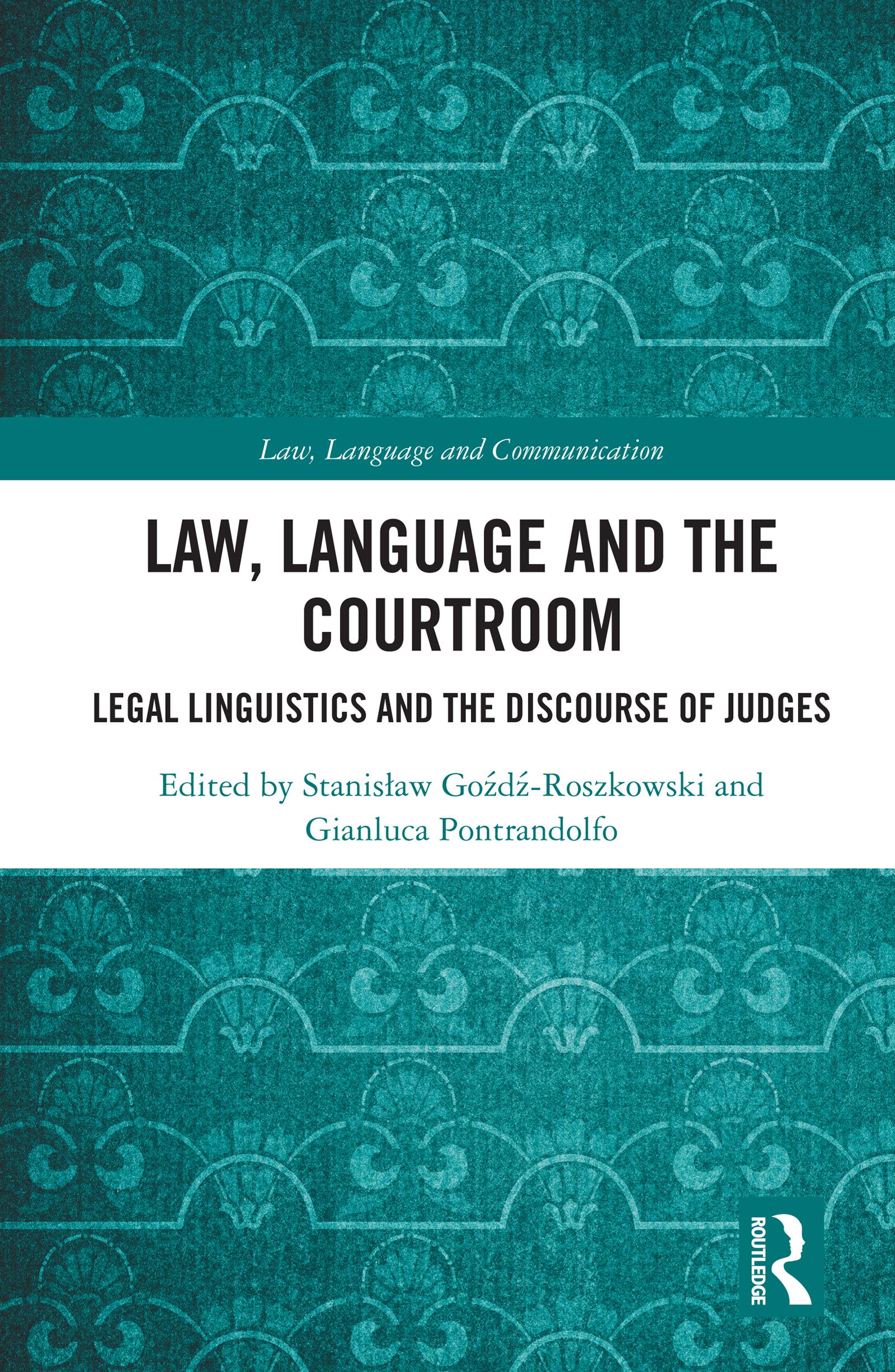
This book explores the language of judges. It is concerned with understanding how language works in judicial contexts. Using a range of disciplinary and methodological perspectives, it looks in detail at the ways in which judicial discourse is argued, constructed, interpreted and perceived. Focusing on four central themes - constructing judicial discourse and judicial identities, judicial argumentation and evaluative language, judicial interpretation, and clarity in judicial discourse - the book’s ultimate goal is to provide a comprehensive and in-depth analysis of current critical issues of the role of language in judicial settings. Contributors include legal linguists, lawyers, legal scholars, legal practitioners, legal translators and anthropologists, who explore patterns of linguistic organisation and use in judicial institutions and analyse language as an instrument for understanding both the judicial decision-making process and its outcome.
The book will be an invaluable resource for scholars in legal linguistics and those specialising in judicial argumentation and reasoning ,and forensic linguists interested in the use of language in judicial settings.
Paga fácilmente con tarjeta, Klarna, Apple Pay o Google Pay. ¿No estás contento? Siempre tienes 14 días de garantía de devolución. Lee más en nuestros términos. Si tienes preguntas, escríbenos a hello@memmo.org.
Memmo hace que estudiar sea más fácil, estés donde estés. Aquí tienes tus libros de texto y herramientas de estudio inteligentes en un solo lugar: resúmenes, quizzes, podcasts y flashcards. Y también a Ted, tu compañero de estudio que responde a todo lo que te preguntes. Más de 50 000 estudiantes ya estudian aquí. Está hecho para que aprendas más rápido y te estreses menos.