
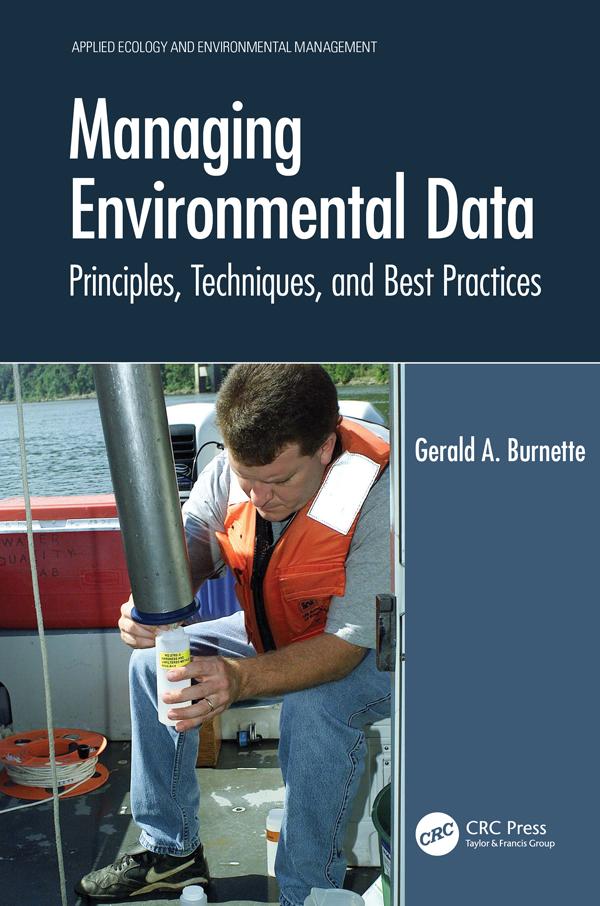
Focused on the mechanics of managing environmental data, this book provides guidelines on how to evaluate data requirements, assess tools and techniques, and implement an effective system. Moving beyond the hypothetical, Gerald Burnette illustrates the decision-making processes and the compromises required when applying environmental principles and practices to actual data.
Managing Environmental Data explains the basic principles of relational databases, discusses database design, explores user interface options, and examines the process of implementation. Best practices are identified during each portion of the process. The discussion is summarized via the development of a hypothetical environmental data management system. Details of the design help establish a common framework that bridges the gap between data managers, users, and software developers.
It is an ideal text for environmental professionals and students. The growth in both volume and complexity of environmental data presents challenges to environmental professionals. Developing better data management skills offers an excellent opportunity to meet these challenges. Gaining knowledge of and experience with data management best practices complements students’ more traditional science education, providing them with the skills required to address complex data requirements.
Paga fácilmente con tarjeta, Klarna, Apple Pay o Google Pay. ¿No estás contento? Siempre tienes 14 días de garantía de devolución. Lee más en nuestros términos. Si tienes preguntas, escríbenos a hello@memmo.org.
Memmo hace que estudiar sea más fácil, estés donde estés. Aquí tienes tus libros de texto y herramientas de estudio inteligentes en un solo lugar: resúmenes, quizzes, podcasts y flashcards. Y también a Ted, tu compañero de estudio que responde a todo lo que te preguntes. Más de 50 000 estudiantes ya estudian aquí. Está hecho para que aprendas más rápido y te estreses menos.