
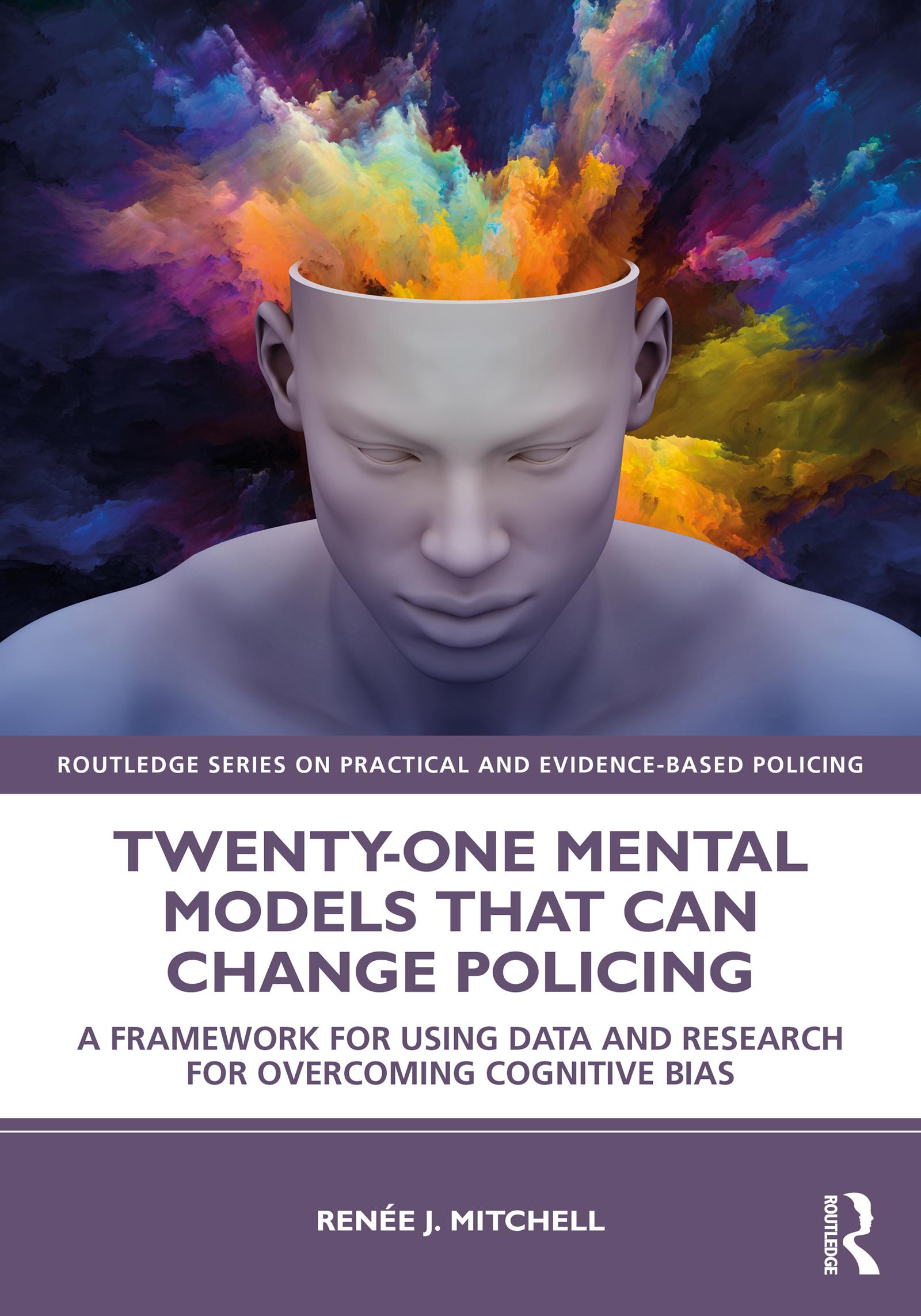
This book goes beyond other police leadership books to teach practitioners how to think about policing in a structured way that synthesizes criminological theory, statistics, research design, applied research, and what works and what doesn’t in policing into Mental Models. A Mental Model is a representation of how something works. Using a Mental Model framework to simplify complex concepts, readers will take away an in-depth understanding of how cognitive biases affect our ability to understand and interpret data, what empirical research says about effective police interventions, how statistical data should be structured for management meetings, and how to evaluate interventions for efficiency and effectiveness.
While evidence-based practice is critical to advancing the police profession, it is limited in scope, and is only part of what is necessary to support sustainable change in policing. Policing requires a scientifically based framework to understand and interpret data in a way that minimizes cognitive bias to allow for better responses to complex problems. Data and research have advanced so rapidly in the last several decades that it is difficult for even the most ambitious of police leaders to keep pace. The Twenty-one Mental Models were synthesized to create a framework for any police, public, or community leader to better understand how cognitive bias contributes to misunderstanding data and gives the reader the tools to overcome those biases to better serve their communities.
The book is intended for a wide range of audiences, including law enforcement and community leaders; scholars and policy experts who specialize in policing; students of criminal justice, organizations, and management; reporters and journalists; individuals who aspire to police careers; and citizen consumers of information about policing. Anyone who is going to make decisions about their communities based on data has a responsibility to be numerate and this book Twenty-one Mental Models That Can Change Policing: A Framework For Using Data and Research For Overcoming Cognitive Bias, will help you become just that.
Paga fácilmente con tarjeta, Klarna, Apple Pay o Google Pay. ¿No estás contento? Siempre tienes 14 días de garantía de devolución. Lee más en nuestros términos. Si tienes preguntas, escríbenos a hello@memmo.org.
Memmo hace que estudiar sea más fácil, estés donde estés. Aquí tienes tus libros de texto y herramientas de estudio inteligentes en un solo lugar: resúmenes, quizzes, podcasts y flashcards. Y también a Ted, tu compañero de estudio que responde a todo lo que te preguntes. Más de 50 000 estudiantes ya estudian aquí. Está hecho para que aprendas más rápido y te estreses menos.