
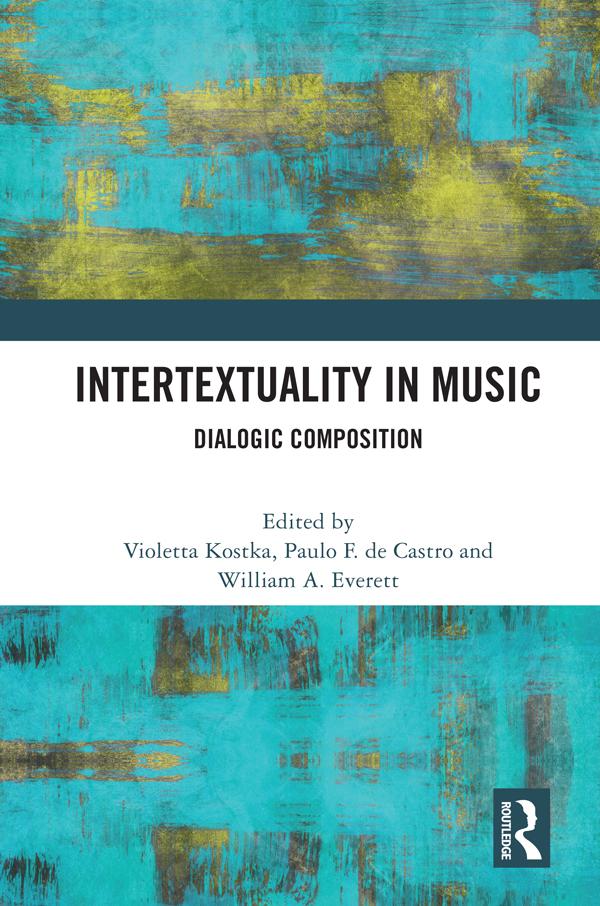
The concept of intertextuality – namely, the meaning generated by interrelations between different texts – was coined in the 1960s among literary theorists and has been widely applied since then to many other disciplines, including music. Intertextuality in Music: Dialogic Composition provides a systematic investigation of musical intertextuality not only as a general principle of musical creativity but also as a diverse set of devices and techniques that have been consciously developed and applied by many composers in the pursuit of various artistic and aesthetic goals. Intertextual techniques, as this collection reveals, have borne a wide range of results, such as parody, paraphrase, collage and dialogues with and between the past and present. In the age of sampling and remix culture, the very notion of intertextuality seems to have gained increased momentum and visibility, even though the principle of creating new music on the basis of pre-existing music has a long history both inside and outside the Western tradition. The book provides a general survey of musical intertextuality, with a special focus on music from the second half of the twentieth century, but also including examples ranging from the nineteenth century to the second decade of the twenty-first century. The volume is intended to inspire and stimulate new work in intertextual studies in music.
Paga fácilmente con tarjeta, Klarna, Apple Pay o Google Pay. ¿No estás contento? Siempre tienes 14 días de garantía de devolución. Lee más en nuestros términos. Si tienes preguntas, escríbenos a hello@memmo.org.
Memmo hace que estudiar sea más fácil, estés donde estés. Aquí tienes tus libros de texto y herramientas de estudio inteligentes en un solo lugar: resúmenes, quizzes, podcasts y flashcards. Y también a Ted, tu compañero de estudio que responde a todo lo que te preguntes. Más de 50 000 estudiantes ya estudian aquí. Está hecho para que aprendas más rápido y te estreses menos.