
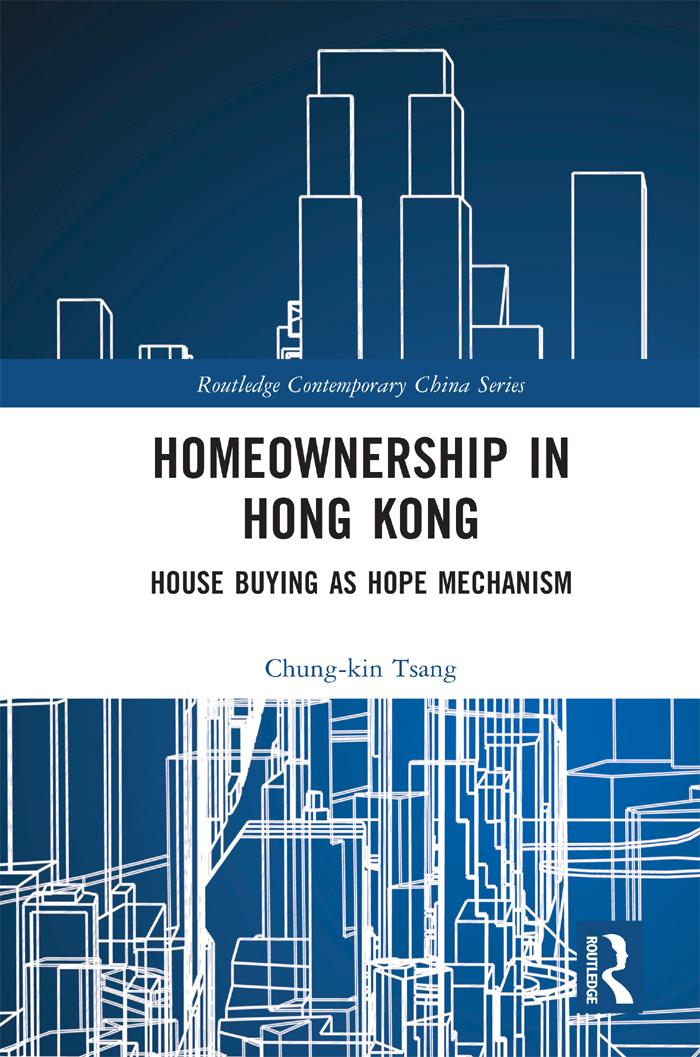
This book studies the cultural framework of the connections between homeownership and social stability in Hong Kong.
In the post-war period, homeownership became the most preferable housing choice in developed societies, such as Australia, Britain, Japan, Spain, and the United States. In the financialization era, its proliferation aggregated enormous wealth and debt in the housing and mortgage markets, affecting social stability by creating inequality and housing unaffordability. Hong Kong is the most extreme example of this among developed societies – in recent years, the city has made international headlines both for its housing problem and its social instability. By studying the history of homeownership in Hong Kong over a period of four decades, Chung-kin Tsang proposes that homeownership is inseparable from the social imagination of the future, conceptualizing this framework as "hope mechanism". This perspective helps trace the connections between ‘House Buying’ as a hope mechanism – one which is central to subject formation, life goals, and temporal mapping for socially shared life planning – and social stability.
Given its unique approach, specifically its use of "hope" as an analytical category, this book will prove to be a useful resource for scholars in economic culture and financialization, and Asian Studies, especially those working on the cultural, sociopolitical, and economic history of Hong Kong.
Paga fácilmente con tarjeta, Klarna, Apple Pay o Google Pay. ¿No estás contento? Siempre tienes 14 días de garantía de devolución. Lee más en nuestros términos. Si tienes preguntas, escríbenos a hello@memmo.org.
Memmo hace que estudiar sea más fácil, estés donde estés. Aquí tienes tus libros de texto y herramientas de estudio inteligentes en un solo lugar: resúmenes, quizzes, podcasts y flashcards. Y también a Ted, tu compañero de estudio que responde a todo lo que te preguntes. Más de 50 000 estudiantes ya estudian aquí. Está hecho para que aprendas más rápido y te estreses menos.