
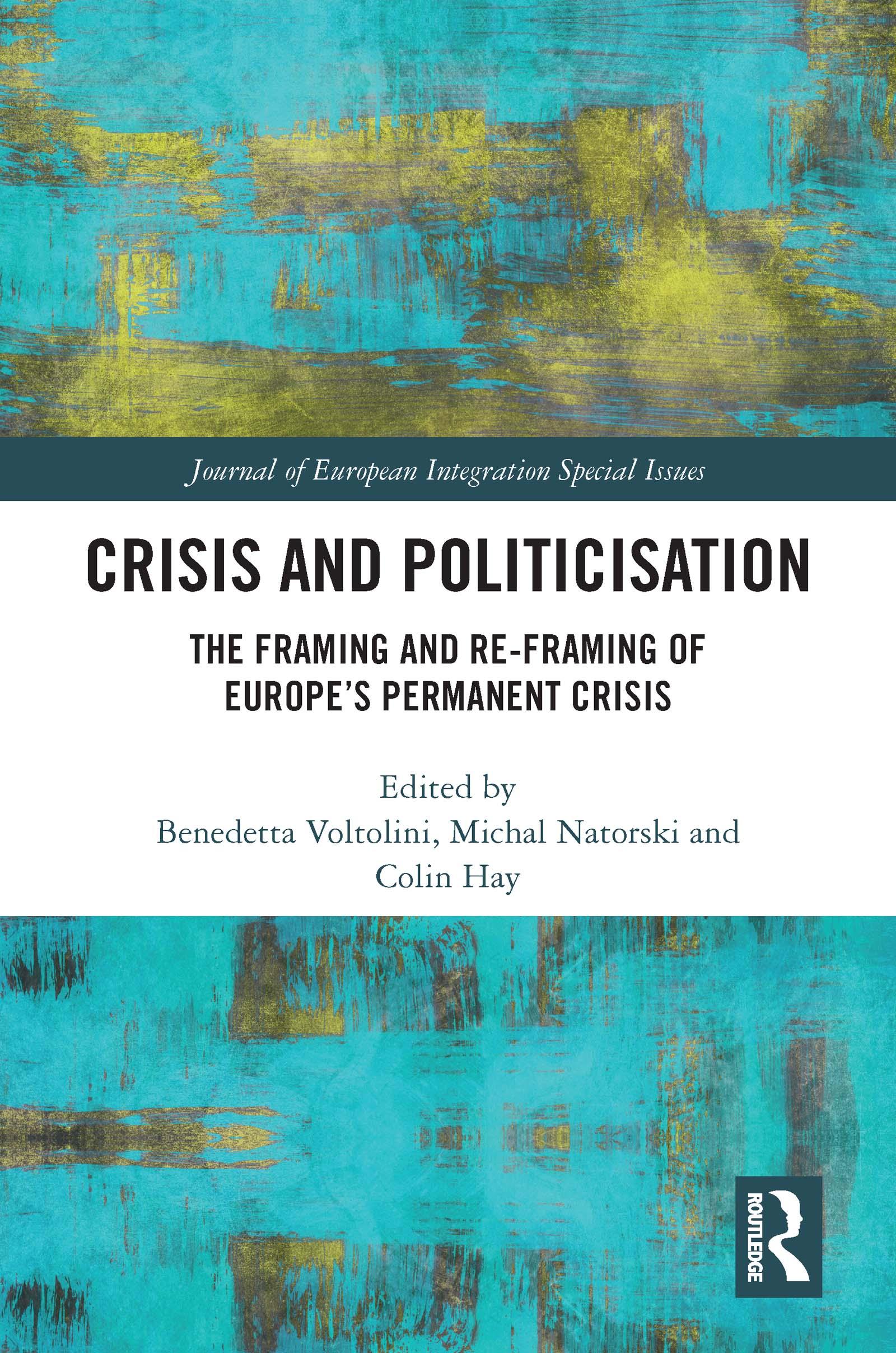
This book elucidates the link between the politics of a now seemingly permanent crisis in Europe and the politicisation of European integration. Looking at the epistemic dimension of crises, it suggests that the way in which a crisis is framed and contested determines its potential impact on the level of politicisation of European integration.
Europe is more challenged and contested today than it has even been, facing crisis of an almost existential kind. Yet, political crises are manufactured and narrated, so Europe has the possibility to intervene and ‘bring about her recovery’, instead of letting these crises prove terminal. This book explores the political process in and through which certain events come to be framed as constitutive of a moment that requires a decisive intervention. It shows that crises require a double framing: a situation needs to be identified as one of crisis in the first place and, subsequently, the nature and character of the crisis need to be specified. By examining a wide range of policy areas, the book demonstrates that framing of crises, i.e., identifying one situation both as a crisis and a crisis of a particular kind, contributes to the politicisation (or depoliticisation) of the process of European integration.
The chapters in this book were originally published as special issue of Journal of European Integration.
Paga fácilmente con tarjeta, Klarna, Apple Pay o Google Pay. ¿No estás contento? Siempre tienes 14 días de garantía de devolución. Lee más en nuestros términos. Si tienes preguntas, escríbenos a hello@memmo.org.
Memmo hace que estudiar sea más fácil, estés donde estés. Aquí tienes tus libros de texto y herramientas de estudio inteligentes en un solo lugar: resúmenes, quizzes, podcasts y flashcards. Y también a Ted, tu compañero de estudio que responde a todo lo que te preguntes. Más de 50 000 estudiantes ya estudian aquí. Está hecho para que aprendas más rápido y te estreses menos.