
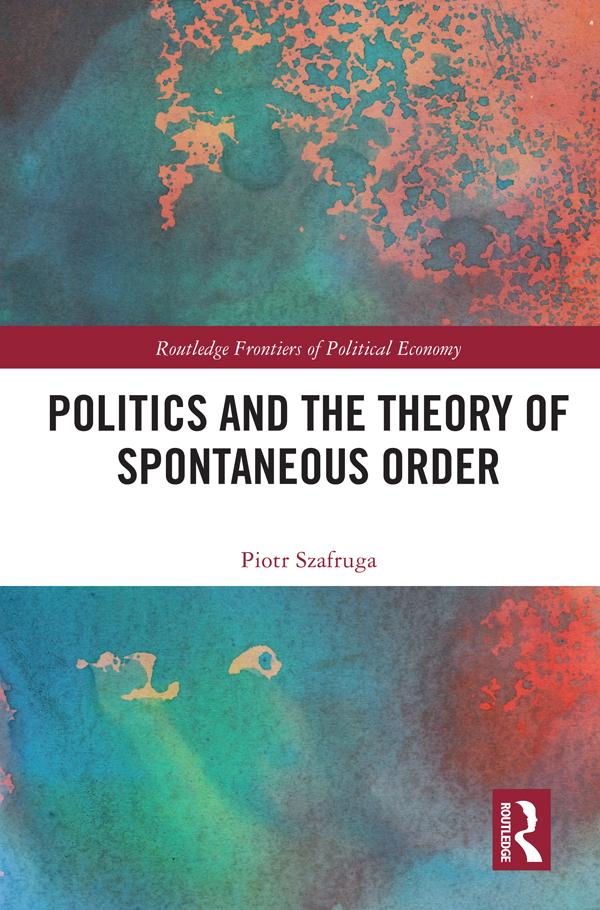
The theory of spontaneous order conceptualises and explains a number of institutional and social phenomena that are not an intended effect of either individual decisions or a collective consensus but an unplanned outcome of interactions between people pursuing their own aims. Drawing on these insights, this book demonstrates the utility of the theory of spontaneous order in explaining many phenomena in political economy and political science.
The book opens with a discussion of the history and development of the theory of spontaneous order, particularly in economics and the Austrian School. The epistemological premises of the theory are then explored including the formulation of the central idea of social individualism. Demonstrating the potential applications of the theory of spontaneous order to politics, core ideas are examined including democracy, fragile states and the concept of the veil of ignorance. Finally, the limitations and constraints of the theory of spontaneous order are also reviewed and discussed.
This book marks a valuable contribution to the literature on political economy, political science, public choice and political philosophy.
Paga fácilmente con tarjeta, Klarna, Apple Pay o Google Pay. ¿No estás contento? Siempre tienes 14 días de garantía de devolución. Lee más en nuestros términos. Si tienes preguntas, escríbenos a hello@memmo.org.
Memmo hace que estudiar sea más fácil, estés donde estés. Aquí tienes tus libros de texto y herramientas de estudio inteligentes en un solo lugar: resúmenes, quizzes, podcasts y flashcards. Y también a Ted, tu compañero de estudio que responde a todo lo que te preguntes. Más de 50 000 estudiantes ya estudian aquí. Está hecho para que aprendas más rápido y te estreses menos.