
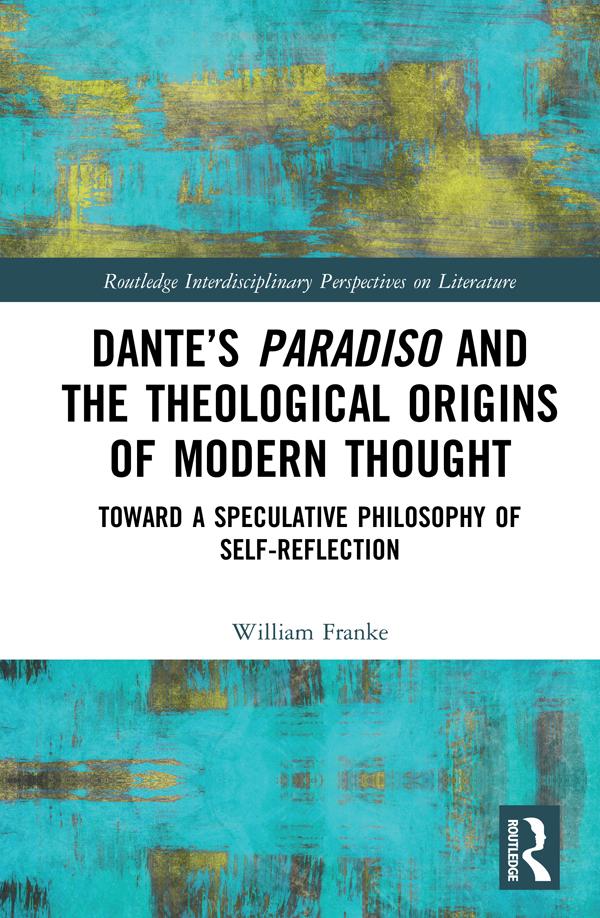
Self-reflection, as the hallmark of the modern age, originates more profoundly with Dante than with Descartes. This book rewrites modern intellectual history, taking Dante’s lyrical language in Paradiso as enacting a Trinitarian self-reflexivity that gives a theological spin to the birth of the modern subject already with the Troubadours. The ever more intense self-reflexivity that has led to our contemporary secular world and its technological apocalypse can lead also to the poetic vision of other worlds such as those experienced by Dante. Facing the same nominalist crisis as Duns Scotus, his exact contemporary and the precursor of scientific method, Dante’s thought and work indicate an alternative modernity along the path not taken. This other way shows up in Nicholas of Cusa’s conjectural science and in Giambattista Vico’s new science of imagination as alternatives to the exclusive reign of positive empirical science. In continuity with Dante’s vision, they contribute to a reappropriation of self-reflection for the humanities.
Paga fácilmente con tarjeta, Klarna, Apple Pay o Google Pay. ¿No estás contento? Siempre tienes 14 días de garantía de devolución. Lee más en nuestros términos. Si tienes preguntas, escríbenos a hello@memmo.org.
Memmo hace que estudiar sea más fácil, estés donde estés. Aquí tienes tus libros de texto y herramientas de estudio inteligentes en un solo lugar: resúmenes, quizzes, podcasts y flashcards. Y también a Ted, tu compañero de estudio que responde a todo lo que te preguntes. Más de 50 000 estudiantes ya estudian aquí. Está hecho para que aprendas más rápido y te estreses menos.