
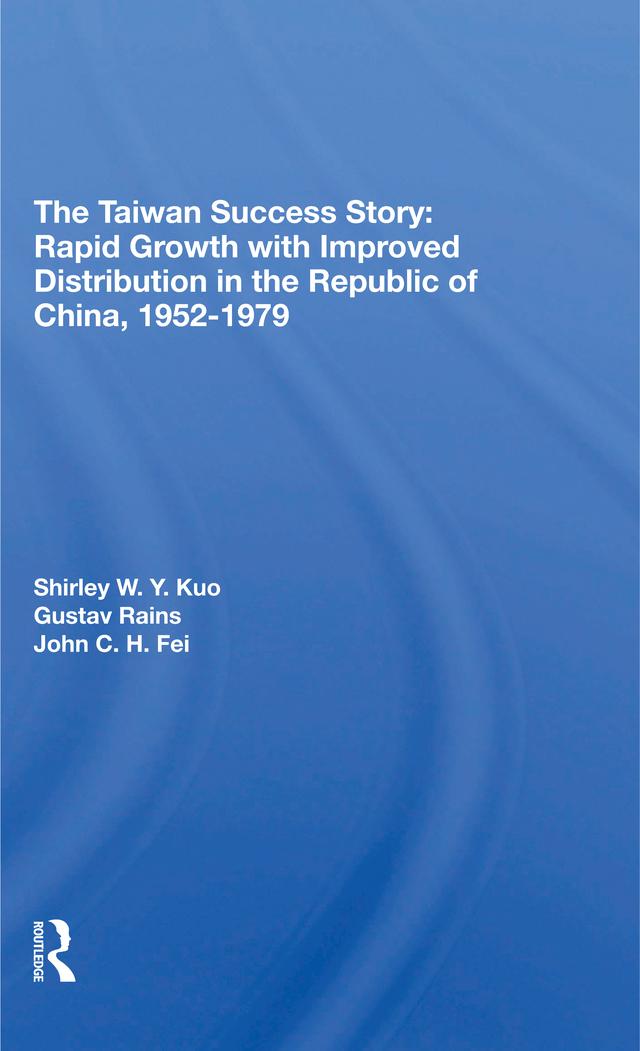
Economists and policymakers have long been perplexed over the way rapid growth appears to conflict with the other common goal of developing nations - more equitable income distribution. But economic expansion need not preclude equity, as demonstrated by the case of Taiwan, which experienced high rates of economic growth between the early 1950s and the late 1970s while simultaneously improving the distribution of income among its people.
This book describes how the Republic of China managed this balancing of goals and analyzes the reasons for Taiwan's exceptional performance. The authors illustrate how full utilization of the country's vast human resources through emphasis on labor-intensive production has worked to make Taiwan's products competitive in international markets and to make fiscal redistribution after the fact unnecessary. They also cite Taiwan's early attention to land reform, to productivity in agriculture, and to the spread of decentralized rural industry as important factors in the country's achievements. They point out that, although the specifics may change, strategies and policy implications drawn from the Taiwan experience should be applicable in other developing countries.
Paga fácilmente con tarjeta, Klarna, Apple Pay o Google Pay. ¿No estás contento? Siempre tienes 14 días de garantía de devolución. Lee más en nuestros términos. Si tienes preguntas, escríbenos a hello@memmo.org.
Memmo hace que estudiar sea más fácil, estés donde estés. Aquí tienes tus libros de texto y herramientas de estudio inteligentes en un solo lugar: resúmenes, quizzes, podcasts y flashcards. Y también a Ted, tu compañero de estudio que responde a todo lo que te preguntes. Más de 50 000 estudiantes ya estudian aquí. Está hecho para que aprendas más rápido y te estreses menos.