
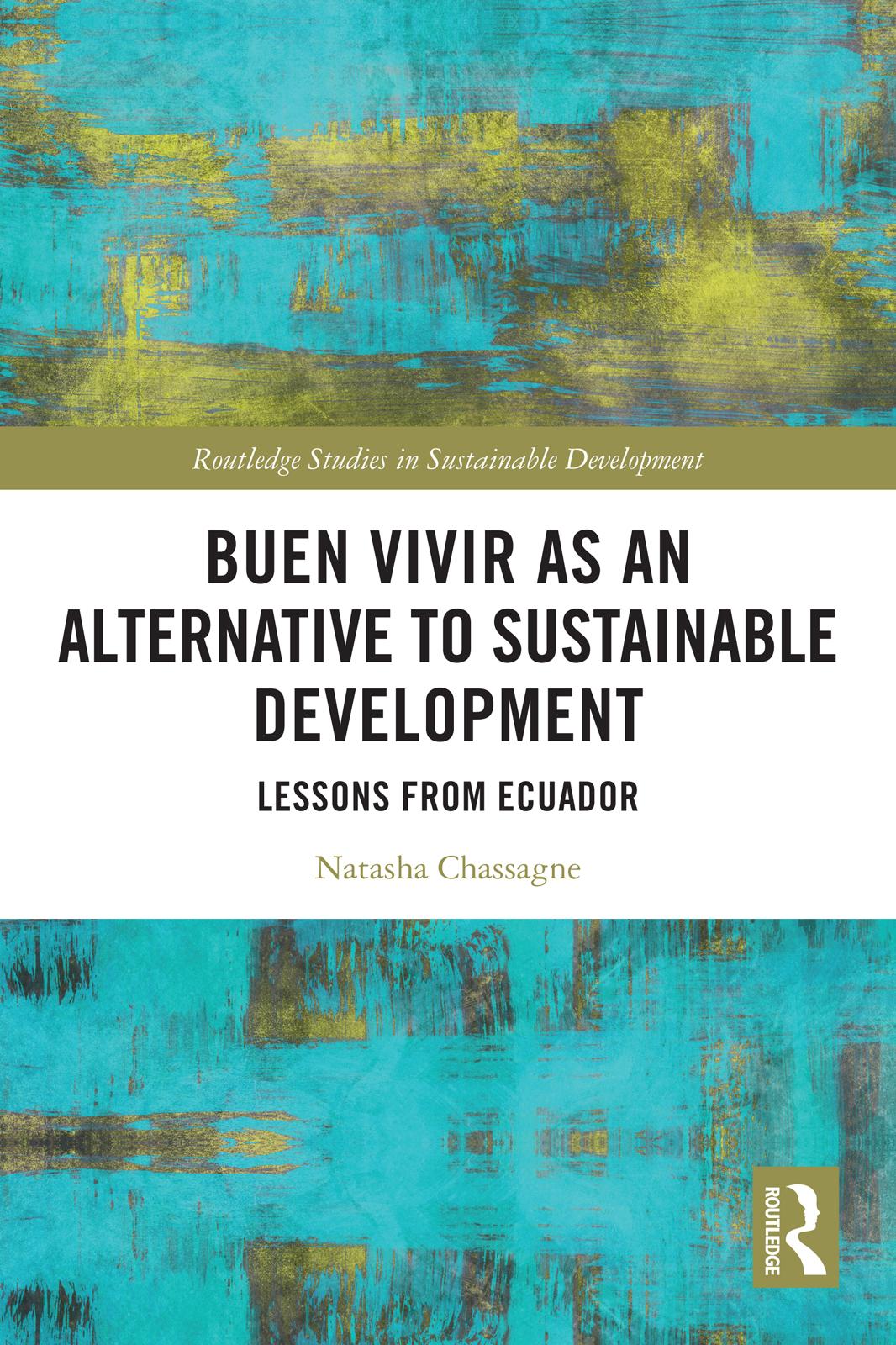
Until recently, the concept of Buen Vivir has only been loosely articulated by practising communities and in progressive policy in countries like Ecuador. What it actually means has been unclear, and in the case of policy, contradictory. As such there has been a lack of understanding about exactly what Buen Vivir entails, its core principles and how to put it into practice. This book, based on extensive theoretical and field research of Buen Vivir as an alternative to sustainable development, fills that gap and offers a concrete way forward. It uses an ethnographic study in Cotacachi County, in Ecuador's highland communities, to explore how communities understand and practice Buen Vivir. Combining this with what we already know about the concept theoretically, the book then develops a framework for Buen Vivir with 17 principles for practice.
Exploring Buen Vivir’s evolution from its indigenous origins, academic interpretations, and implications for development policy, to its role in endogenous, community-led change, this book will be of interest to policy-makers and development professionals. It will also be of great value to activists, students, and scholars of sustainability and development seeking grassroots social and environmental change.
Paga fácilmente con tarjeta, Klarna, Apple Pay o Google Pay. ¿No estás contento? Siempre tienes 14 días de garantía de devolución. Lee más en nuestros términos. Si tienes preguntas, escríbenos a hello@memmo.org.
Memmo hace que estudiar sea más fácil, estés donde estés. Aquí tienes tus libros de texto y herramientas de estudio inteligentes en un solo lugar: resúmenes, quizzes, podcasts y flashcards. Y también a Ted, tu compañero de estudio que responde a todo lo que te preguntes. Más de 50 000 estudiantes ya estudian aquí. Está hecho para que aprendas más rápido y te estreses menos.