
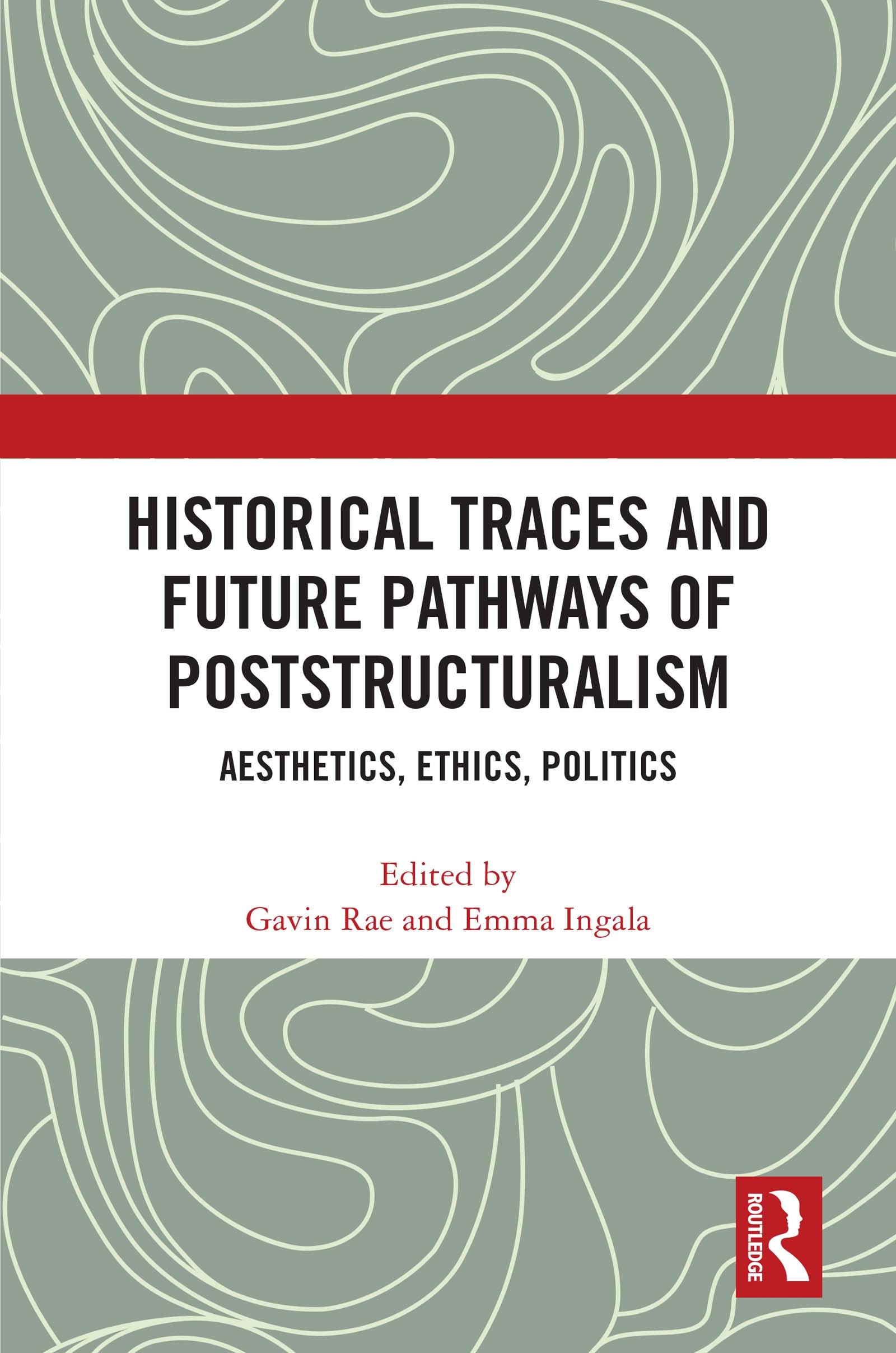
This volume brings together an international array of scholars to reconsider the meaning and place of poststructuralism historically and demonstrate some of the ways in which it continues to be relevant, especially for debates in aesthetics, ethics, and politics.
The book’s chapters focus on the works of Butler, Deleuze, Derrida, Foucault, Irigaray, Kristeva, Lacan, and Lyotard—in combination with those of Agamben, Luhman, Nancy, and Nietzsche—and examine issues including biopolitics, culture, embodiment, epistemology, history, music, temporality, political resistance, psychoanalysis, revolt, and the visual arts. The contributors use poststructuralism as a hermeneutical strategy that rejects the traditional affirmation of unity, totality, transparency, and representation to instead focus on the foundational importance of open-ended becoming, difference, the unknowable, and expression. This approach allows for a more expansive definition of poststructuralism and helps demonstrate how it has contributed to debates across philosophy and other disciplines.
Historical Traces and Future Pathways of Poststructuralism will be of particular interest to researchers in philosophy, politics, political theory, critical theory, aesthetics, feminist theory, cultural studies, intellectual history, psychoanalysis, and sociology.
Paga fácilmente con tarjeta, Klarna, Apple Pay o Google Pay. ¿No estás contento? Siempre tienes 14 días de garantía de devolución. Lee más en nuestros términos. Si tienes preguntas, escríbenos a hello@memmo.org.
Memmo hace que estudiar sea más fácil, estés donde estés. Aquí tienes tus libros de texto y herramientas de estudio inteligentes en un solo lugar: resúmenes, quizzes, podcasts y flashcards. Y también a Ted, tu compañero de estudio que responde a todo lo que te preguntes. Más de 50 000 estudiantes ya estudian aquí. Está hecho para que aprendas más rápido y te estreses menos.