
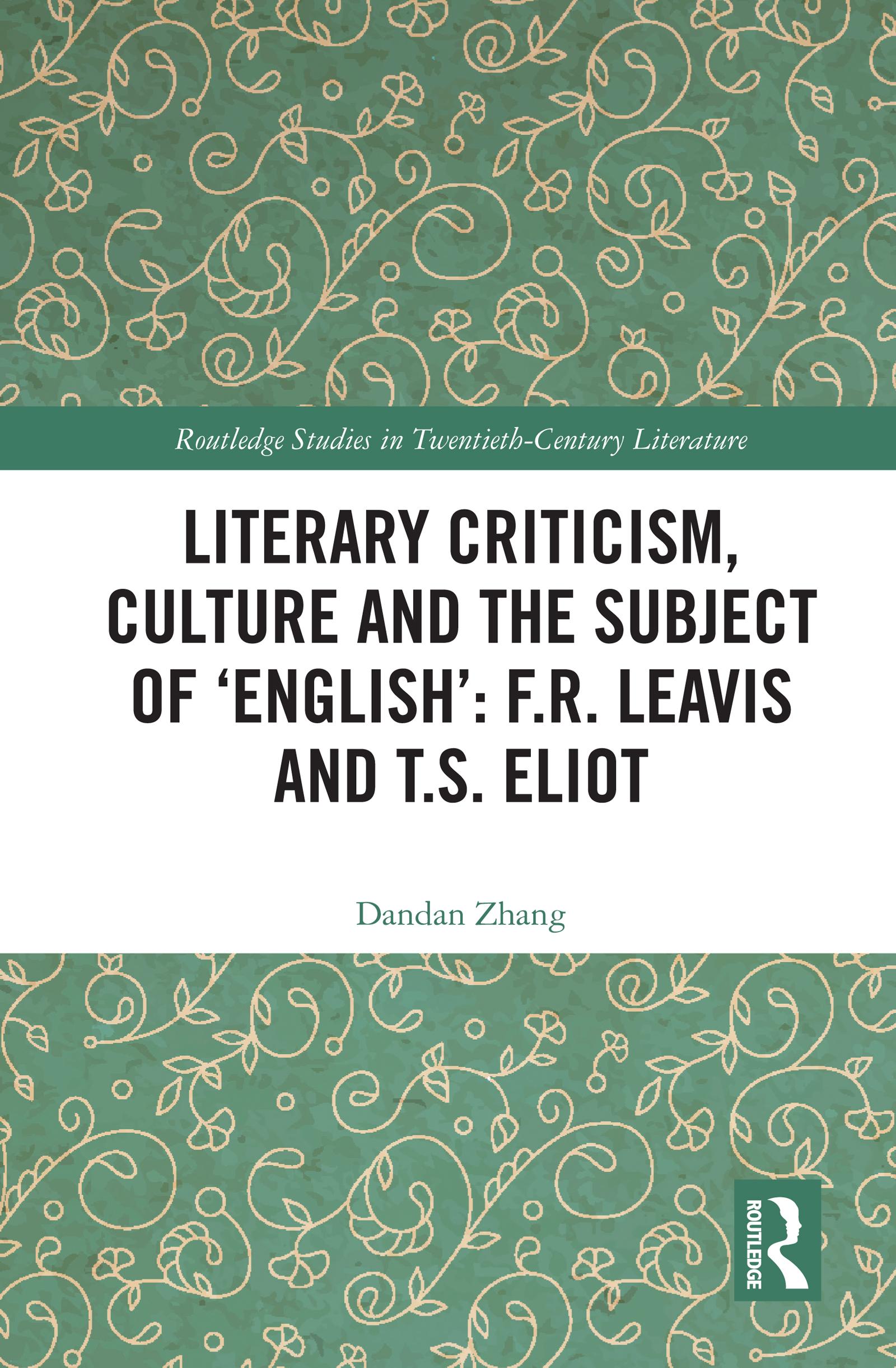
This volume considers the highly convoluted relationship between F. R. Leavis and T. S. Eliot, comparing their ideas in literary and cultural criticism, and connecting it to the broader discourse of English Studies as a university subject that developed in the first half of the twentieth century. Comparing and contrasting all the many writings of Leavis on Eliot, and the two on Lawrence, the study examines how Eliot is formative for the theory and practice of Leavis’s literary criticism in both positive and negative ways, and investigates Lawrence’s significance in relation to Leavis’s changing attitude to Eliot. It also examines how profound differences in social, cultural, religious and national thinking strengthened Leavis’s alliance with Lawrence to the detriment of his relationship with Eliot. These differences between the two writers are presented as dichotomies between nationalism and Europeanism/internationalism, ruralism/organicism and industrialism/metropolitanism, and relate to the two men’s views on literary education, the subject of ‘English’ and the position of the Classics in the curriculum. It explores how Leavis’s increasingly conflicted feelings about a figure to whom he owned an enormous critical debt and inspiration, but whose various beliefs and literary affiliations caused him much misgiving, result in a deep sense of division in Leavis himself which he sought to transfer onto Eliot as what he called a pathological ‘case’.
Paga fácilmente con tarjeta, Klarna, Apple Pay o Google Pay. ¿No estás contento? Siempre tienes 14 días de garantía de devolución. Lee más en nuestros términos. Si tienes preguntas, escríbenos a hello@memmo.org.
Memmo hace que estudiar sea más fácil, estés donde estés. Aquí tienes tus libros de texto y herramientas de estudio inteligentes en un solo lugar: resúmenes, quizzes, podcasts y flashcards. Y también a Ted, tu compañero de estudio que responde a todo lo que te preguntes. Más de 50 000 estudiantes ya estudian aquí. Está hecho para que aprendas más rápido y te estreses menos.