
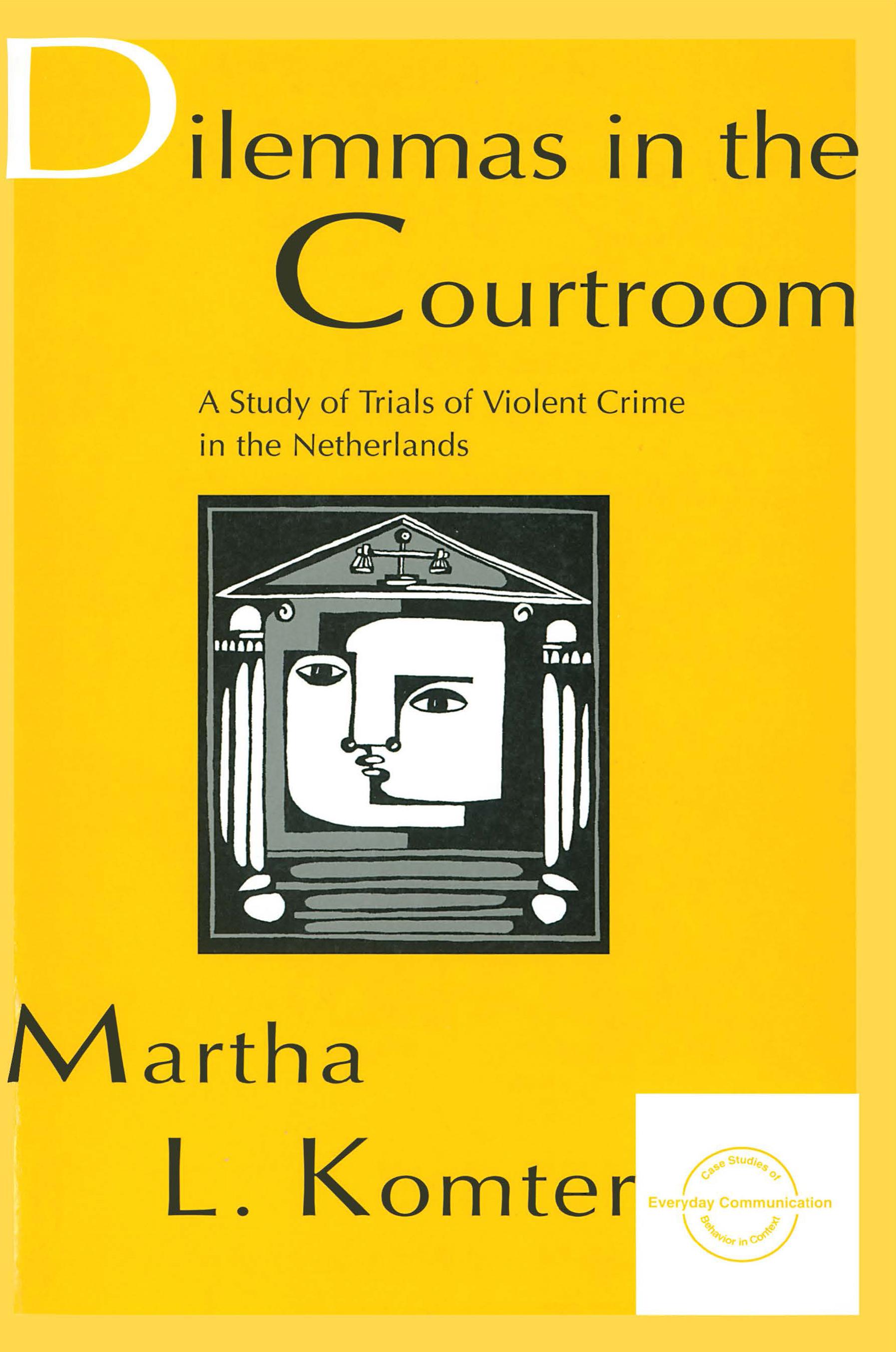
Interactional dilemmas occur when participants are required to engage in two contradictory activities at the same time or orient to two conflicting goals. The existence of such dilemmas provides a context for interactants to be creative, pro-active, and indeed strategic as they maneuver between the numerous demands placed on them and produce behavior that fits the ongoing communication episode. Trials are one such episode in which the various participants -- in this case, the judge, the defendant, and lawyers -- experience interactional dilemmas and work to resolve these through their behavior.
This volume offers an analysis of both the institutional factors which promote dilemmas during court proceedings and the interactional behaviors used by trial participants to navigate these dilemmas. Using ethnomethodology, conversation analysis, and ethnography as complementary methods, Komter's research combines an understanding of the legal rules for courtroom procedure and crime descriptions, with details of actual trial discourse. The analysis is based upon fieldnotes of 48 trials and audiotapes of 31 trials, all related to violent crimes and occurring in courtrooms in Amsterdam, Utrecht, and Haarlem.
Dilemmas reflect enduring conflicts of interest or values; they derive from the ongoing institutional and interactional positions of the various courtroom participants. Komter points to the existence of dilemmas and to their role in shaping unfolding interaction during the trials. She especially highlights the different dilemmas faced by judges and suspects, and the ways in which behavior on the part of one constrains that of the other. She further reveals the wide variety of ways in which interactants handle dilemmas -- their innovativeness and resourcefulness -- and the consequences these have for the unfolding interaction and the court's ultimate judgment.
Of course, dilemmas are not only relevant to an understanding of judicial interaction. This study has implications for other contexts, since concerns with credibility, blame, responsibility, and morality -- and their opposites -- are incorporated into many everyday interactions. This volume examines behavior that is quite specific to a single context, yet its conclusions bear upon a wide range of communication events.
Of interest to scholars in communication, linguistics, anthropology, criminal justice, or those with interests in ethnomethodology, conversation analysis, and ethnography.
Paga fácilmente con tarjeta, Klarna, Apple Pay o Google Pay. ¿No estás contento? Siempre tienes 14 días de garantía de devolución. Lee más en nuestros términos. Si tienes preguntas, escríbenos a hello@memmo.org.
Memmo hace que estudiar sea más fácil, estés donde estés. Aquí tienes tus libros de texto y herramientas de estudio inteligentes en un solo lugar: resúmenes, quizzes, podcasts y flashcards. Y también a Ted, tu compañero de estudio que responde a todo lo que te preguntes. Más de 50 000 estudiantes ya estudian aquí. Está hecho para que aprendas más rápido y te estreses menos.