
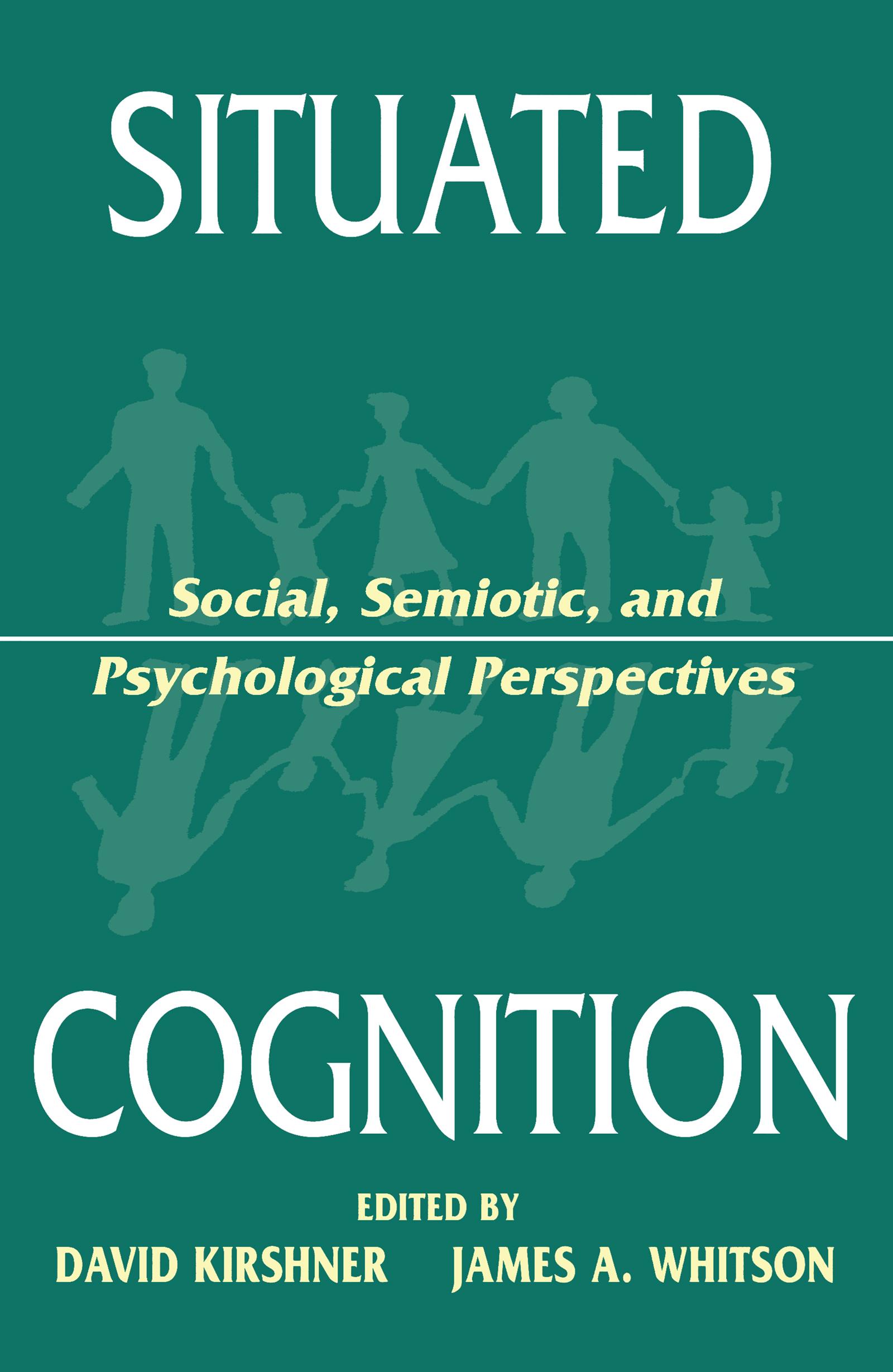
This book is a result of a symposium at a recent annual meeting of the American Educational Research Association that explored foundational issues relative to situated cognition theory. Its chapters contribute to discourse about repositioning situated cognition theory within the broader supporting disciplines and to resolving the problematics addressed within the book.
There is a cumulative vision to the book -- its theme is that the notion of the individual in situated cognition theory needs to be fundamentally reformulated. No theoretical reconfiguration of the social world or of social practices can overcome an individual cast in the dualist tradition. This reformulation probes the physiological, psychoanalytic, and semiotic constitution of persons. Chapters authors cover a wide range of topics including:
* transfer of training -- arguing that traditional cognitive psychology has found precious little evidence of people's ability to apply knowledge gained in one context to the problems encountered in another;
* ecosocial systems -- a new object of inquiry for situated cognition theory in which the primary units of analysis are not things or people, but processes and practices;
* how linkages between discursive practices are manifested as semiotic chaining of signifiers for individuals engaged in everyday activities at home or at school;
* how the ability to function in ways that are consistent with logic emerges not through reflective abstraction on actions, but through an enhanced sense of agency as more responsible roles are adopted in daily life practices;
* the mutual constitution of social and individual knowledge -- familiar terms and concepts normally available through linguistic labels are cultural models, to be distinguished from the variegated and hidden mid-level meanings that reflect their situated uses in social activity;
* the material (neurological) substrate through which cultural models and mid-level meanings emerge; and
* how learning environments can be structured to take advantage of the perceptual underpinnings of cognition.
Paga fácilmente con tarjeta, Klarna, Apple Pay o Google Pay. ¿No estás contento? Siempre tienes 14 días de garantía de devolución. Lee más en nuestros términos. Si tienes preguntas, escríbenos a hello@memmo.org.
Memmo hace que estudiar sea más fácil, estés donde estés. Aquí tienes tus libros de texto y herramientas de estudio inteligentes en un solo lugar: resúmenes, quizzes, podcasts y flashcards. Y también a Ted, tu compañero de estudio que responde a todo lo que te preguntes. Más de 50 000 estudiantes ya estudian aquí. Está hecho para que aprendas más rápido y te estreses menos.