
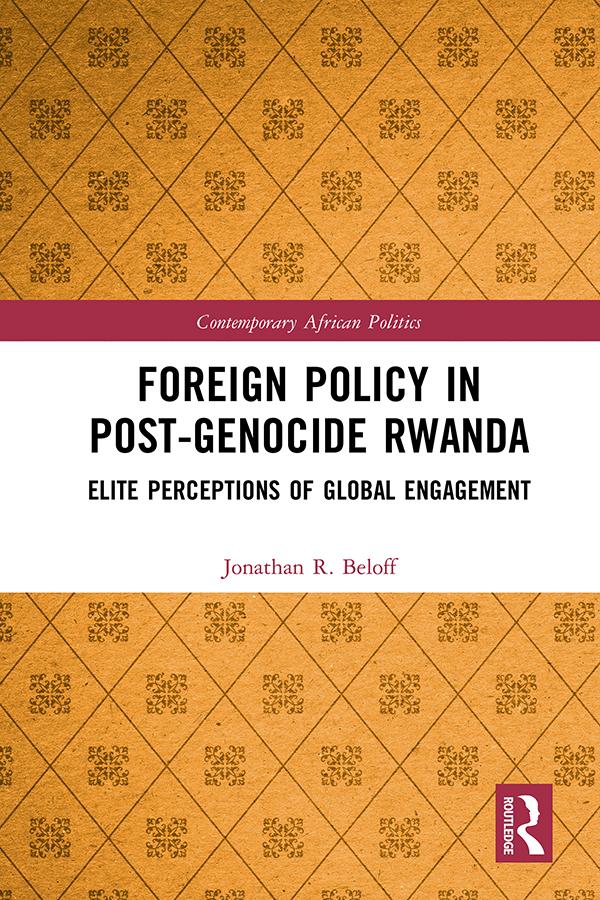
This book examines how Rwandan elites within the government, private sector and civil society perceive the nation’s political and economic relationship with the international community. Using testimonies and interviews of Rwandan political, military and economic leaders, and bureaucrats, this book examines the intersubjective beliefs that formulate how Rwanda engages with the international community. The book presents and analyses three primary intersubjective themes: historical and possible future abandonment of Rwanda; implementing an ideology of agaciro to promote self-respect, dignity and self-reliance for state security and economic development; and the belief in the government’s obligation to promote human security for those who identify as ‘Rwandan’. These perceptions help us understand how post-genocide Rwanda engages with the international community in the pursuit of state security, economic development and to prevent a future genocide. This book will be of interest to students and scholars of African politics and international relations as well as the politics of post-genocide states.
Paga fácilmente con tarjeta, Klarna, Apple Pay o Google Pay. ¿No estás contento? Siempre tienes 14 días de garantía de devolución. Lee más en nuestros términos. Si tienes preguntas, escríbenos a hello@memmo.org.
Memmo hace que estudiar sea más fácil, estés donde estés. Aquí tienes tus libros de texto y herramientas de estudio inteligentes en un solo lugar: resúmenes, quizzes, podcasts y flashcards. Y también a Ted, tu compañero de estudio que responde a todo lo que te preguntes. Más de 50 000 estudiantes ya estudian aquí. Está hecho para que aprendas más rápido y te estreses menos.