
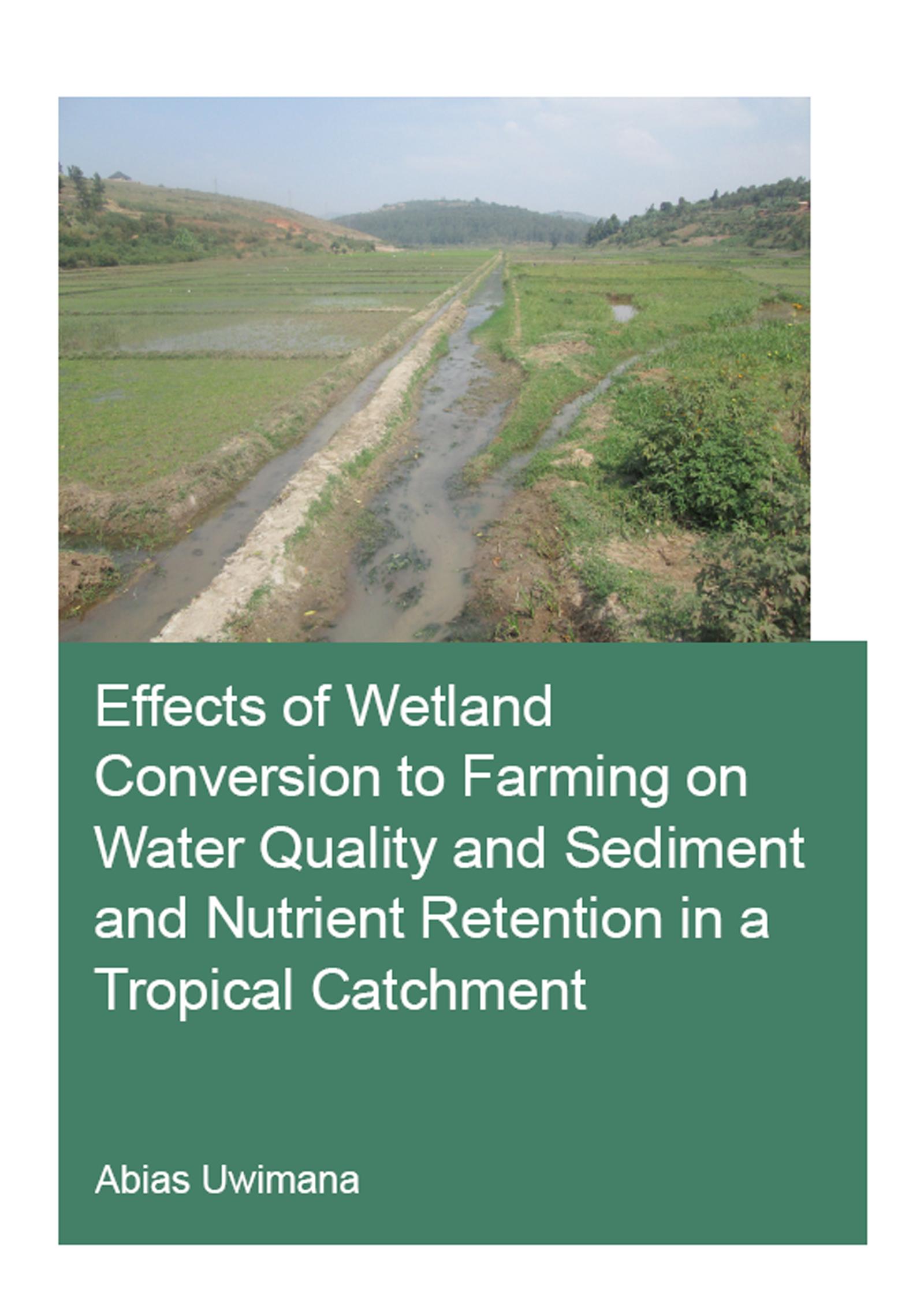
The study used a combination of landscape-scale synoptic surveys (catchment, reaches) and mesocosm surveys (experimental plots) to assess the impacts of conversion of natural valley-bottom wetlands to farming land on the water quality and retention of sediment and nutrients. The results showed that temperature, pH, electrical conductivity and dissolved oxygen concentration decreased, and total suspended solids (TSS) increased with storm water increase. Nitrogen (TN) and phosphorus (TP) accumulated in the catchment during the dry season and washed into the water courses during the early stages of the higher flows, with subsequent lower concentrations at the end of the rains due to dilution. Large proportions of the annual loads of TSS, TP and TN (93%, 60% and 67%, respectively) were transported during rainfall events that occurred in 115 days. Fishponds acted as temporal traps of TSS, TN and TP at the early stages of farming, and were a source of and TN and TP at the end of the farming period, in contrast to rice farming that generated sediments and nutrients early in the farming period and trapped them at the end of the farming season. Wetlands mostly acted as sinks but sometimes as a source of sediment and nutrients.
Paga fácilmente con tarjeta, Klarna, Apple Pay o Google Pay. ¿No estás contento? Siempre tienes 14 días de garantía de devolución. Lee más en nuestros términos. Si tienes preguntas, escríbenos a hello@memmo.org.
Memmo hace que estudiar sea más fácil, estés donde estés. Aquí tienes tus libros de texto y herramientas de estudio inteligentes en un solo lugar: resúmenes, quizzes, podcasts y flashcards. Y también a Ted, tu compañero de estudio que responde a todo lo que te preguntes. Más de 50 000 estudiantes ya estudian aquí. Está hecho para que aprendas más rápido y te estreses menos.