
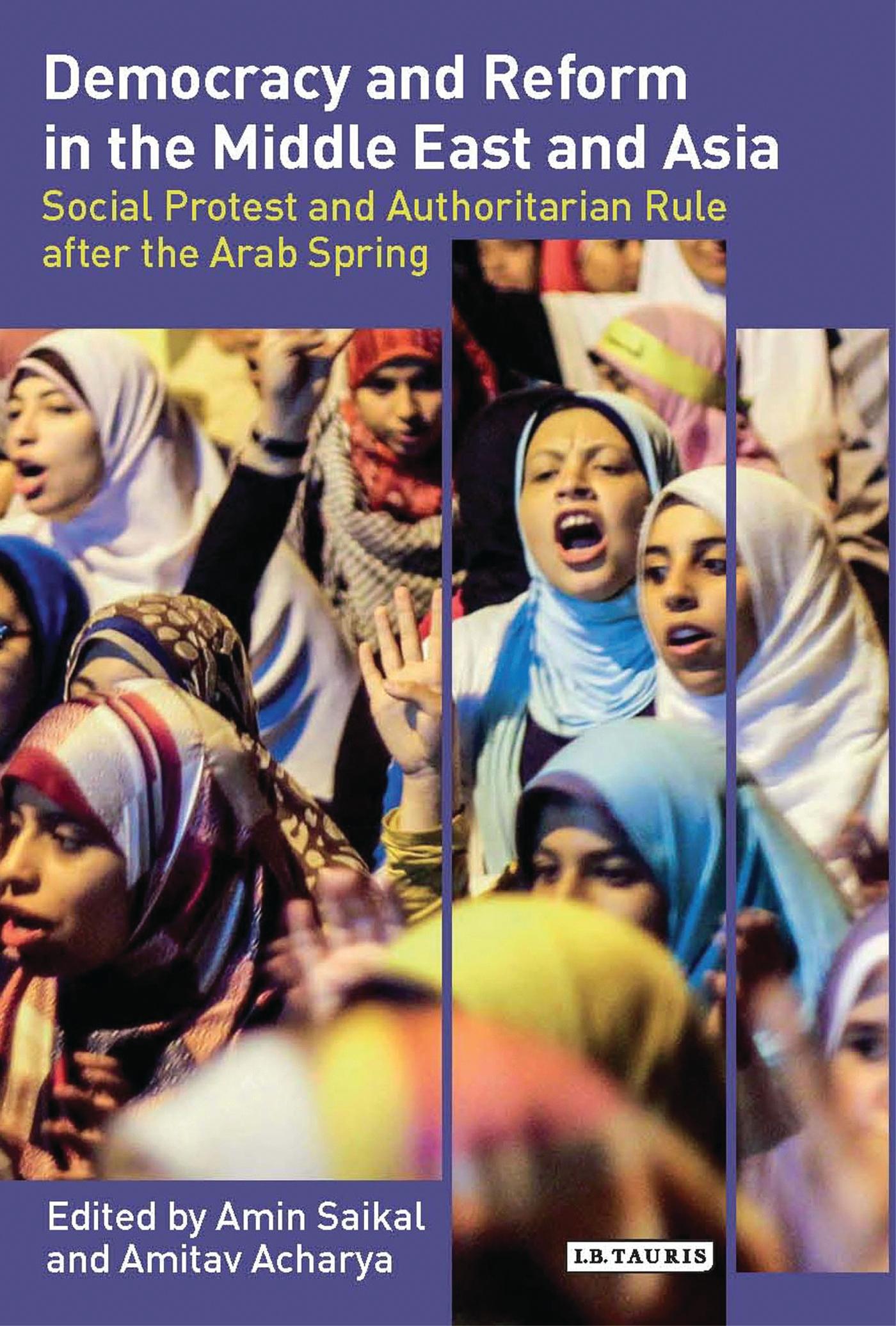
The protests that swept across the Middle East and North Africa in late 2010 and 2011 confounded long-time observers of the region, in both the media and academia. After addressing the conditions in the Middle East and North Africa that produced these attempts at revolution, Amin Saikal and Amitav Acharya explore the global impact of the protests, both in terms of their ideological influence on opposition groups and the prospects for democratic transition in a variety of authoritarian and semi-authoritarian governments. Democracy and Reform in the Middle East and Asia commences with a comprehensive attempt to understand the cultural, economic and political background out of which the uprisings in Egypt, Tunisia and Libya emerged. It then expands outwards investigating the impact of the Arab uprisings on a regional level in other Middle Eastern and north African states such as Iran, Morocco and Algeria, and on a more global level in the Asian states of China, Malaysia, Singapore, Indonesia and the former Soviet Muslim republics.
Saikal and Acharya bring a global perspective to the still-unfolding wave of calls for more meaningful political participation, which continues to make itself felt in the Middle East, to shed light upon the ideal role of both regional and international actors in promoting sustainable transitions from authoritarianism to democracy. This book not only offers explanations for why certain countries were more susceptible to the spread of the uprisings in the Middle East and North Africa, but also contrasts the organic and grassroots vehicles for democratization characteristic of the most recent Arab uprisings with the Western model of externally imposed regime change to illustrate the conditions necessary for a successful democratic transition. Touching on perennial issues in politics - for example, democracy, authoritarian rule and social protest - this book is vital for researchers of politics and international relations.
Saikal and Acharya bring a global perspective to the still-unfolding wave of calls for more meaningful political participation, which continues to make itself felt in the Middle East, to shed light upon the ideal role of both regional and international actors in promoting sustainable transitions from authoritarianism to democracy. This book not only offers explanations for why certain countries were more susceptible to the spread of the uprisings in the Middle East and North Africa, but also contrasts the organic and grassroots vehicles for democratization characteristic of the most recent Arab uprisings with the Western model of externally imposed regime change to illustrate the conditions necessary for a successful democratic transition. Touching on perennial issues in politics - for example, democracy, authoritarian rule and social protest - this book is vital for researchers of politics and international relations.
Paga fácilmente con tarjeta, Klarna, Apple Pay o Google Pay. ¿No estás contento? Siempre tienes 14 días de garantía de devolución. Lee más en nuestros términos. Si tienes preguntas, escríbenos a hello@memmo.org.
Memmo hace que estudiar sea más fácil, estés donde estés. Aquí tienes tus libros de texto y herramientas de estudio inteligentes en un solo lugar: resúmenes, quizzes, podcasts y flashcards. Y también a Ted, tu compañero de estudio que responde a todo lo que te preguntes. Más de 50 000 estudiantes ya estudian aquí. Está hecho para que aprendas más rápido y te estreses menos.