
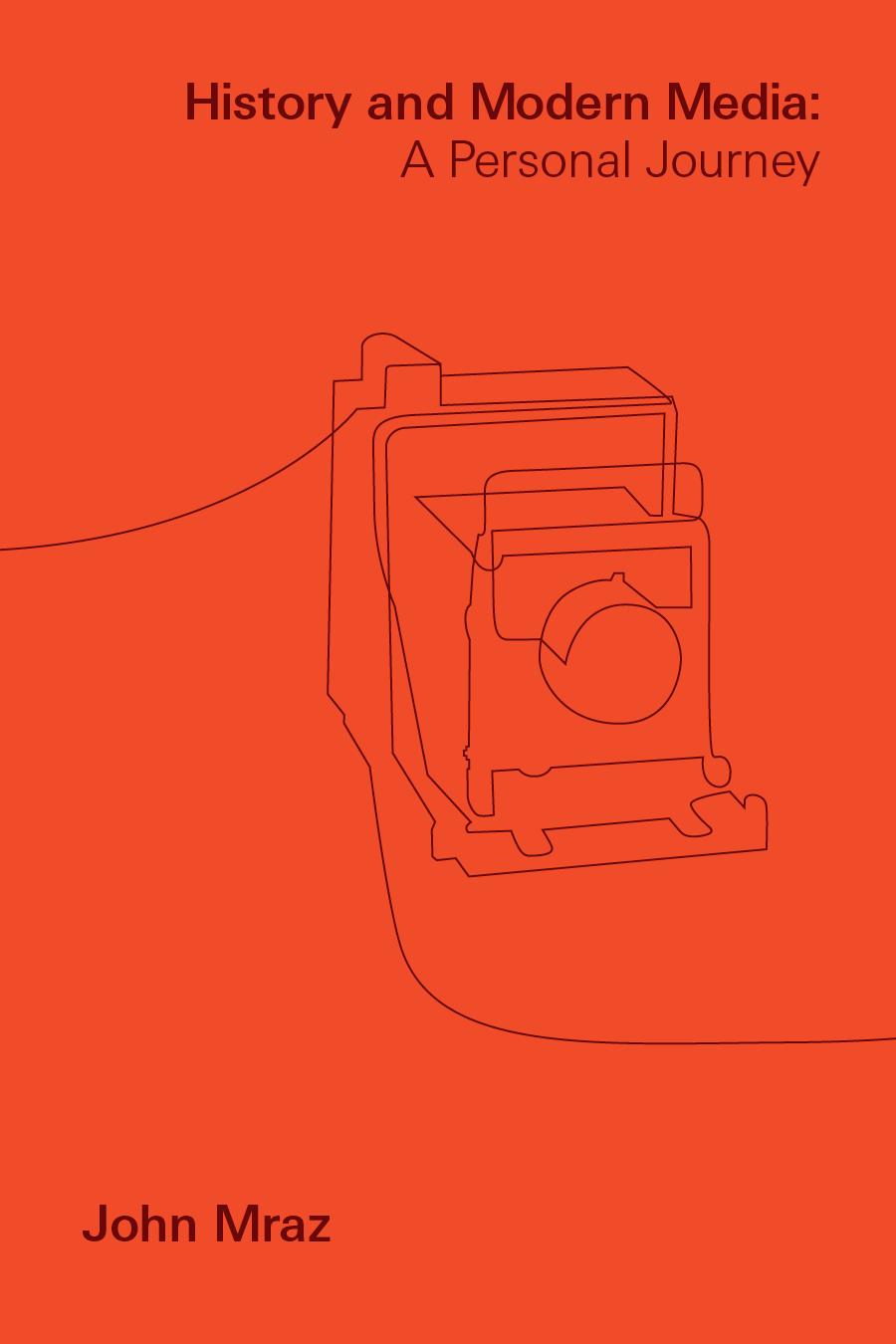
In History and Modern Media, John Mraz largely focuses on Mexican photography and his innovative methodology that examines historical photographs by employing the concepts of genre and function. He developed this method in extensive work on photojournalism; it is tested here through examining two genres: Indianist imagery as an expression of imperial, neo-colonizing, and decolonizing photography, and progressive photography as embodied in worker and laborist imagery, as well as feminist and decolonizing visuality.
The book interweaves an autobiographical narrative with concrete research. Mraz describes the resistance he encountered in US academia to this new way of showing and describing the past in films and photographs, as well as some illuminating experiences as a visiting professor at several US universities. More importantly, he reflects on what it has meant to move to Mexico and become a Mexican. Mexico is home to a thriving school of photohistorians perhaps unequaled in the world. Some were trained in art history, and a few continue to pursue that discipline. However, the great majority work from the discipline known as "photohistory" which focuses on vernacular photographs made outside of artistic intentions.
A central premise of the book is that knowing the cultures of the past and of the other is crucial in societies dominated by short-term and parochial thinking, and that today's hyper-audiovisuality requires historians to use modern media to offer their knowledge as alternatives to the "perpetual present" in which we live.
The book interweaves an autobiographical narrative with concrete research. Mraz describes the resistance he encountered in US academia to this new way of showing and describing the past in films and photographs, as well as some illuminating experiences as a visiting professor at several US universities. More importantly, he reflects on what it has meant to move to Mexico and become a Mexican. Mexico is home to a thriving school of photohistorians perhaps unequaled in the world. Some were trained in art history, and a few continue to pursue that discipline. However, the great majority work from the discipline known as "photohistory" which focuses on vernacular photographs made outside of artistic intentions.
A central premise of the book is that knowing the cultures of the past and of the other is crucial in societies dominated by short-term and parochial thinking, and that today's hyper-audiovisuality requires historians to use modern media to offer their knowledge as alternatives to the "perpetual present" in which we live.
Páginas: 338
Categoría: Film- & Medievetenskap
e-ISBN: 9780826501462
Peso de envío: 1.2 kg
Envío en: 1-2 días
Paga fácilmente con tarjeta, Klarna, Apple Pay o Google Pay. ¿No estás contento? Siempre tienes 14 días de garantía de devolución. Lee más en nuestros términos. Si tienes preguntas, escríbenos a hello@memmo.org.
Memmo hace que estudiar sea más fácil, estés donde estés. Aquí tienes tus libros de texto y herramientas de estudio inteligentes en un solo lugar: resúmenes, quizzes, podcasts y flashcards. Y también a Ted, tu compañero de estudio que responde a todo lo que te preguntes. Más de 50 000 estudiantes ya estudian aquí. Está hecho para que aprendas más rápido y te estreses menos.
También te podría gustar
Comprar el libro0