
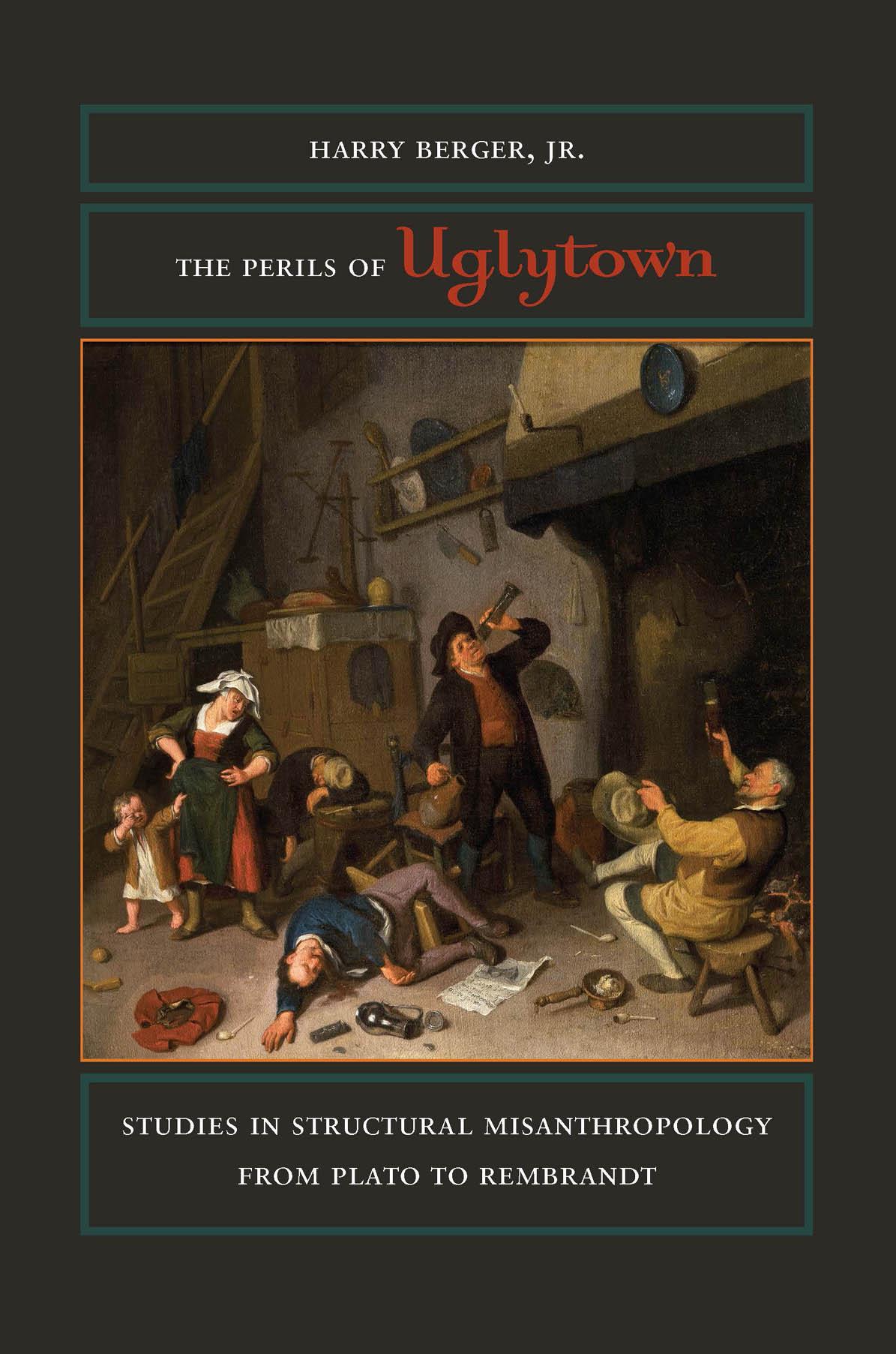
With characteristic wit, Harry Berger, Jr., brings his flair for close reading to texts and images across two millennia that illustrate what he calls “structural misanthropology.” Beginning with a novel reading of Plato, Berger emphasizes Socrates’s self-acknowledged failures. The dialogues, he shows, offer up, only to dispute, a misanthropic polis. The Athenian city-state, they worry, is founded on a social order motivated by apprehension—both the desire to take and the fear of being taken. In addition to suggesting new political
and philosophical dimensions to Platonic thought, Berger’s attention to rhetorical practice offers novel ways of parsing the dialogic method itself.
In the book’s second half, Berger revisits and revises his earlier accounts of Italian humanism, Elizabethan drama, and Dutch painting. Berger shows how structural misanthropology helps us to read the competitive practices that characterize Renaissance writing and art, whether in Machiavelli’s constitutional prostheses, Shakespeare’s pageants of humiliation, or the elbow jabs of Dutch portraiture.
Paga fácilmente con tarjeta, Klarna, Apple Pay o Google Pay. ¿No estás contento? Siempre tienes 14 días de garantía de devolución. Lee más en nuestros términos. Si tienes preguntas, escríbenos a hello@memmo.org.
Memmo hace que estudiar sea más fácil, estés donde estés. Aquí tienes tus libros de texto y herramientas de estudio inteligentes en un solo lugar: resúmenes, quizzes, podcasts y flashcards. Y también a Ted, tu compañero de estudio que responde a todo lo que te preguntes. Más de 50 000 estudiantes ya estudian aquí. Está hecho para que aprendas más rápido y te estreses menos.