
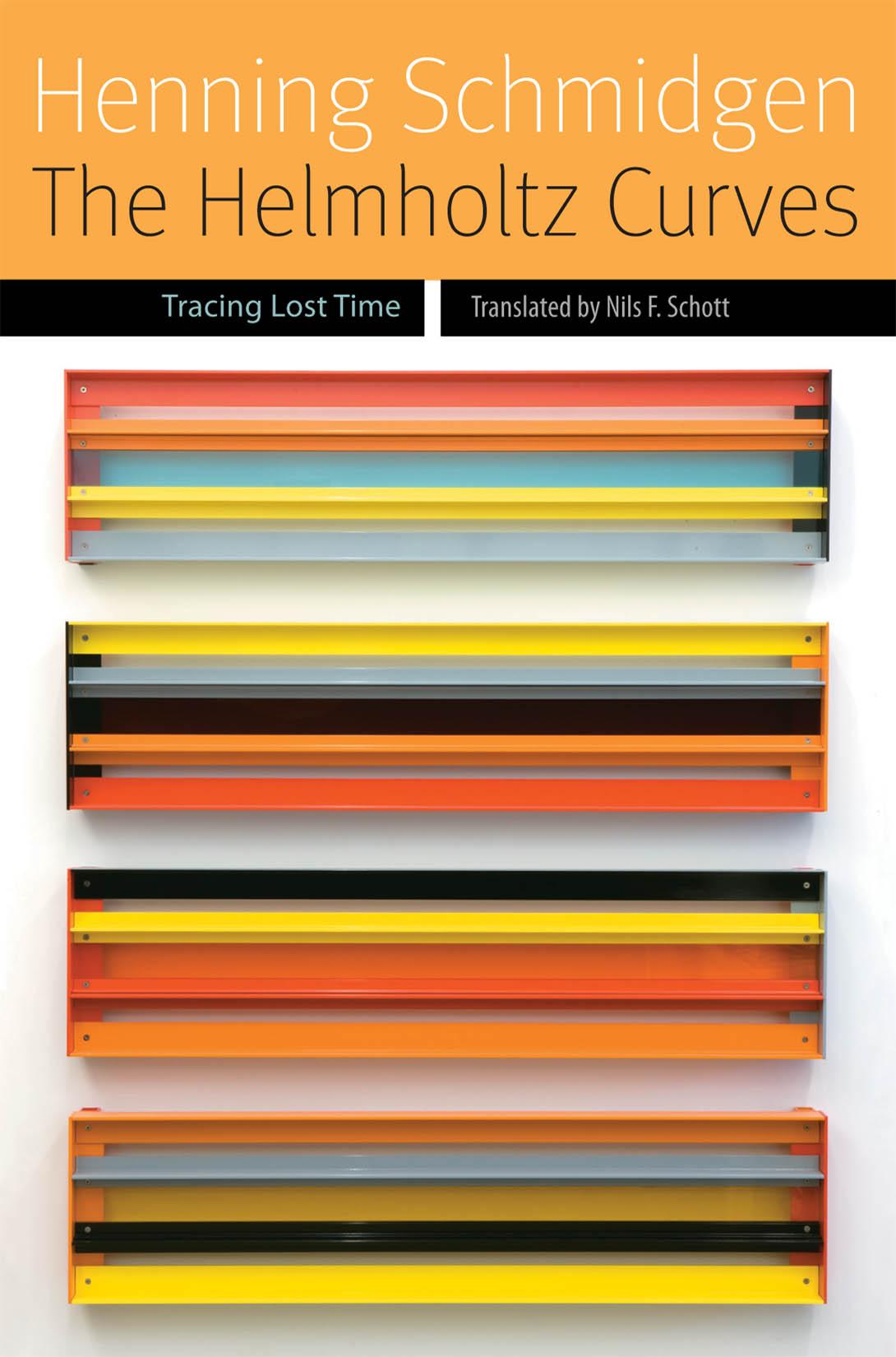
This book reconstructs the emergence of the phenomenon of “lost time” by engaging with two of the most significant time experts of the nineteenth century: the German physiologist Hermann von Helmholtz and the French writer Marcel Proust.
Its starting point is the archival discovery of curve images that Helmholtz produced in the context of pathbreaking experiments on the temporality of the nervous system in 1851. With a “frog drawing machine,” Helmholtz established the temporal gap between stimulus and response that has remained a core issue in debates between neuroscientists and philosophers.
When naming the recorded phenomena, Helmholtz introduced the term temps perdu, or lost time. Proust had excellent contacts with the biomedical world of late-nineteenth-century Paris, and he was familiar with this term and physiological tracing technologies behind it. Drawing on the machine philosophy of Deleuze, Schmidgen highlights the resemblance between the machinic assemblages and rhizomatic networks within which Helmholtz and Proust pursued their respective projects.
Paga fácilmente con tarjeta, Klarna, Apple Pay o Google Pay. ¿No estás contento? Siempre tienes 14 días de garantía de devolución. Lee más en nuestros términos. Si tienes preguntas, escríbenos a hello@memmo.org.
Memmo hace que estudiar sea más fácil, estés donde estés. Aquí tienes tus libros de texto y herramientas de estudio inteligentes en un solo lugar: resúmenes, quizzes, podcasts y flashcards. Y también a Ted, tu compañero de estudio que responde a todo lo que te preguntes. Más de 50 000 estudiantes ya estudian aquí. Está hecho para que aprendas más rápido y te estreses menos.