
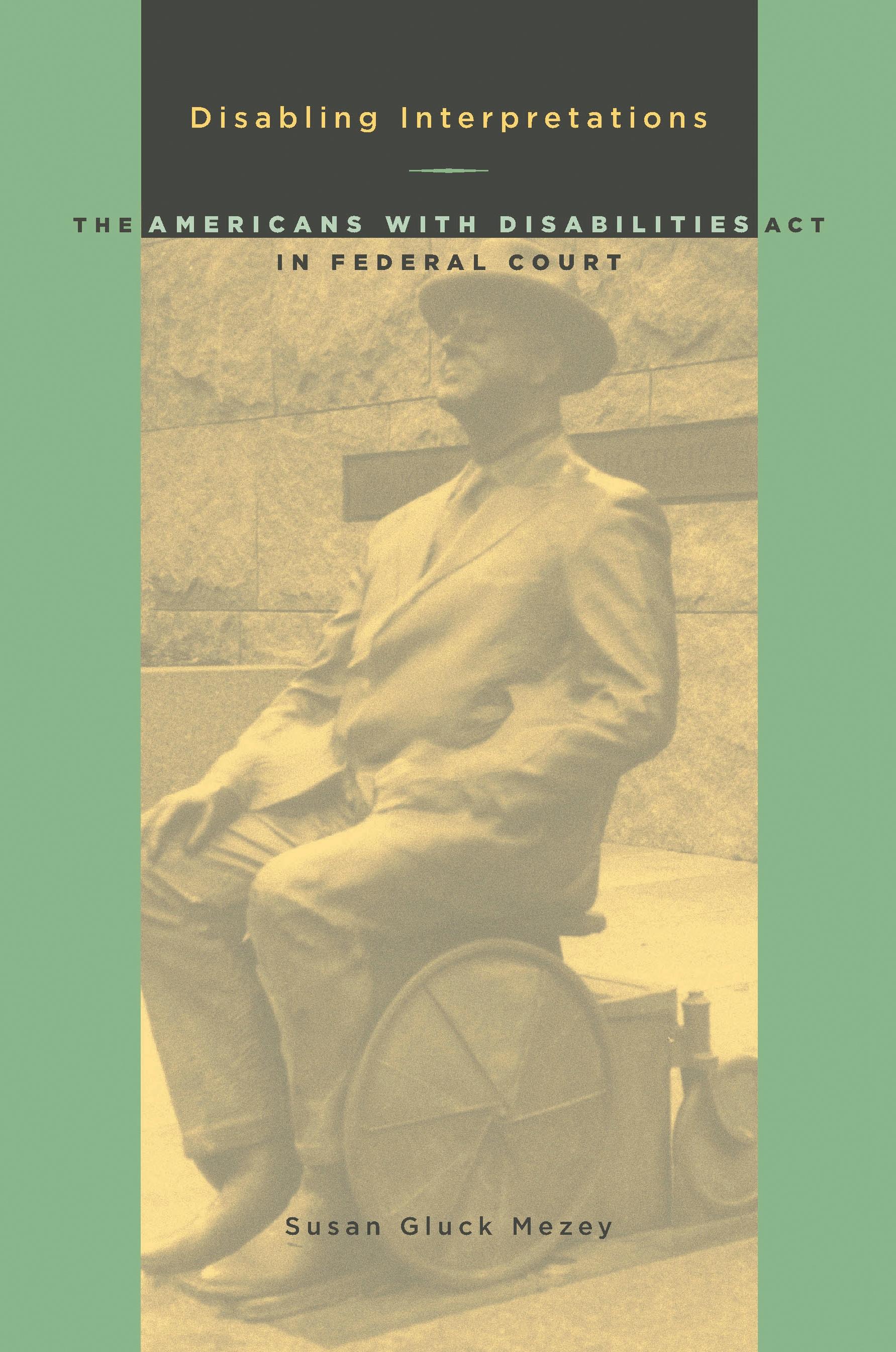
The Americans with Disabilities Act (ADA) of 1990 was intended to send a clear message to society that discrimination on the basis of disability is unacceptable. As with most civil rights laws, the courts were given primary responsibility for implementing disability rights policy.Mezey argues that the act has not fulfilled its potential primarily because of the judiciary's "disabling interpretations" in adjudicating ADA claims. In the decade of litigation following the enactment of the ADA, judicial interpretation of the law has largely constricted the parameters of disability rights and excluded large numbers of claimants from the reach of the law. The Supreme Court has not interpreted the act broadly, as was intended by Congress, and this method of decision making was for the most part mirrored by the courts below. The high court's rulings to expand state sovereign immunity and insulate states from liability in damage suits has also caused claimants to become enmeshed in litigation and has encouraged defendants to challenge other laws affecting disability rights. Despite the law's strong civil rights rhetoric, disability rights remain an imperfectly realized goal.
Categoría: Juridik
e-ISBN: 9780822972792
Paga fácilmente con tarjeta, Klarna, Apple Pay o Google Pay. ¿No estás contento? Siempre tienes 14 días de garantía de devolución. Lee más en nuestros términos. Si tienes preguntas, escríbenos a hello@memmo.org.
Memmo hace que estudiar sea más fácil, estés donde estés. Aquí tienes tus libros de texto y herramientas de estudio inteligentes en un solo lugar: resúmenes, quizzes, podcasts y flashcards. Y también a Ted, tu compañero de estudio que responde a todo lo que te preguntes. Más de 50 000 estudiantes ya estudian aquí. Está hecho para que aprendas más rápido y te estreses menos.
También te podría gustar
Comprar el libro0